


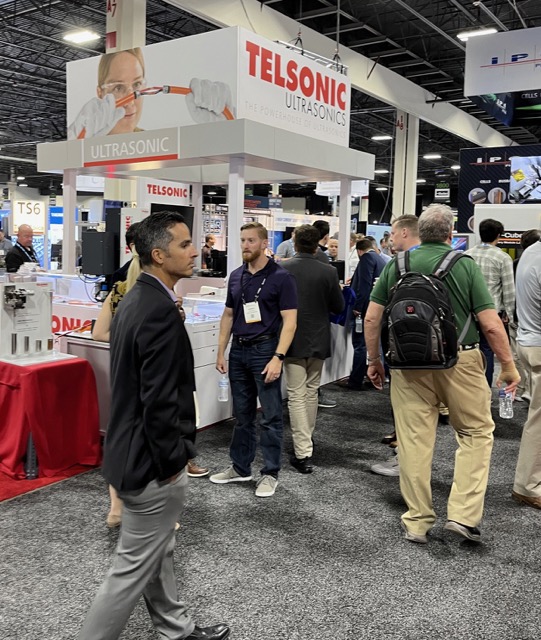

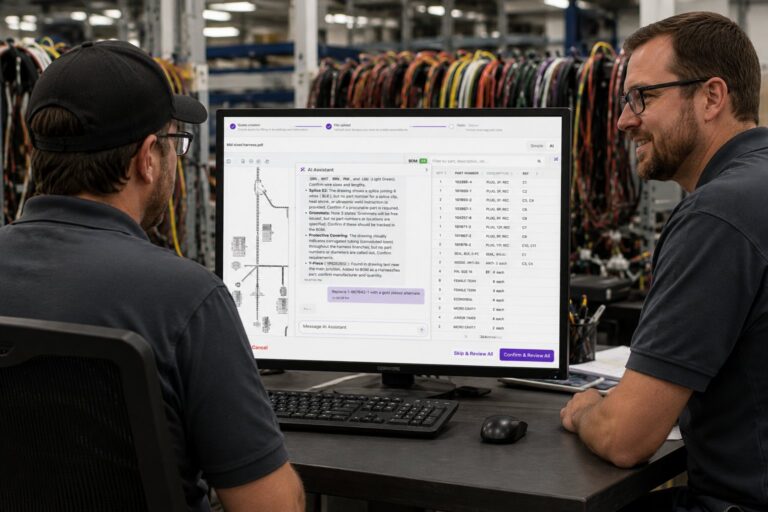







WHN recently caught up with Bharat Patel after meeting him at the Electrical Wire Processing Technology Expo (EWPTE) in Milwaukee. Bharat is the founder of WireIt, a browser-based platform that allows engineers to develop electrical systems and generate harness documentation from the same underlying design data. While the market already includes several established design tools, Bharat believes there is still room for a different approach.
As an electrical engineer, Bharat’s experience spans both PCB design and wire harness development. That background ultimately led him to create WireIt after becoming frustrated with the disconnect between sophisticated PCB design environments and the tools commonly used for harness design.
“I felt PCB tools had matured significantly,” Bharat explained. “But harness design often still relied on spreadsheets, disconnected documents, and basic diagrams. I wanted something that could help engineers move from system requirements to a complete harness design without fighting the software along the way.”
That philosophy has become a guiding principle for WireIt. According to Bharat, software should help users complete their work rather than become another obstacle to overcome.
Starting With the System
One of the ideas behind WireIt is that harnesses are often developed as part of a larger electrical system. Rather than focusing only on individual wires and connectors, Bharat wanted a platform that begins at a higher level.
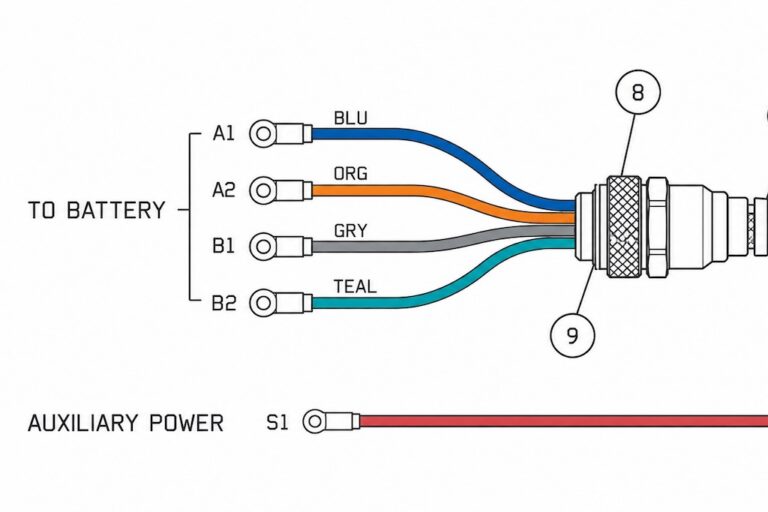
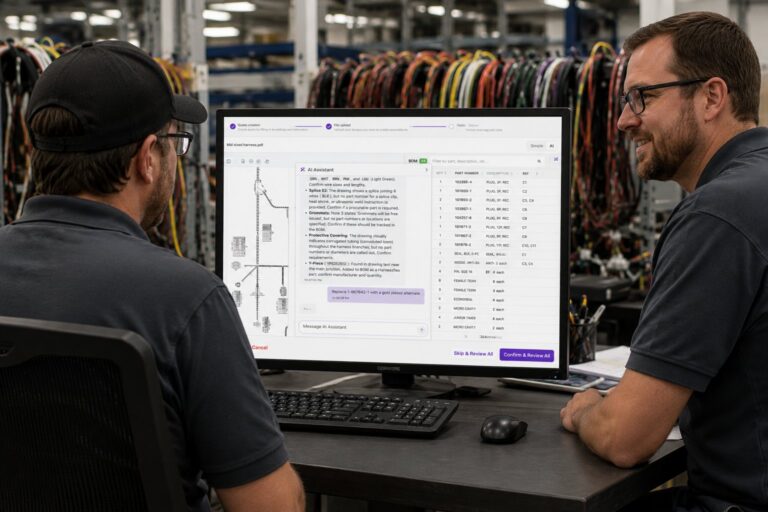
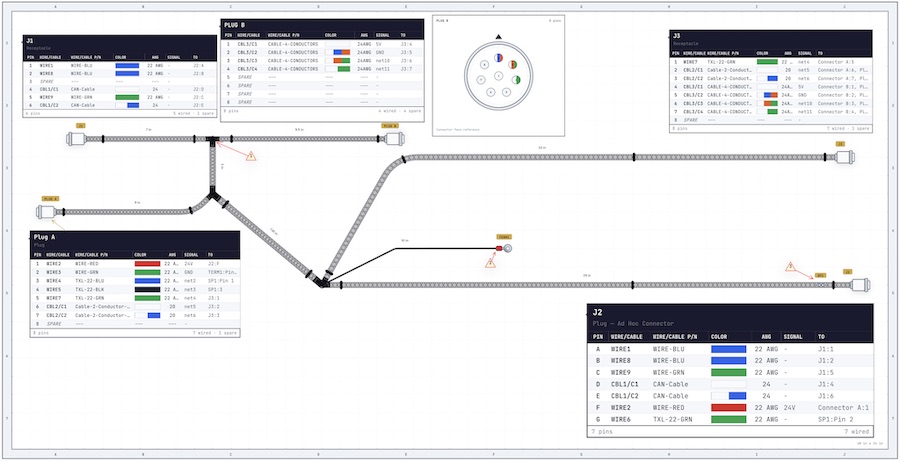
Engineers typically start with block diagrams and system architecture. WireIt allows users to build those diagrams while attaching design data that can later be converted into harness information, including connectors, wiring data, bills of material, and cut lists.
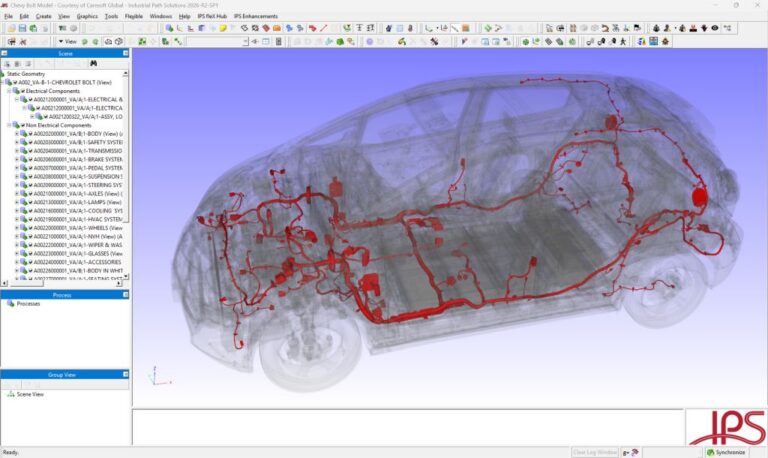
Bharat describes wire harnesses as the “nervous system” of complex electrical products. In his view, designers should not have to maintain separate diagrams, spreadsheets, and documentation whenever changes occur. Instead, the system-level design should become the foundation from which downstream harness documentation is generated.
The concept is particularly relevant for companies that regularly modify products or produce multiple harness variants. A change to one portion of a design can ripple through several documents when handled manually. By keeping design information connected, Bharat hopes to reduce that burden.
Although Signetronics LLC, Bharat’s company, was established in 2023, the idea behind WireIt had been developing for years. Bharat had experimented with similar concepts before eventually deciding to build the platform from the ground up.
The initial development was largely driven by his own experiences as an engineer. More recently, however, customer feedback has begun shaping the product’s direction. “What started as my idea of what a harness design tool should be has become a working platform developed around customer requirements,” he said.
That customer-driven approach remains a key part of WireIt’s development roadmap. Several potential capabilities, including additional integrations and quoting functionality, are being evaluated based on user demand.
A Different Approach to Software Pricing
One aspect of WireIt’s current evaluation approach is its focus on making evaluation straightforward. At the time of the interview, WireIt was presenting a clear path for prospective customers, including a Free Preview option and plan information for teams ready to move into production use. Bharat says packaging may evolve as WireIt works with more customers, but the principle is to help manufacturers understand the starting point before they spend time evaluating the software.
Bharat says the decision was intentional. He recalls visiting software websites and struggling to determine what a product would actually cost. Too often, pricing information was hidden behind multiple conversations, demonstrations, and licensing discussions.
Rather than making evaluation feel like a lengthy sales process, Bharat wanted potential customers to understand the starting point early and decide whether WireIt was worth a closer look. He views early clarity as a way to remove friction during the evaluation process and allow users to focus on determining whether the software solves their actual design challenges.
Addressing Complexity
Industrial software has become increasingly capable over the years, but that capability often comes at the cost of complexity. Bharat acknowledges that many advanced platforms have evolved to meet customer requirements for ERP integration, PLM connectivity, and other enterprise-level functionality. Those features provide real value for many organizations.
At the same time, he believes some users simply want to design a harness without navigating an extensive collection of features they may never use. “Sometimes users just want to build a harness right now,” he said.
WireIt’s response is a more streamlined user experience focused on core design tasks. According to Bharat, one customer was able to begin designing harnesses independently after only a brief demonstration.
That simplicity is particularly important because harness design is often learned on the job. While engineering schools teach electrical theory and circuit design, Bharat notes that they rarely provide significant instruction in harness design practices.
Supporting Low-Volume, High-Mix Manufacturing
Many wire harness manufacturers operate in a low-volume, high-mix environment where product variations are common, and engineering changes occur frequently.
Bharat believes those companies may benefit significantly from a more connected design process. When every new order introduces different connector selections, wire lengths, or routing requirements, maintaining multiple spreadsheets and drawing packages can become increasingly difficult.
WireIt allows users to copy existing designs, modify them, and build new harness variants without recreating everything from scratch. Shared component libraries also allow team members to reuse existing work and maintain consistency across projects.
For companies producing many similar but not identical assemblies, that can mean less time recreating designs and more consistency across projects.
Integration With Mechanical Design
While WireIt focuses primarily on electrical system and harness design, the platform is not intended to exist in isolation.
Bharat has already developed integration capabilities with a third-party cloud-based mechanical CAD platform. Users can transfer harness design data into the mechanical environment, perform routing activities, and then synchronize physical wire lengths back into WireIt.
At present, additional ERP and MRP integrations are not yet available, although Bharat says those capabilities may be added as customer requirements evolve.
Cloud-Based and Accessible
Another design decision was to make WireIt browser-based. Users can sign in through a web browser and begin working without installing large software packages locally. Bharat says the goal was to reduce setup requirements and make the platform easy to access.
For organizations requiring alternative deployment options, on-premises configurations are also available.
The emphasis, however, remains on simplicity. Bharat wants users spending time designing products rather than managing software installations and updates.
Looking Ahead
Looking ahead, Bharat sees opportunities to expand the platform’s capabilities while remaining focused on its core mission of simplifying electrical system and harness design. Rather than forcing engineers to move between multiple disconnected tools, he hopes WireIt eventually becomes a central tool for electrical system design and harness development.
His long-term goal is a platform that helps users move from requirements to production-ready documentation while maintaining consistency throughout the process. “I want WireIt to be practical, modern, and easy to trust,” Bharat said.
Ultimately, Bharat hopes WireIt gives engineers a simpler path from concept to completed harness documentation without forcing them to navigate unnecessary complexity along the way.
If you would like more information, visit https://electrical.design/ or contact Bharat Patel directly at [email protected].