





















When Wiring Harness News first spoke with Frisimos, the Israeli automation company was working to solve one of the more stubborn problems in cable assembly: how to automate processes that have traditionally depended on the dexterity and judgment of human operators.
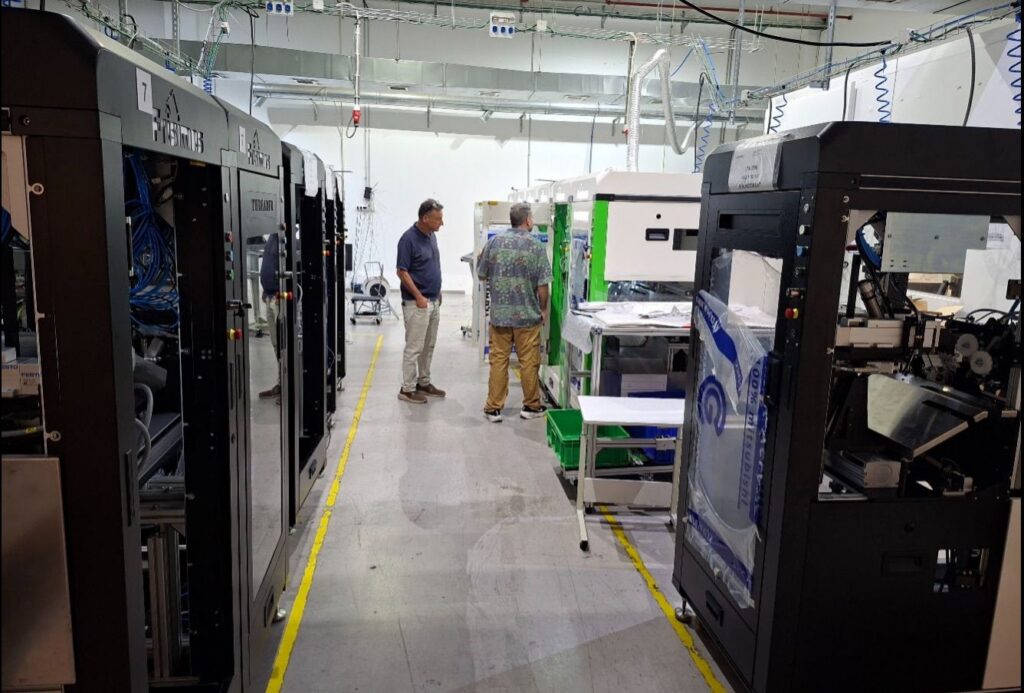
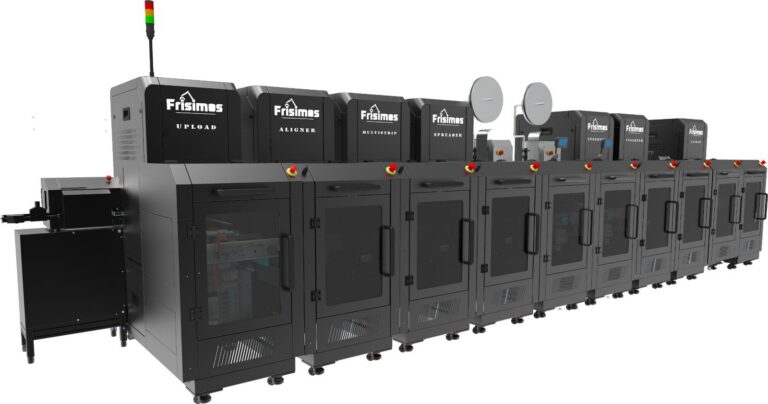
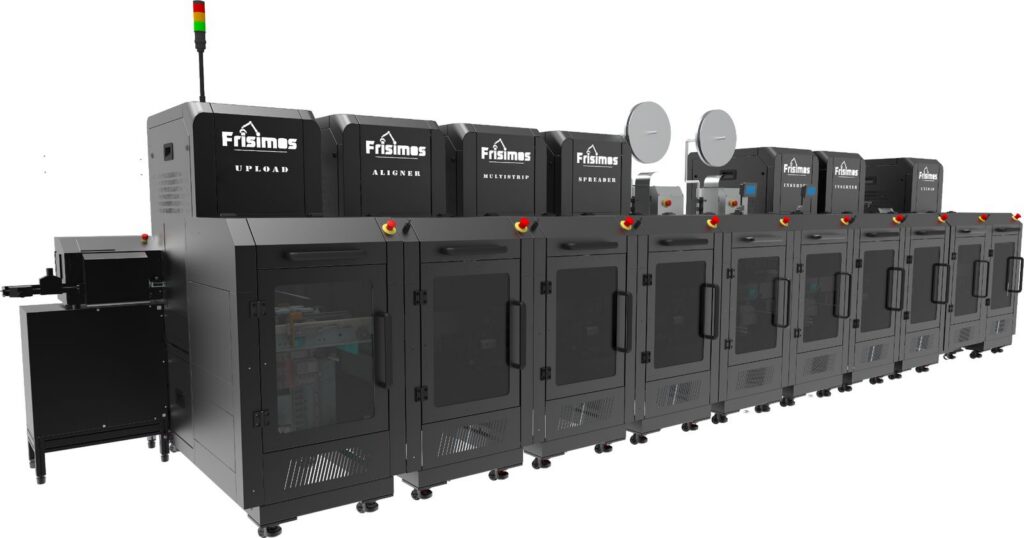
The company’s approach was built around modular automation. Rather than attempting to develop one enormous machine around a narrowly defined product, Frisimos designed individual process modules that could be combined into a complete line. Miniature robots and vision systems handle and sort individual conductors, laser technology processes shielding, foils and other cable layers, and conventional third-party equipment can be integrated for operations such as crimping, molding and testing. Software ties the processes together and provides traceability, production data and ERP integration.
The objective was particularly ambitious because Frisimos was targeting multicore cable assemblies and high-mix production, an area where automation has historically been difficult to justify. At the time of the original WHN article, the company was concentrating on communication cables using M8 and M12 connectivity, Cat 5e through Cat 8, USB Type-C and, eventually, optical fiber.
Readers interested in a deeper look at the technology and the thinking behind it can revisit WHN’s original article, A New Approach in Automated Cable Assembly.
Since then, the story has moved considerably beyond the development stage.
During a recent conversation with WHN, Frisimos Business Development executive Nadav Ofir provided an update on the company’s progress. Frisimos continues to have a strong European focus, supported by an office near Munich. The company has already shipped several production lines to European customers, and Nadav said additional F5 lines are currently in production for shipment to Germany, Hungary and the Czech Republic.
With the recent creation of Frisimos USA in Chicago, cable assembly will be offered to North American customers as a service. Expected to begin production in 2027, Frisimos USA will initially offer domestic copper cable assembly without companies needing to invest millions in CapEx. Customers will receive finished products that are 100% inline tested and 100% traceable, eliminating human error and cable-to-cable variation.
Just as important, the range of cable types Frisimos is pursuing is expanding.
The company is currently selling lines for M8/M12 and RJ45 applications and has begun development of two new families of equipment aimed at fiber optics and USB-C/USB4. For Frisimos, these are a logical extension of the automation platform, but they also move the company into considerably more complex cable assemblies.
Nadav described fiber and advanced USB assemblies as a significant step up in both complexity and value from more conventional industrial Ethernet products. Assemblies can contain 8, 12, 16 or 24 conductors and, depending on the product, can require 20 to 30 minutes of manual assembly time. That combination of high labor content and relatively high product value creates an attractive target for automation.
Where those products are manufactured has also become a much bigger part of the conversation since WHN first covered Frisimos.
According to Nadav, the manufacturing picture varies considerably by product type. Industrial cable assembly has substantial capacity in Europe, while higher-volume Ethernet production has migrated largely to Eastern Europe, Mexico and Asia. Fiber assembly has a presence in the United States and Europe, he said, but available capacity is much narrower and supply chains can be slow and expensive. USB cable manufacturing is even more concentrated in Asia. That makes automation more than a labor-saving proposition. Frisimos increasingly sees it as an enabling technology for regional manufacturing.
The company aims to add these new assembly capabilities to its U.S. facility and open a similar facility in Europe. Nadav believes robotics could make local production economically practical while also providing increasingly valuable traceability.
With a locally automated process, the origin of cables, connectors and other materials can be documented throughout production. For applications where cybersecurity, certification or country of origin is important, that level of visibility could become a significant advantage.
The concept closely follows one of the themes Frisimos discussed in the original WHN article. At the time, company executives argued that reshoring cable production would require more than simply recreating the labor-intensive manufacturing models that had previously moved offshore. Advanced automation would be necessary if production were going to return economically to higher-cost manufacturing regions.
That argument has become even more relevant as concerns over supply-chain resilience and domestic manufacturing have grown.
Nadav sees communications cabling as part of that discussion, particularly in critical infrastructure and defense-related applications. He argues that securing servers, switches and other endpoints is only part of the equation. If the cables connecting that equipment come from overseas sources with limited traceability, questions can remain about the security of the communications network itself.
That evolution may ultimately be the most significant change since WHN’s first visit with Frisimos. The original story centered on whether sophisticated robotics, vision, lasers and modular tooling could automate cable assemblies that had long resisted automation. The company is now demonstrating a broader value proposition. At one end of the spectrum, automation can tackle complex, labor-intensive assemblies such as fiber. At the other, it can help make higher-volume products such as USB economically competitive when produced closer to the markets they serve. In both cases, local production can shorten supply chains, improve traceability and reduce dependence on overseas manufacturing.
There is still a great deal to play out, particularly as Frisimos moves into these more complex product families. But Nadav believes the company is operating from a very different position today.
“I think we are in a much more mature place,” he said. “And I think the ecosystem is supporting where we want to go.”
Frisimos began by rethinking how cables could be assembled. Its next stage may depend just as much on where that assembly takes place.