














By Joanne Harris – for Cableteque.com
Herman Rozenberg’s free IPC-620 certificate program at Long Beach City College is putting job-ready technicians on the floor and cutting on-the-job training from a year to months.
Ask most wire harness manufacturers how long it takes to bring a new hire up to speed, and you’ll hear a familiar answer: a long time. Three months of basics. Two months to get them through IPC certification. Another six months shadowing an experienced assembler. By the time they’re genuinely productive, a year has passed, and that’s assuming you can find someone willing to learn the trade in the first place.
Herman Rozenberg has spent his career inside this gap. Now CTO at Onshore Technologies in California, he has worked across the interconnect industry for decades, including as Vice President at Winchester Interconnect, and has watched the workforce shortage compound year after year. His answer is a purpose-built certificate program at Long Beach City College (LBCC), offered entirely free to students and already sending graduates into some of the most demanding shops in Southern California.
The Gap Nobody Was Filling
Rozenberg is direct about why he built the program. “There are no schools for interconnect systems,” he says. “It sits between electronics and mechanics; it’s electromechanical, and when I joined this industry, I had an electronics engineering background, and it still wasn’t enough. I had to figure it out myself.”
That boundary, too mechanical for electronics programs and too electronic for mechanical ones, is where wire harness manufacturing lives. And as the industry has grown, particularly in aerospace, defense, and space, the demand for people who understand both sides has far outpaced supply.
“Electromechanics is the next generation of this space business,” Rozenberg says. “The mechanical engineering field needs to fill in. I decided to build this curriculum to prepare people for that.”
What the Courses Cover
The LBCC program comprises two courses, ELECT 620A and ELECT 620B, and leads to a Certificate of Completion in WHMA/IPC-620 Wire Harness Assembly and Inspection. No prior experience is required to enroll.
The objective is straightforward: students leave with the IPC/WHMA-A-620 certification, the hands-on skills to assemble, test, and inspect cable harnesses, and enough practical foundation that a manufacturer can move them straight into a condensed boot camp rather than starting from zero.
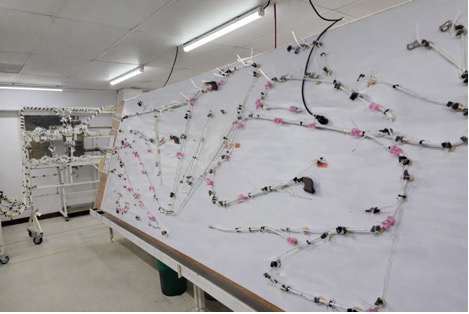
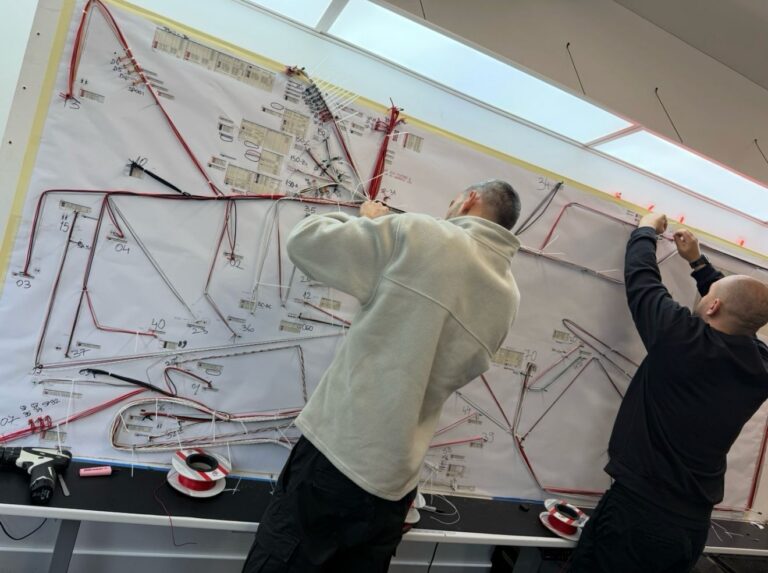
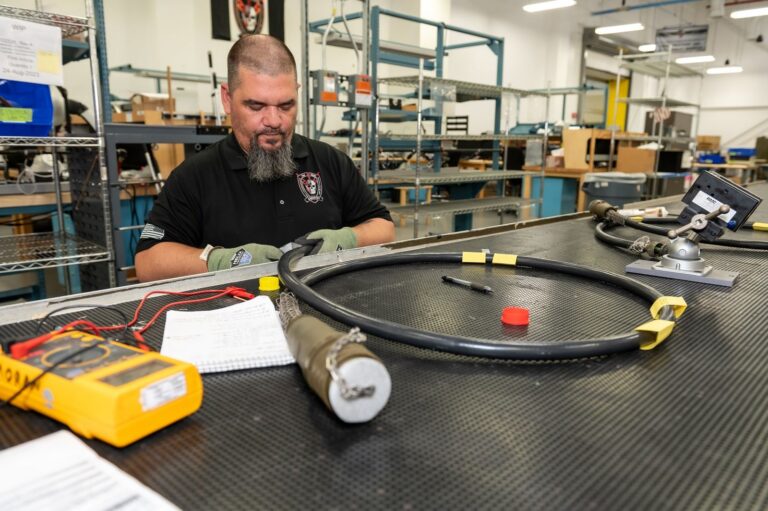
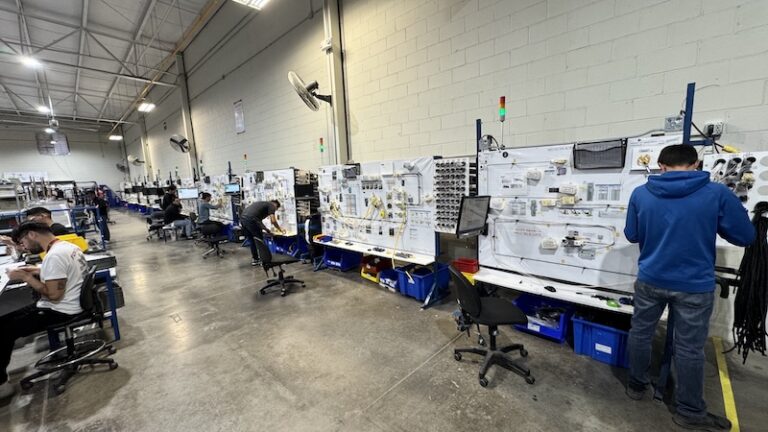
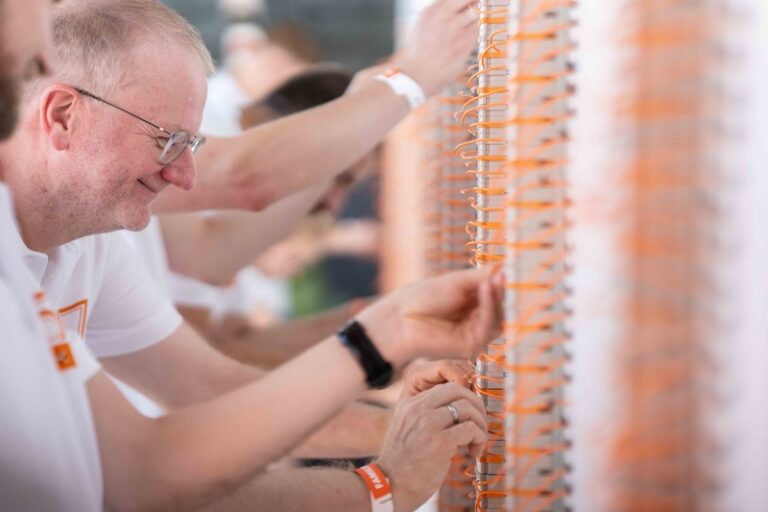
Each day is split between classroom instruction and lab time. Students work through the IPC/WHMA-A-620 standard in the academic portion, then move to a hands-on lab where they crimp, strip, terminate, test, and build. “There is the academic side, then the second half of the day they are hands-on in the lab,” Rozenberg explains. “They are building, crimping, stripping, testing, doing all the preparation, all the wiring, all the testing.”
What This Means for Manufacturers
The value to hiring companies is concrete. Under the traditional route, a new hire with no industry background takes roughly a year to become independently productive: three to four months of fundamentals, two months to get certified, then another six months paired with an experienced assembler. That’s twelve months of investment before you see a real return.
Program graduates compress that significantly. “When they are graduating from this curriculum, they already have the first six months,” Rozenberg says. “Then they can join the boot camp, shadow an experienced person for two months, and they are ready to go, independent.” Graduates also command higher starting salaries, reflecting the skills they bring.
For an industry already stretched thin, that timeline reduction matters. And Rozenberg sees the shortage only deepening: “From LA to Orange County, there are something like 200 companies working in the space sector, and each and every one of them needs interconnect technicians for design, for testing, for system integration.”
Where the Jobs Are
Rozenberg has placed graduates at some of the most prominent names in Southern California’s aerospace and defense ecosystem. “Some of these companies are hiring 300 people per month,” he says. “Out of those 300, 50 are going into the interconnect field. This industry is really, really growing.”
It’s also one of the few skilled trades where AI-driven automation hasn’t displaced human hands. “Mechanics and electronics engineers are worried about AI taking over,” Rozenberg notes. “But harness building, that’s something AI is not capable of replacing right now.” For students weighing their options, that job security is an additional draw.
“From LA to Orange County, there are something like 200 companies working in the space sector, and each one needs interconnect technicians.”
A Student’s Perspective
Marcos Meytarjyan completed the program remotely while finishing a computer science degree at St. Olaf College in Minnesota. He has since relocated to Southern California and joined Onshore Technologies, where he now leads a team of three.
“It really just helped me kick off my engineering career,” Meytarjyan says. “Everything was informative and on point, structured in line with the IPC standard, the same style. It gave me a good background to get started working hands-on.” He credits the course with bridging the gap between his academic training and the practical demands of the job. “I’m just really glad I got to go through all of this so I can be here today.”
His trajectory, from a remote student in the Midwest to a team lead in Southern California’s interconnect sector, is the kind of outcome Rozenberg is building toward at scale.
Free, Open, and Expanding
The LBCC program is sponsored by the city and is currently open for enrollment at no cost to students, with no prerequisites and no tuition. Rozenberg is emphatic that this accessibility was a core part of the mission. “There are a lot of students who want to graduate, want to have a profession, but they don’t have the money and the resources to make it,” he says. “These courses are free. I’m very happy that hundreds of people can graduate without needing resources, without needing to come from a rich family.”
Looking further ahead, Rozenberg is working with the School of Engineering at UC Irvine to develop a parallel curriculum that would be integrated as a credited course for electrical and mechanical engineering students. That program is currently under development; Rozenberg has already delivered lectures at UCI’s Rocket Lab, where students build and launch rockets in the Mojave Desert, and has received an enthusiastic reception.
“The students in the Rocket Lab said, ‘We are doing the system, we are doing everything, but wiring, we don’t know exactly what to do,'” he recalls. “That is exactly the gap I’m building to fill.”
HOW TO ENROLL
The IPC-620 Wire Harness Assembly and Inspection Certificate program (ELECT 620A and ELECT 620B) is open now at Long Beach City College. No prerequisites are required. The courses are free for eligible students. For enrollment information, visit lbcc.edu or search the LBCC program map for ‘IPC-620 Wire Harness Assembly and Inspection.’
Images:
Courtesy Long Beach College
Courtesy Herman Rozenberg