










By Christian Huber, Product Market Manager Ultrasonic Metal Welding, Telsonic
Automotive wire harness production is operating under sustained pressure. New market entrants
are intensifying competition, geopolitical uncertainty is disrupting supply chains, and volatile trade
conditions – including shifting tariffs – make long-term cost planning difficult. In this environment,
every investment including production equipment is scrutinized more closely than before. For
ultrasonic terminal welding systems, this has shifted the central question: not “What does the
machine cost?” but “What does the machine cost over its entire service life?”
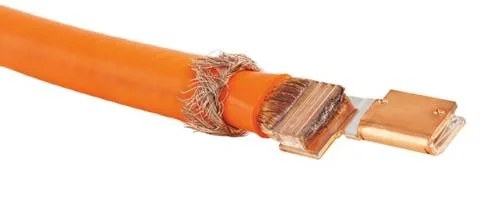
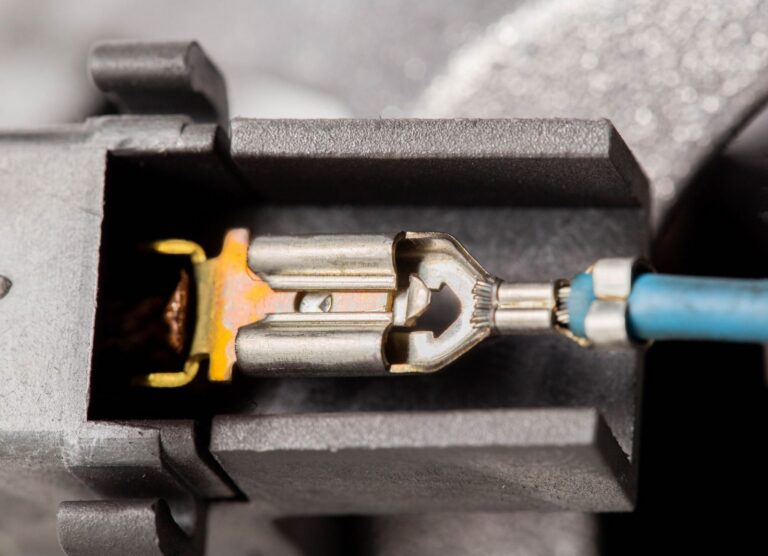
Figure 1: Ultrasonically welded terminal on a high-voltage cable. Joining stranded conductors directly to terminals is a
typical application in automotive wire harness production. (Image: Telsonic)
The iceberg below the purchase price
The purchase price is the most visible cost item, and it is the one most often used to compare
offers. Yet in practice it is only the tip of the iceberg.
A structured Total Cost of Ownership (TCO) analysis therefore looks at four cost blocks across the
lifecycle of the system:
▪ Investment – purchase price, integration costs and utilization
▪ Operation – sources of error, training effort and Overall Equipment Effectiveness (OEE)
▪ Maintenance – changeover times, tool life and maintenance intervals▪ Reusability – conversion costs and investment protection
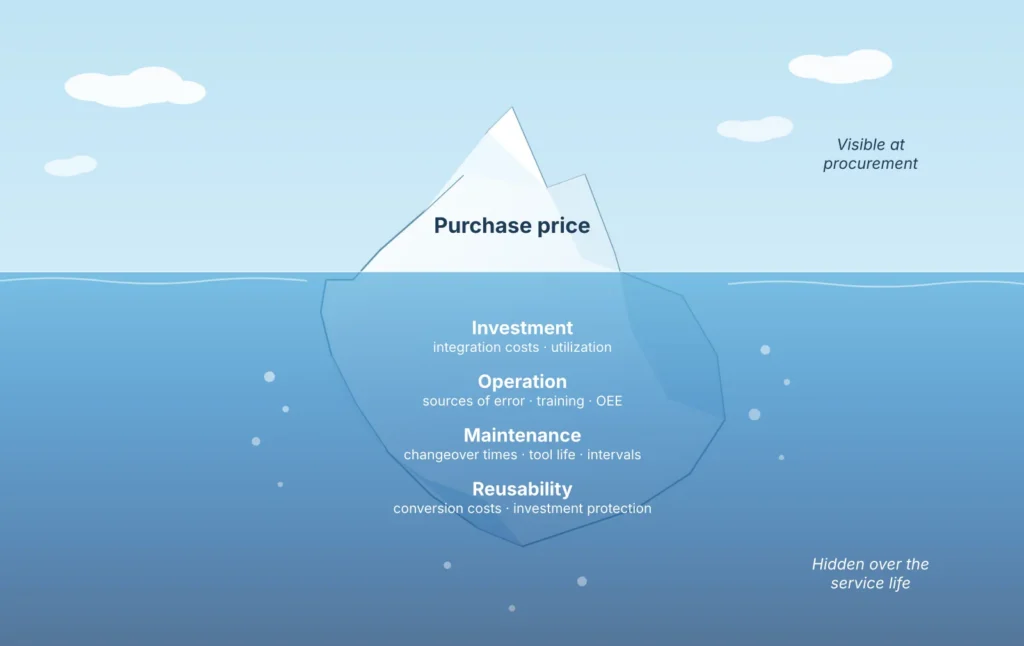
Figure 2: The purchase price is only the visible part of the total cost of ownership. Investment, operation, maintenance
and reusability determine the costs that arise over the service life of a terminal welder. (Image: Telsonic)
Each block contains cost drivers that are easy to overlook during procurement but that accumulate
over years of production.
Investment: more than the price tag
Beyond the list price, integration costs are frequently underestimated. Connecting a welder to a
plant’s Manufacturing Execution System (MES), adapting software interfaces and embedding the
system in an existing line can add considerable engineering effort. Communication standards such
as OPC UA and common real-time Industrial Ethernet protocols allow systems to be connected
without proprietary middleware.
Utilization is the third investment factor. A system that covers only one narrow range of cross-
sections may sit idle when order volumes shift. A welder with a wide weldable cross-section range
per power class can serve several applications – for example, flat terminals, 3D terminals, cable
lugs, grounding contacts or braided tapes – and thus achieve higher utilization over its lifetime. In
some cases, one machine can cover applications that would otherwise require two, such as a 25
mm² and a 120 mm² connection, simply by changing the welding tools.Operation: where daily costs arise
In daily production, costs arise primarily from errors, training and lost productivity. Typical sources
of error in terminal welding include incorrect material, incorrect cable cross-sections and insertion
errors – for example, wires that are not fully inserted or a terminal positioned incorrectly. Each
such error causes scrap at best and a field failure at worst. Operator guidance on the machine’s
user interface, combined with process monitoring, reduces the likelihood that these errors go
undetected.
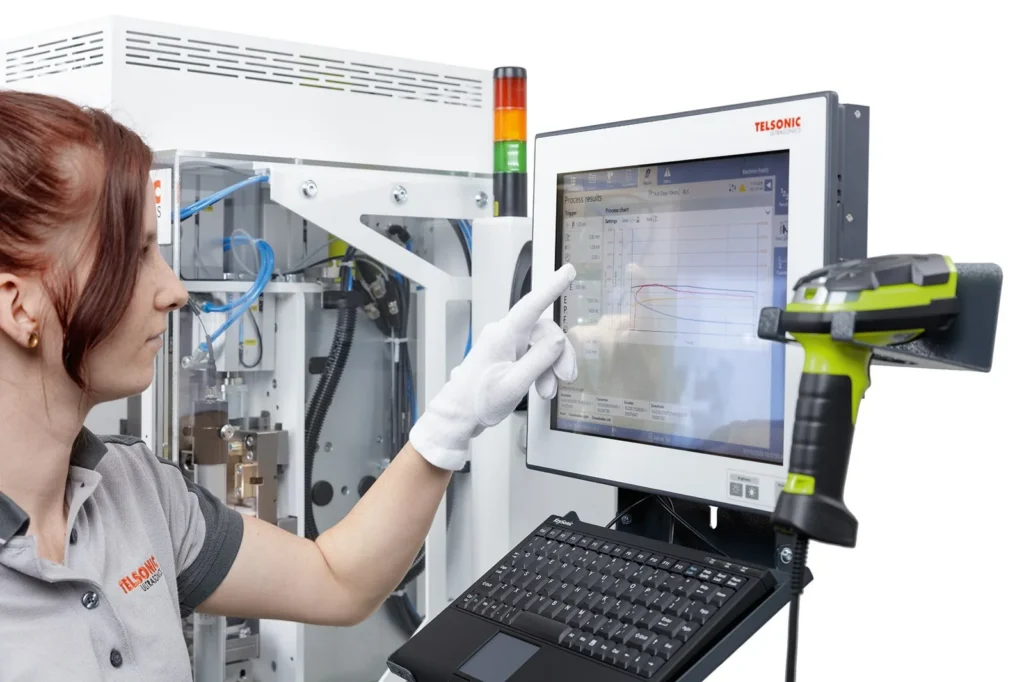
Figure 3: Operator guidance on the touchscreen and barcode scanning of materials help to avoid typical sources of error
such as incorrect material or the wrong application. (Image: Telsonic)
Training is a second operational cost. High staff turnover in harness production means that new
operators must become productive quickly. Uniform operating concepts across different machine
types reduce training effort, because operators do not have to learn a new interface for each
system.
The third block is OEE. MES integration enables central management of parameters, automatic
documentation and full traceability of every weld. This saves time and material and supports the
documentation requirements of automotive customers.
Process monitoring as a cost factor
Weld quality monitoring deserves particular attention, because its effectiveness directly determines
scrap and the risk of defective parts reaching the customer. Modern systems monitor several
process variables in parallel, including power, force, time, weld height (distance) and trigger
behavior, each with defined tolerance windows. A precise force transducer integrated into the
welding head enables true force measurement rather than an indirect value derived frompneumatic pressure. Force-dependent deflection compensation and height measurement suitable
for quality assurance further improve the reliability of the results.
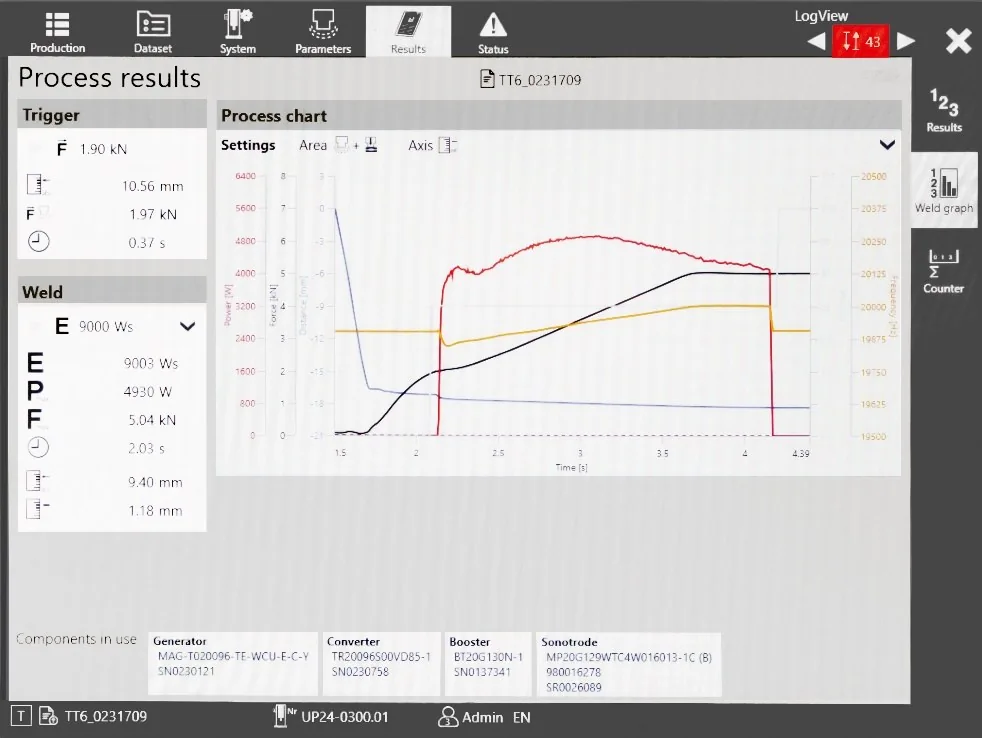
Figure 4: Process results of a single weld: trigger and weld values such as force, energy, power, time and height are
recorded together with the weld graph and evaluated against defined tolerance windows. (Image: Telsonic)
Missing strands illustrate how sensitive such monitoring can be: with a rigid machine structure and
multi-parameter monitoring, a current linear terminal welding platform is designed to detect welds
with as little as 3% of the strands missing. Monitoring a minimum weld time is also relevant – an
unusually short weld can indicate a fault just as well as an overly long one.
A frequently underestimated detail is the choice of units. When welding parameters and results are
expressed in absolute physical quantities from the International System of Units (SI) – force in
newtons (N) and amplitude in micrometers (µm) – processes can be compared directly across
machines, plants and suppliers. Relative values such as pressure in bar or amplitude in percent
depend on the specific machine configuration. Using SI units therefore simplifies process transfer
and removes a source of error when parameters are moved from one system to another.
Maintenance: the underestimated cost block
Maintenance costs are often discussed only after the investment decision. Three factors dominate:
Changeover times. In harness production with many variants, applications are changed
frequently. Every minute of changeover is a minute without output. On a current linear terminal
welding system, a resonance unit can be exchanged in under three minutes without tool change orrepositioning; a complete conversion including tool change and positioning takes under ten
minutes. Guided step-by-step changeover instructions on the operator panel help to achieve
consistent results, regardless of the individual operator’s experience.
Tool life and wear part costs. Sonotrodes and anvils are wear parts. Their service life and their
replacement price both feed directly into the cost per weld. A design that allows wear parts to be
replaced quickly, with good access to the welding area, reduces both downtime and labor.
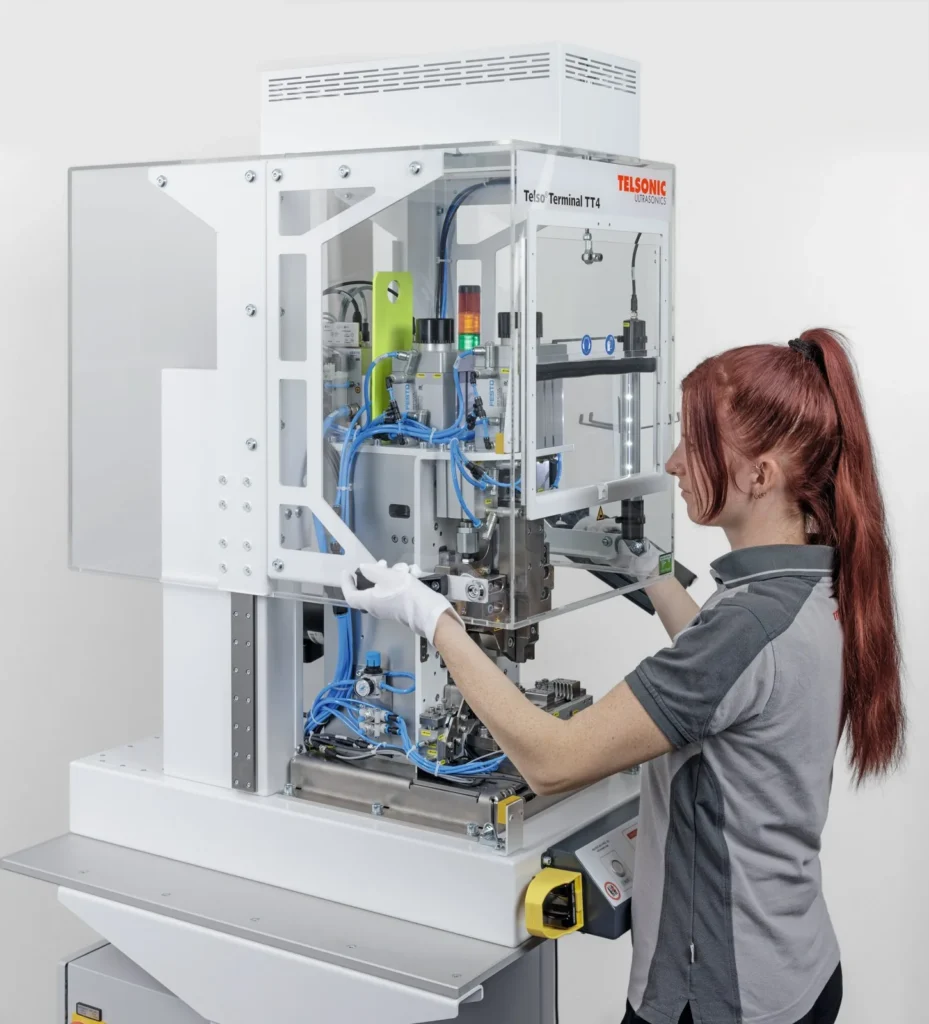
Figure 5: 360° access to the machine and quick-change wear parts shorten maintenance times and increase machine
uptime. (Image: Telsonic)
Maintenance intervals and self-diagnostics. Equipment management functions that identify
incorrectly mounted or defective components before production starts help to prevent faulty welds.
Self-check routines that verify the advance stroke and the resonance system allow problems to be
identified at the start of a shift rather than through rejected parts.
Reusability: what if the application changes?
Automotive projects have defined lifecycles. When a vehicle program ends or a terminal design
changes, the question arises whether the welding equipment can be reused or must be replaced.Conversion costs for new terminal types are a key factor here. A system that can process
terminals with and without insulation crimp on the same machine – choosing per application
between a bad-part cutter and an insulation crimp unit – can be adapted to new projects with less
effort. The ability to transfer the welding components and the qualified welding process to
automated production lines is equally important: a process developed on a stand-alone machine
can then be scaled into an automated line without requalification from scratch.
Software extensions that add functionality and connectivity over time also contribute to investment
protection.
A practical example
How these considerations translate into equipment design can be illustrated by a recent
development in the 3.6 kW class of linear terminal welders. The Telso®Terminal TT4 from Telsonic
is intended to succeed the company’s MPX platform in this power range. It covers copper cross-
sections from 1 to 35 mm² and aluminum cross-sections from 1.5 to 50 mm², and is used for flat
terminals, contact parts with insulation crimp, straight and angled 3D terminals, plug contacts,
cable lugs, grounding contacts, voltage taps and braided tapes.
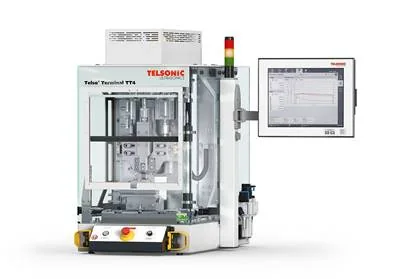
Figure 6: Telso®Terminal TT4: linear terminal welding system in the 3.6 kW class for copper cross-sections from 1 to 35
mm² and aluminum cross-sections from 1.5 to 50 mm². (Image: Telsonic)
The changeover times as well as the monitoring and self-check functions described above refer to
this platform. The TCO perspective is thus not only a purchasing tool – it can also guide how
equipment is engineered.
Checklist for TCO-oriented equipment selection
For production and purchasing teams evaluating terminal welding systems, the following questions
can help structure the comparison:1. 2. 3. 4. 5. 6. Which cross-section and application range does the system cover per power class – and
how many machines would be needed for the planned product mix?
Which interfaces are supported as standard (MES, OPC UA, Industrial Ethernet), and how
much integration effort is required?
Which process variables are monitored, and are parameters expressed in absolute physical
units?
How long does a typical application changeover take, and is it guided?
What are the replacement costs and expected service life of wear parts?
Can the system be converted for new terminal types or transferred to an automated line?
Conclusion
Under current market conditions, the purchase price of a terminal welder is a poor predictor of its
true cost. Integration effort, error rates, training needs, changeover times, wear parts and the
ability to reuse the equipment for future projects together determine its economic value. Assessing
all four cost blocks – investment, operation, maintenance and reusability – gives cable assemblers
a more reliable basis for investment decisions and helps to keep production competitive over the
full lifecycle of the system.
About Telsonic
The Swiss Telsonic Group has been offering its industrial ultrasonic solutions through
representation in Europe, America and Asia since 1966. Constant innovations help to ensure that,
in many applications, Telsonic has established a lead over competitors that offers added value to
customers. With over 300 highly qualified staff, the owner-managed company specialises
in plastic and metal welding as well as ultrasonic cleaning and sieving. All over the world,
customers in fields such as automotive, packaging and medical technology value the company’s
comprehensive services and broad range of ultrasonic components for system construction as well
as its complete welding systems. www.telsonic.com