









There is no shortage of companies claiming to be “technology driven.” In harness manufacturing, that phrase often means a new machine, a better ERP package, or another layer of software sitting on top of an old process. Senra Systems has taken a different approach. Rather than simply adding technology to traditional wire harness manufacturing, the company has spent the past three years rethinking the entire workflow, from quoting and procurement to engineering, work instructions, quality control, and production itself.
That may sound like the story of a software company, but it isn’t.
At its core, Senra Systems is a wire harness manufacturer founded by people who spent years living the frustrations of building complex assemblies under impossible deadlines. The software simply grew out of the belief that there had to be a better way.
For CEO Jordan Black, that realization began long before Senra Systems existed. Growing up in Southern California, his first exposure to manufacturing was anything but ordinary. He spent time repairing rides at the Santa Monica Pier, then worked his way through the restaurant business as a host, busboy, pizza cook, bouncer, and bartender. The experience taught him something he still believes today: manufacturing may revolve around equipment and processes, but it remains a people business.
After graduating from college in Wisconsin, Jordan worked at Ford before receiving an opportunity that would ultimately shape his future. “SpaceX reached out and said, ‘Are you looking for a job?'” he told WHN.
He joined the company’s wire harness organization, helping support internal production and supplier development before eventually leading research and development efforts for avionics manufacturing. His team worked on everything from harnesses and PCB assemblies to electromechanical systems, test racks, and machining operations.
It was there that he encountered a challenge familiar to many OEMs. “We just couldn’t get wire harnesses fast enough,” he explained. “We couldn’t get them at the quality level we needed either because we were ramping up so quickly.”
The problem, in his mind, was not simply one of capacity. Jordan learned that traditional harness manufacturing often depends on countless manual processes that consume engineering time, create opportunities for mistakes, and force skilled technicians to spend valuable hours interpreting drawings rather than building products. Eventually, he reached a simple conclusion. “I think we can do this a little bit better.”
Three years ago, that idea became Senra Systems.
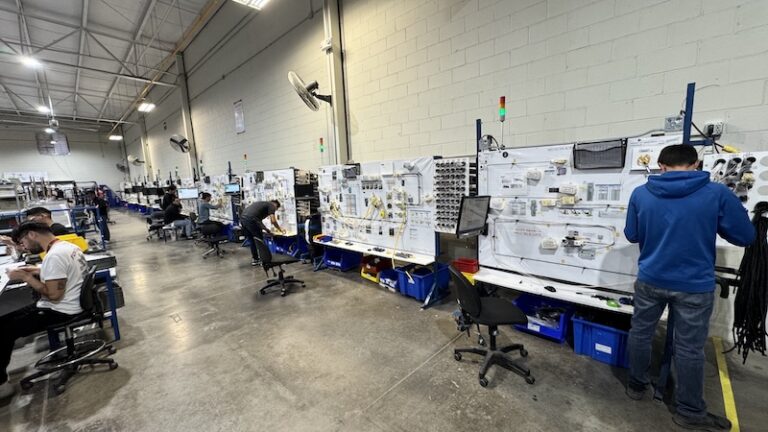
Like many startups, the beginning was humble. Jordan built the company’s first harnesses on the carpeted floor of his apartment. Today, Senra operates two manufacturing facilities totaling roughly 95,000 square feet and employs approximately 190 people, with plans for significant growth in the coming year.
Much of that growth has come from customers looking for low- to medium-volume production of highly engineered assemblies. What truly separates Senra from many contract manufacturers is the way the company approaches the entire manufacturing process.
Most harness manufacturers receive a drawing package, interpret the bill of materials, source components, create work instructions, program equipment, and then hand the documentation over to technicians on the production floor.
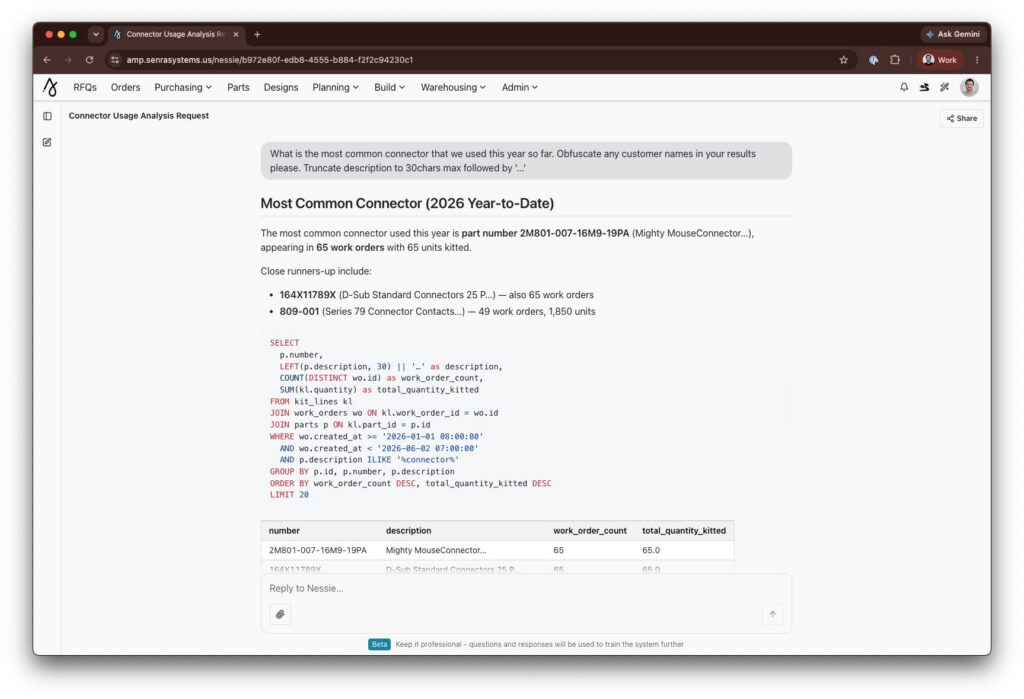
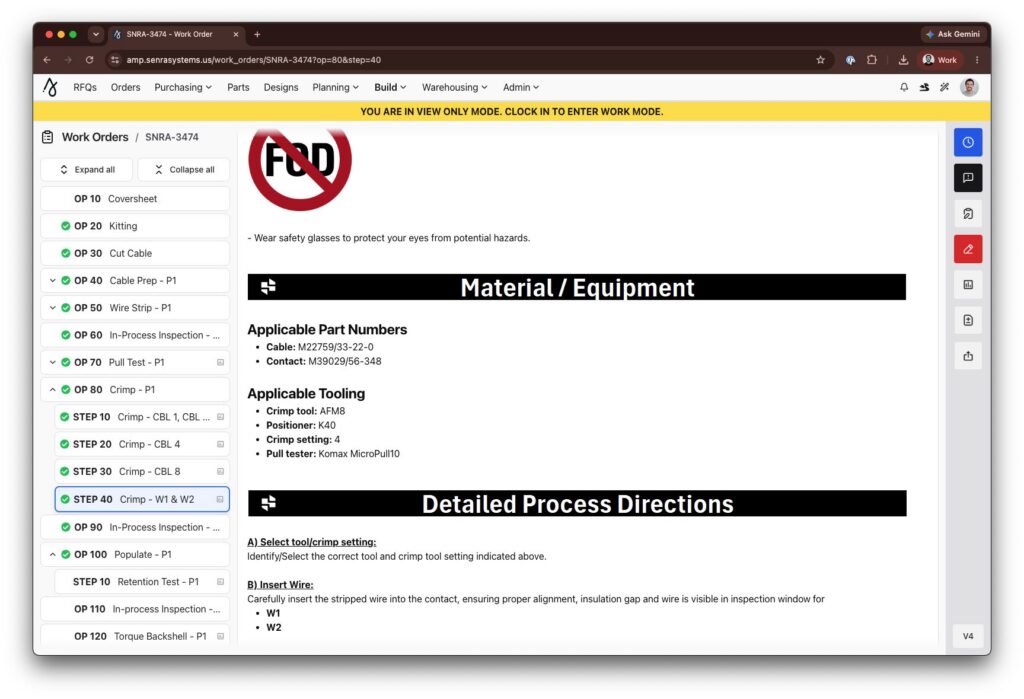
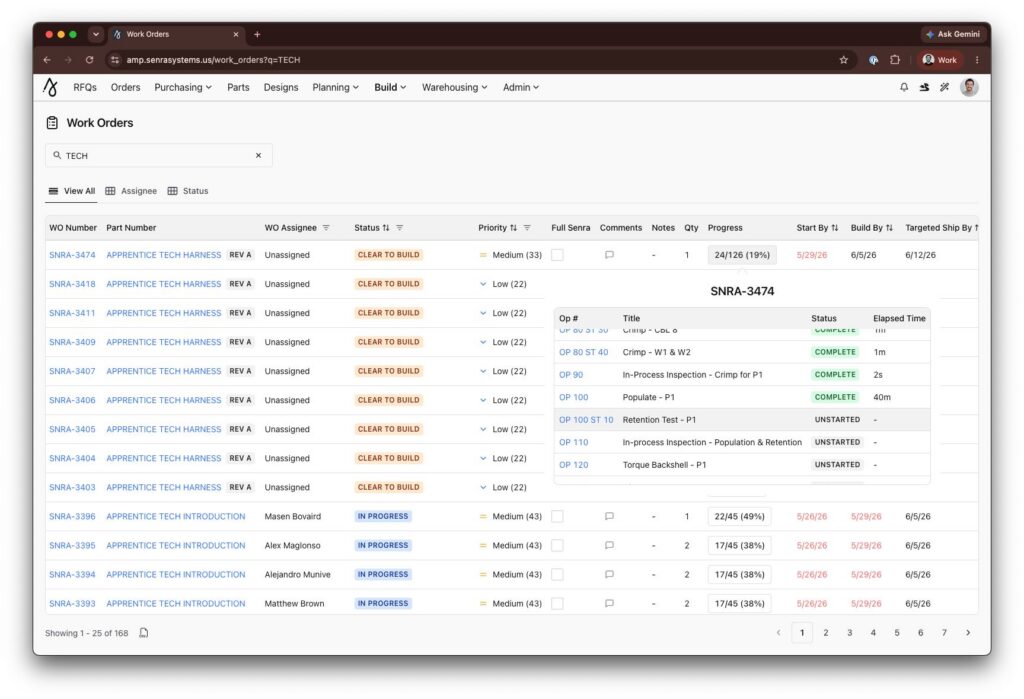
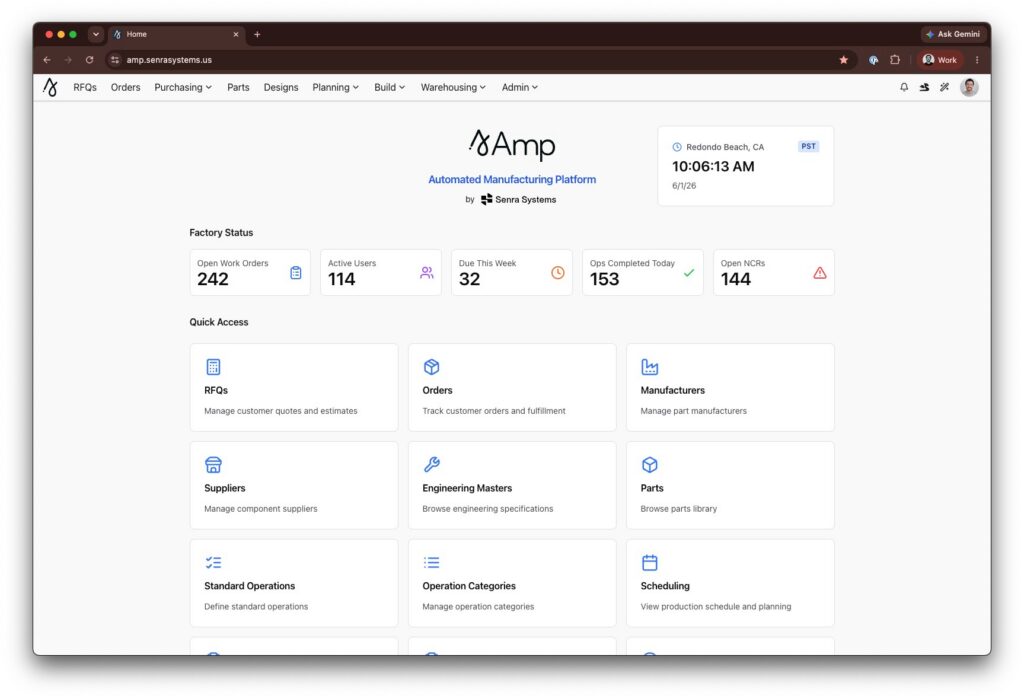
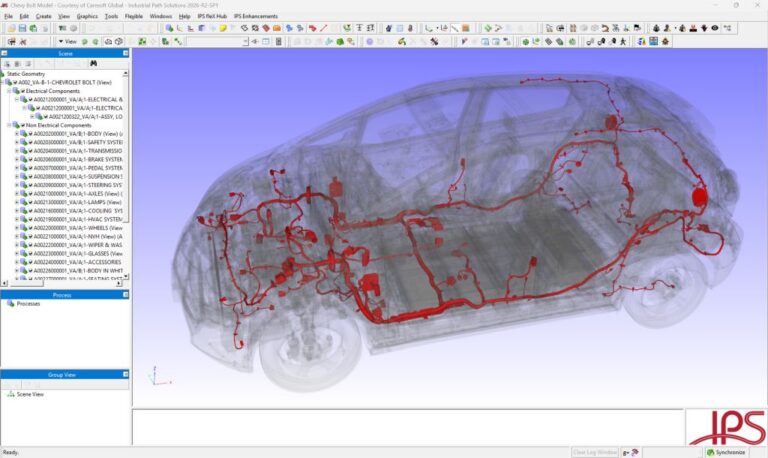
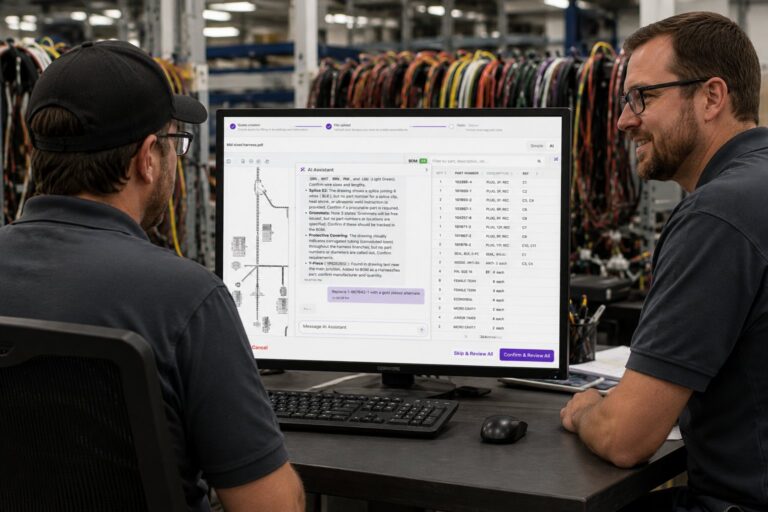
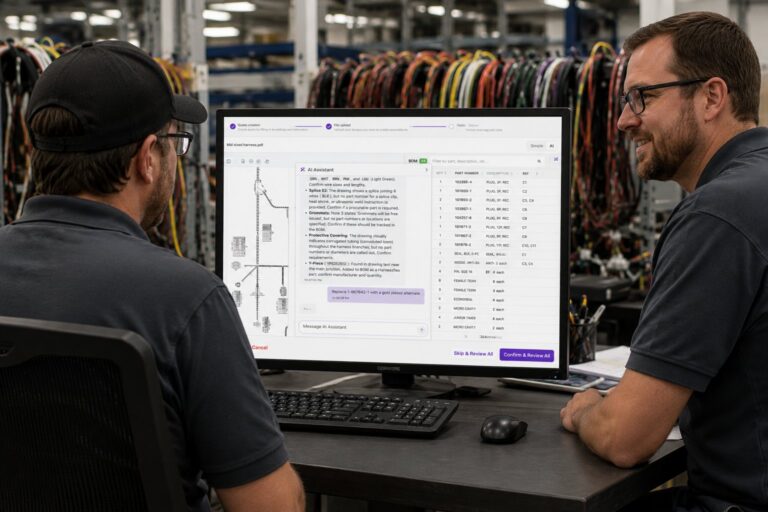
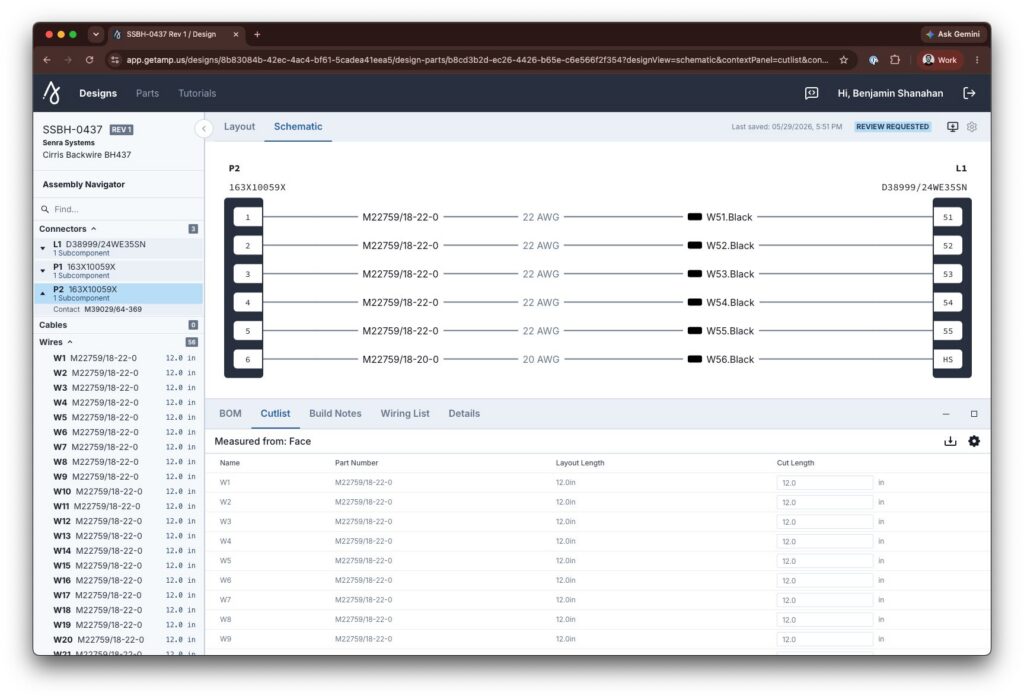
At Senra, nearly every one of those steps flows through an internally developed software platform called Amp (Automated Manufacturing Platform). Virtually every operational touchpoint in the company runs through it, with finance being the only exception. “Everything has a digital thread,” he explained. The screenshots at the end of this article offer a closer look at Amp in action.
The quoting process is where most customers first encounter what Amp can do. When a request for quote comes in, the system uses AI to read the bill of materials from whatever format the customer sends: PDF, Excel, PowerPoint, or even a napkin sketch of the harness. It parses the BOM and imports it into Senra’s part library, which carries engineering and supply chain data for every component they have ever quoted or built. From there, an API connects to online distributors and automatically scrapes current pricing, quantities, and lead times across all available sources.
At the same time, Senra’s own supplier quotes are ingested so the system can compare them against real-time distributor pricing and find the best option. Jordan showed me this during our conversation, pulling up a part number that displayed available pricing, quantities, and lead times from every major online distributor in one clean view. For parts that require manual supplier outreach, those quotes feed directly into the same comparison.
On the labor side, Amp generates its own estimates based on the complexity and quantity of the harness. The result is a quote turnaround that typically runs about a day for straightforward builds with available parts, and under two weeks when supply chain questions need sorting out.
As engineers build out the company’s internal parts library, they capture information about connectors, terminals, backshells, wire gauges, and component compatibility. The system can identify engineering conflicts, suggest alternate components, and compare distributor inventories and pricing through automated connections to supply chain databases.
The Shop Floor
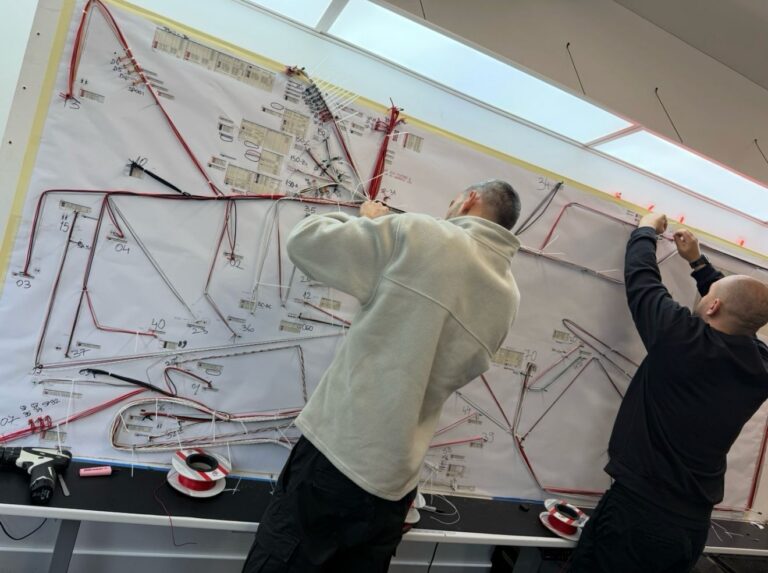
The real test of any manufacturing system is what happens on the production floor. In many shops, the process is familiar. A technician receives a drawing and figures out how to turn it into a finished harness. Senra does the opposite. Work instructions generated in Amp break every operation down to a granular level, specifying exactly which wire to cut, the precise length, and the acceptable tolerance, so technicians never have to interpret a drawing or do mental math at the bench. “I don’t want the technician having to even look at the drawing and figure out what the cable length should be,” Jordan told me. “I don’t want them writing on a Post-it note that 12 inches plus 6 inches plus 10 inches.” The instructions live on screens at each station, specific to the work order in front of them.
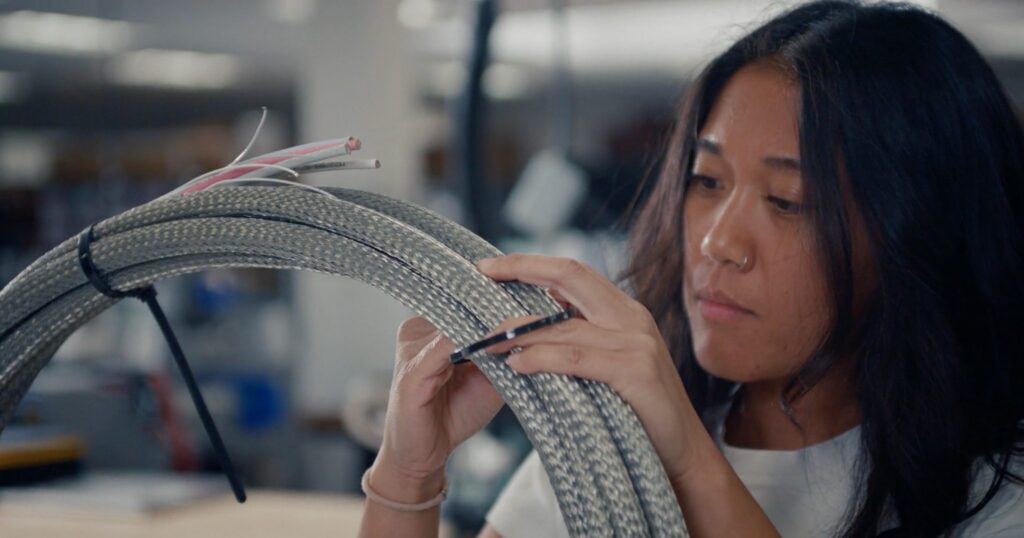
It goes beyond instructions. When a stripping operation comes up in a work order, the technician clicks a link in Amp and the system pushes the correct program directly to equipment on the floor. There is no hunting through a machine’s menu to find the right setup. One machine might run 100 different unique stripping operations, and the system handles the configuration automatically each time. Jordan described the overall approach as “configuration over automation,” meaning the platform is flexible enough to handle Senra’s high-SKU, frequently changing harness mix without requiring hard automation that would slow them down when designs evolve, as they often do in their customer base.
Quality and Continuous Improvement
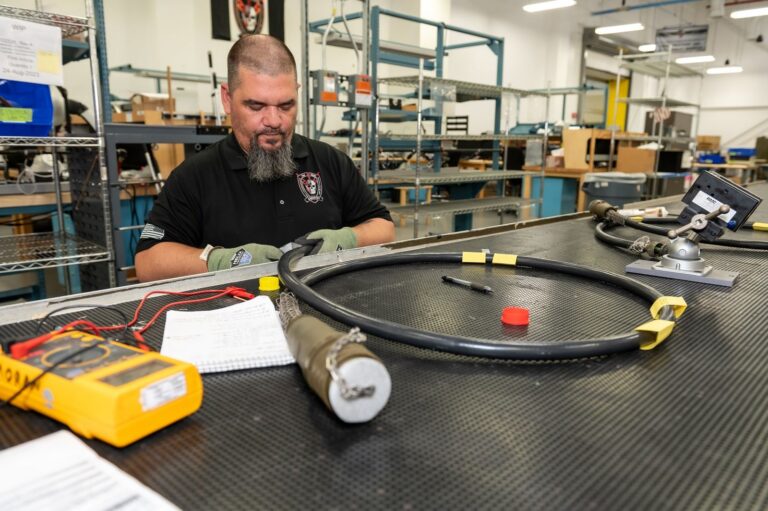
Amp also serves as Senra’s quality management system. During our conversation, Jordan pulled up an example involving melted wire insulation that occurred during a heat-shrink operation. The system tracked not only the defect itself, but the operation where it occurred, the root cause, the serial number, and the rework required to correct it. Rather than treating quality issues as isolated events, Senra uses that information to identify patterns and continuously improve instructions, training, and processes. The software also tracks the time required for individual operations, giving the company’s industrial engineering team a detailed view of cycle times and production efficiency. The result is a first-pass yield that currently stands at 99 percent.
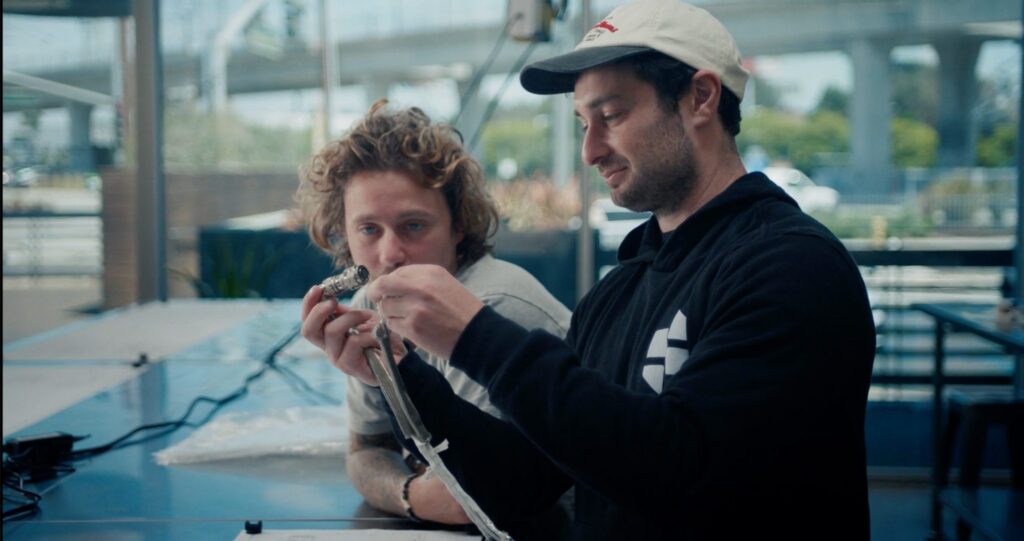
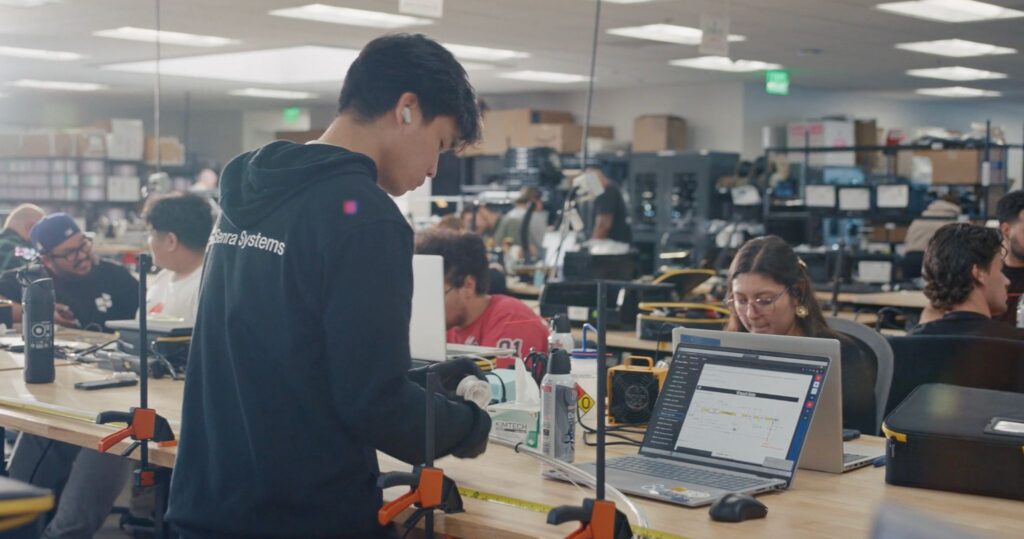
Another aspect of Amp is that a design change from the customer does not require engineers to update multiple systems or communicate revisions through handwritten notes and verbal instructions. The change flows through Amp, connecting engineering, procurement, production planning, machine programming, and quality.
Many manufacturers view automation as a way to reduce labor. Jordan sees it differently. The goal is not to replace experienced technicians. It is to remove the paperwork, interpretation, and repetitive tasks that keep them from doing what they do best.
Beyond the Build
While technology plays a major role in Senra’s operation, Jordan believes the company’s biggest differentiator may actually be its willingness to engage customers much earlier in the design process.
Rather than serving strictly as a build-to-print supplier, Senra often works alongside customers during prototype development, helping refine designs, improve manufacturability, and guide component selection before production ever begins. “We come from the OEM industry,” Jordan said. “We’re not just a build-to-print shop, we’re a partnership.”
Senra’s sweet spot right now is aerospace, defense, and industrial customers, at low-to-medium production volumes, roughly 100 to 1,000 units. The complexity of what they will tackle ranges across the board, but the quantity range is where they feel most at home. Once they build a harness for the first time, the institutional knowledge lives in Amp, and repeat runs are genuinely fast to launch. “It takes us two seconds to copy and paste in the work order,” Jordan said. “As long as we have the technician capacity and the parts, it’s very simple for us to build that harness again.”
In just three years, Senra has expanded from Jordan’s apartment floor to two manufacturing facilities totaling roughly 95,000 square feet. The company currently employs about 190 people and expects that number to climb to roughly 300 by the end of the year.
For much of the company’s existence, Senra had no dedicated business development team. Growth has come primarily through existing customers and word of mouth. As engineers, buyers, and supplier quality professionals moved between organizations, many brought Senra with them. According to Jordan, maintaining that reputation means being selective.
The company is not interested in winning business solely by offering the lowest price. Instead, it looks for long-term partnerships where both organizations can grow together without compromising quality or delivery performance.
Perhaps the most revealing part of the conversation had nothing to do with software. On the Senra website, one phrase stands out among the technical descriptions and manufacturing capabilities: “Give a damn.”
Jordan calls it the company’s guiding philosophy. “Did you do everything in your power to exceed expectations?” That question applies whether someone is working with a customer, helping a coworker, or building a wire harness on the production floor.
To explain the idea, he offers a simple example. “I call it the water cooler employee. They walk past an empty water cooler, and they replace it instead of walking by and saying it’s someone else’s job.”
Spend enough time talking with Jordan and it becomes clear that the idea extends far beyond a water cooler. It is how he hires, how he leads, and how he wants Senra Systems to grow.
Amp Screenshots:
——