







































by MK Test Systems
When people talk about battery innovation, the conversation usually focuses on energy density, thermal management, and charging speeds. These all matter, but they can overshadow a more practical question that determines whether a product succeeds outside the laboratory: how easily can the system be tested, verified and maintained throughout its life?
That question is becoming increasingly relevant as battery technology moves into new applications, including electric aviation. Conference sessions at this year’s Battery Show on battery performance, certification and system integration highlight a reality that aerospace engineers have understood for decades: Building a high-performing battery is only part of the challenge – it must also be manufacturable, certifiable and maintainable.
One of the most valuable lessons battery engineers can learn from aerospace is that testability should not be considered after the design is complete; it should be designed in from the start.
As Jason Evans, Managing Director of MK Test Systems, puts it: “Testing often gets treated as a checkpoint at the end of the process, when in reality the most successful programmes make it part of the design process from day one.”
Designing for Test
Most engineering teams have experienced the same problem at some point. A system performs well in simulation, prototypes meet expectations and validation progresses smoothly, only for production testing to expose an issue that is difficult to diagnose or access.
The problem is rarely that engineers deliberately create products that are hard to test. More often, testing requirements arrive after key design decisions have already been made.
Design for Test (DFT) addresses this by treating testing as a design requirement rather than a manufacturing activity. Instead of asking how a completed battery pack will be tested, engineers consider test access, measurement points, diagnostics and fault isolation during development.
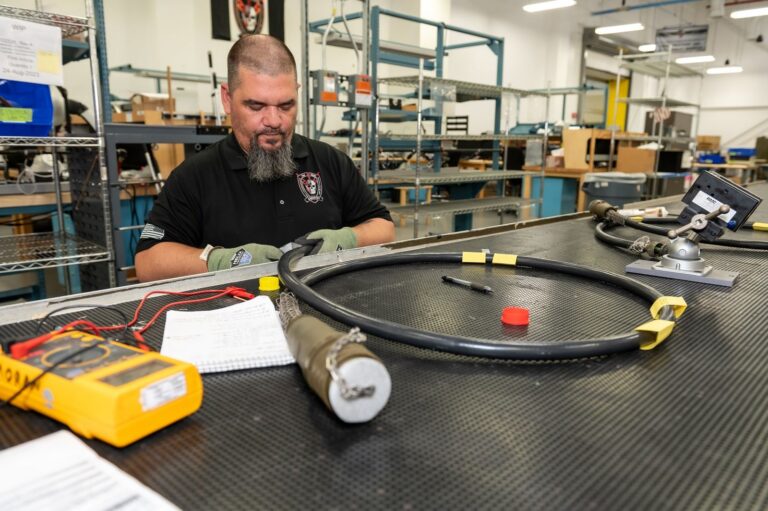
Aerospace has adopted this mindset because electrical systems must often be verified multiple times throughout manufacture and integration. Continuity, HV insulation resistance, ground bonding, HV dielectric withstand, discharge, and resistance measurements can all play a role in ensuring assemblies are fit for service.
The lesson is simple – the sooner testing is considered, the easier it becomes to manufacture and support the final product.
The Battery Is Only Part of the System
Battery developers naturally focus on cells, modules and battery management systems. Yet many real-world failures occur elsewhere.
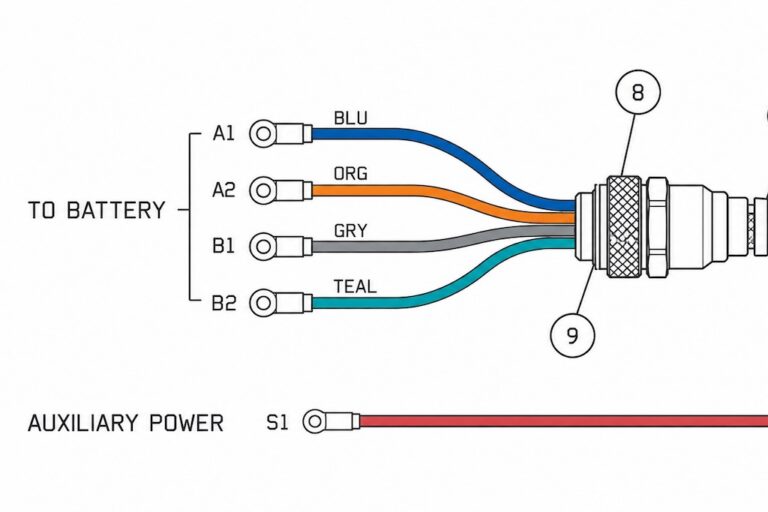
Connectors can be incorrectly mated. Harnesses can be damaged during assembly. Sense wires can be mis-routed. Communication networks can develop intermittent faults. In many cases, problems emerge at the interfaces between components rather than within the components themselves.
This is particularly important in electric aviation, where the battery forms part of a much larger electrical ecosystem. Performance depends on how effectively the battery integrates with propulsion systems, cooling systems, monitoring electronics and aircraft controls. Regulatory guidance for aircraft lithium battery systems reflects this broader focus on system safety, monitoring, maintenance and airworthiness.
For battery engineers, this means looking beyond the pack itself. Can sensing circuits be verified easily? Can communication faults be distinguished from wiring faults? Can technicians isolate problems without dismantling major sections of the system?
If those questions are answered during development, certification and maintenance become significantly easier later on.
Certification Requires Evidence
As commercial electric aviation develops, certification is becoming a major industry focus. Yet certification is about more than demonstrating that a prototype worked during testing.
The real objective is to show that every system built to that design can be manufactured consistently and perform safely throughout its service life.
Regulators are still evolving their approach to electric aircraft technologies, while manufacturers continue to navigate changing certification requirements; and this is where testing becomes particularly valuable.
Reliable test records provide evidence that assemblies were built correctly, that critical functions were verified and that systems met defined acceptance criteria before entering service. If issues emerge later, those records can help identify where and when faults were introduced.
In other words, good testing does more than improve quality – it builds confidence in the entire product lifecycle.
Balancing Performance and Practicality
Discussions about electric aviation often centre on range. The challenge is clear – maximise useful energy while minimising weight. However, performance is influenced by more than cell technology. Connectors, harnesses, cooling systems, enclosures and service access all affect the final design.
Nick Baker, Engineering Director at MK Test further explains: “This creates a balancing act – a highly optimised battery pack may reduce weight, but if it becomes difficult to inspect or diagnose then operational costs increase. Conversely, designing solely for serviceability can add unnecessary complexity.”
Aerospace engineers have spent decades balancing safety, maintainability, performance and testability. Rather than treating these factors separately, they evaluate them together. Modern aerospace design processes increasingly link schematics, harness design and manufacturing documentation to ensure decisions are coordinated across the entire system.
As battery-powered aircraft move closer to commercial reality, these trade-offs will become increasingly important.
Find Faults Early
Perhaps the most useful aerospace lesson is also the simplest: faults become more expensive the later they are discovered.
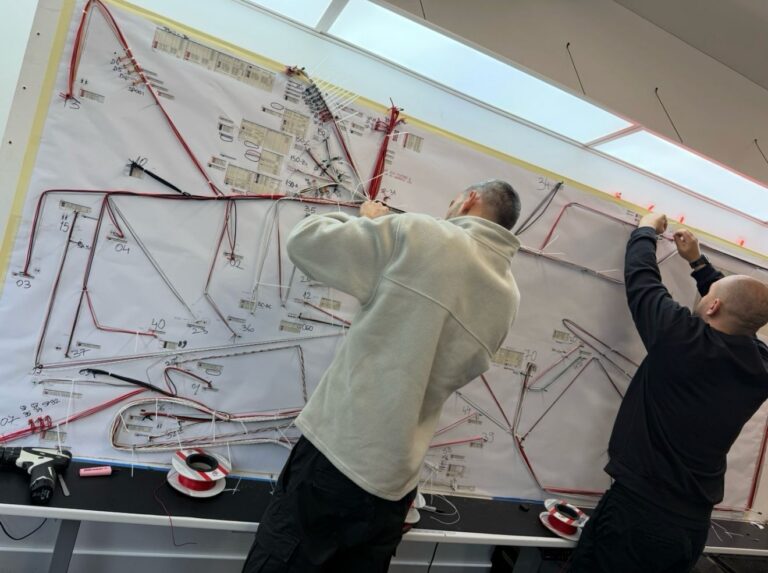
A wiring issue identified during harness manufacture may take only minutes to correct. The same issue discovered after integration, testing and qualification can trigger significant delays.
Nick Baker further observes: “A wiring issue found during harness manufacture might take minutes to correct. Find the same issue after installation or at qualification, and the fix suddenly becomes much more costly.”
For this reason, aerospace manufacturers focus heavily on identifying faults as close as possible to the point where they are introduced. Automated testing, staged verification and design-data-driven processes all help move fault detection upstream.
Battery manufacturers face the same challenge. The earlier uncertainty is removed from a system, the lower the eventual cost of quality becomes.
Looking Ahead
The battery industry’s attention will rightly remain focused on performance, range and emerging technologies. Yet as electric aviation moves from demonstration projects towards commercial operation, another factor will become increasingly important: confidence.
Manufacturers, operators and regulators must all be able to trust that a battery system has been built correctly, tested thoroughly and will continue to perform as intended.
As Jason Evans concludes: “The future of battery technology won’t be defined solely by how much energy we can store. It will likely be defined by how confidently manufacturers, operators and regulators can trust the systems built around it. The companies that succeed will be the ones that can prove that trust, every time they build a pack.” For battery pack engineers, that may be the most important lesson aerospac