



















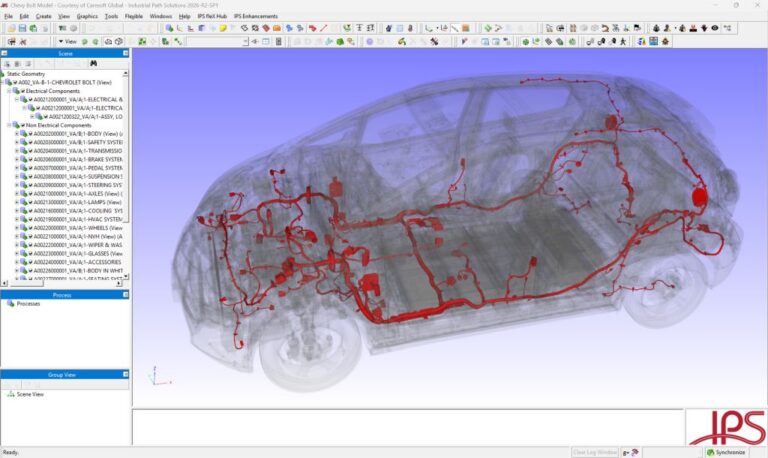











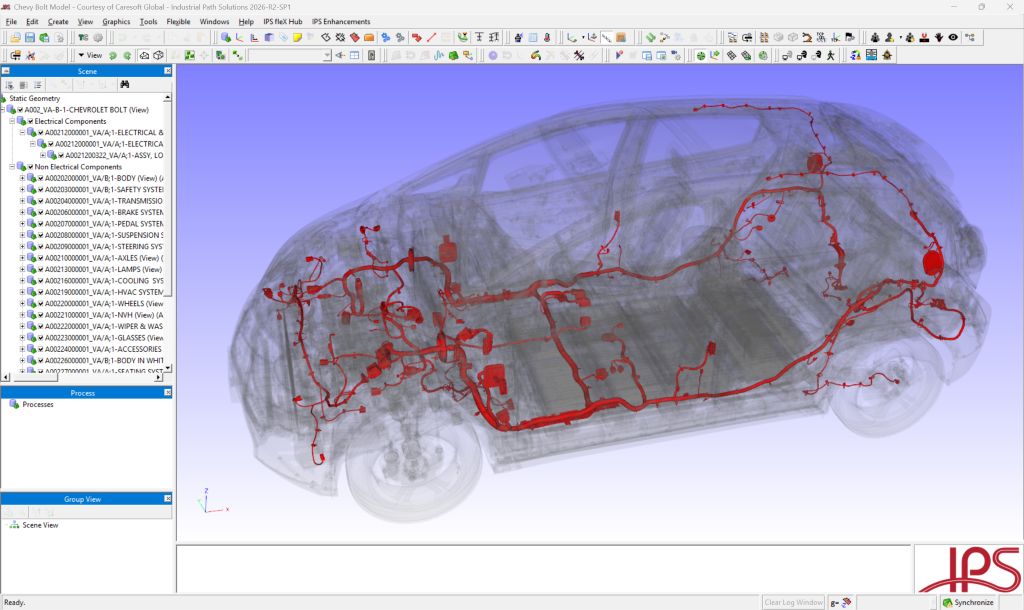
For several years, fleXstructures has been working to close the persistent gap between how a flexible component appears in a conventional CAD environment and how it actually behaves in the physical world. The company’s IPS Cable Simulation software uses physics-based models and measured material properties to simulate the behavior of cables, hoses and complete harness assemblies before physical prototypes are built.
Wiring Harness News has followed that development in two previous articles, most recently looking at how fleXstructures was extending simulation earlier into vehicle architecture decisions and further downstream toward manufacturing and assembly.
In a recent conversation with Karl Bangert, General Manager of fleXstructures North America; Daniel Dengel, Head of Business Development at fleXstructures GmbH; John Lewkowicz, Technical Lead, Digital Engineering; and David Dressler of fleXstructures, the discussion moved another step forward. The focus now is on using reliable physical data as the foundation for greater automation, optimization and, eventually, artificial intelligence in harness development.
Start With the Data
As Daniel explained, the starting point remains the quality of the simulation itself. Traditional validation has depended heavily on physical hardware, an approach that can require multiple prototypes and repeated testing. Moving those activities into the virtual environment can reduce that cycle, but only if engineers can trust the results.
IPS uses measured properties of flexible components, including cables and harnesses, stored within material libraries to create physics-based models. That provides the foundation for moving validation earlier in the development process.
The next challenge is getting accurate harness information into that environment efficiently.
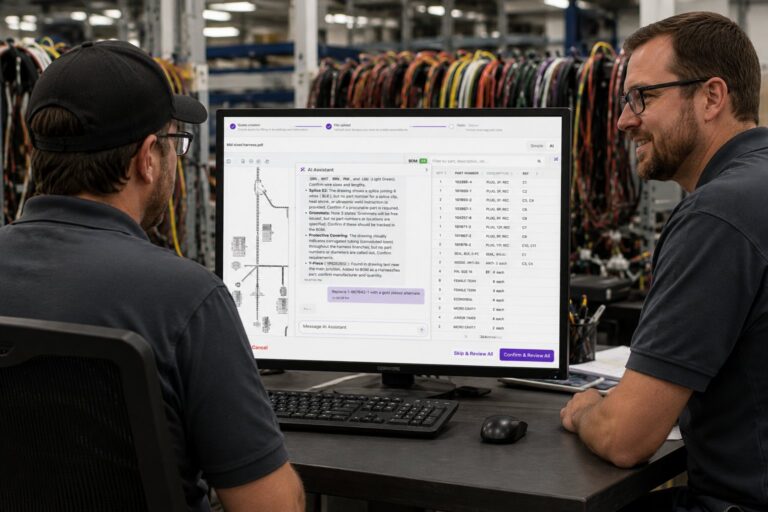
That is where .KBL and .VEC become increasingly important. These standardized data formats can carry detailed information describing harness topology and components between engineering systems. fleXstructures sees their wider adoption as an important step toward eliminating manual data transfer and creating a more continuous digital process.
The objective is to create what the company describes as a reliable “single source of truth” for development, simulation and validation. Standardized, physically validated cable and material data can then be reused across projects and vehicle derivatives rather than recreated or interpreted independently by different engineering groups.
Once that foundation is established, automation becomes considerably more powerful.
Instead of an engineer manually creating a design, testing it, modifying it and repeating the process, optimization tools can evaluate thousands of possible configurations against defined requirements. Those requirements might include harness length, clip locations, tolerances, branch positions, clearances and surrounding geometry.
Daniel described applications ranging from moving suspension systems containing multiple cables and hoses to comparatively routine harness design changes. According to support material provided by fleXstructures, automated optimization has demonstrated wire-length reductions of up to 10 percent while producing results in significantly less time.
Another new capability extends IPS into dynamic simulation. Rather than evaluating only quasi-static movement, IPS can address dynamic behavior and noise, vibration and harshness, or NVH. Engineers can examine how changes in cable routing or fixation affect vibration frequencies and potentially identify problems while the harness is still being designed.
That moves virtual validation into an area that has traditionally depended heavily on physical testing.
Where AI Fits
Artificial intelligence adds another layer, but fleXstructures is careful to distinguish AI from the optimization capabilities already available in IPS.
Karl explained that conventional optimization tends to address a relatively localized problem. Engineers establish objectives and constraints and allow the software to search for the best solution within those boundaries. AI potentially allows the system to consider a much broader set of variables and previous project experience.
That could include design assistance, faster evaluation of simulation results and recommendations for alternative designs based on established engineering guidelines. Eventually, data from previous vehicle programs could help inform the next generation of harness designs.
But AI needs reliable information from which to learn. If previous designs contain physically inaccurate assumptions, using them as training data simply carries those errors forward. fleXstructures’ position is that physically correct simulation data can provide a much stronger foundation for future AI-assisted engineering.
In that sense, AI is not replacing physics-based simulation; rather, it depends on it.
Predicting When a Cable Will Fail
Perhaps the most intriguing development discussed during the interview involves virtual lifetime prediction.
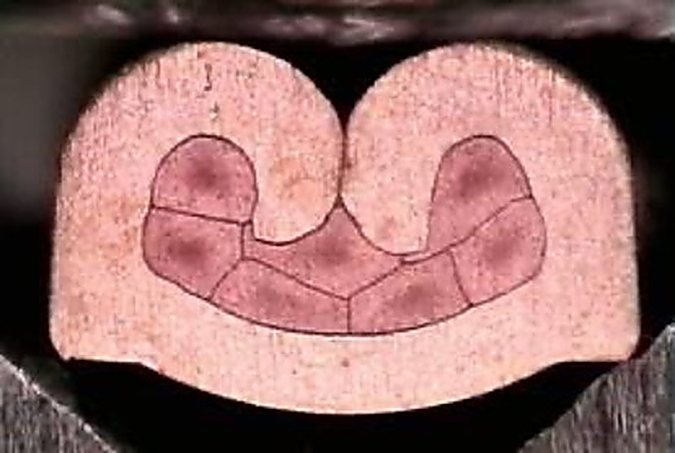
fleXstructures is working with the Fraunhofer Institute on methods intended to predict the absolute lifetime, or number of cycles to failure, of flexible components. The approach combines physical simulation with measured failure data. For a cable, for example, resistance can be monitored during physical cycling to determine when failure occurs. That measurement data can then be combined with load information generated by simulation.
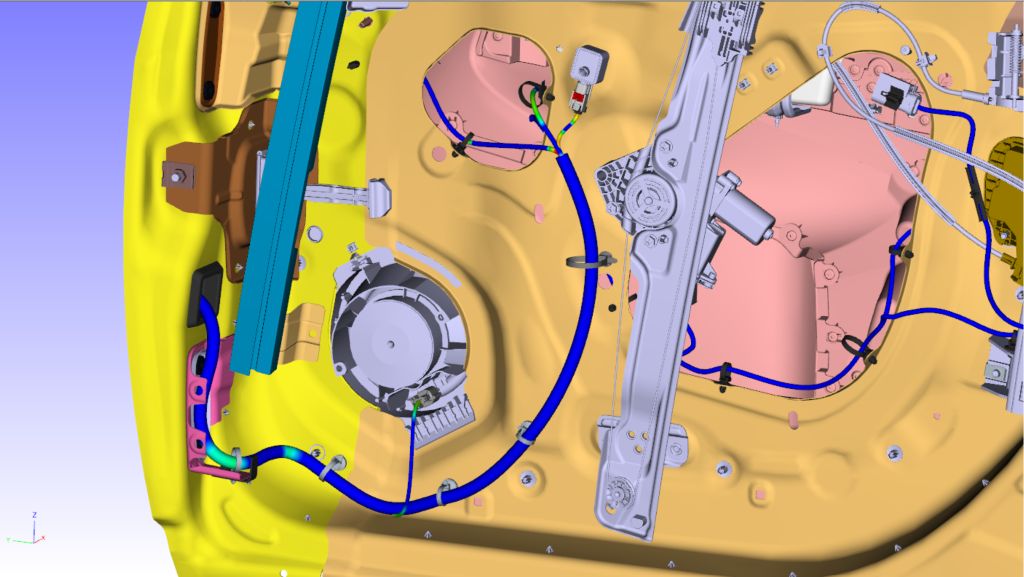
The goal is not simply to identify where a cable is most likely to experience damage, but ultimately to predict when failure will occur.
Early results discussed during the interview showed deviations between predicted and physically measured lifetime of approximately 2 to 20 percent, results Daniel characterized as very encouraging for lifetime prediction. Some capabilities, including calculations that identify the most critical damage locations along a cable, are already available commercially, while portions of absolute lifetime prediction still require project-specific measurement and development work.
Continuing the Discussion in Dearborn
These developments come as automotive electrical distribution systems continue to grow in complexity while development schedules become increasingly compressed. More variants, electrification and changing vehicle architectures all increase the number of decisions engineers must make, often earlier in a program.
fleXstructures’ approach is to build that process around physically validated data first, then use standardized data exchange, automation, optimization and AI to accelerate the engineering work surrounding it.
The company will continue that discussion at the Automotive Wire Harness & EDS Conference, October 20-21 at The Henry Hotel in Dearborn, Michigan. The event brings together OEMs, harness suppliers and technology providers focused specifically on automotive wire harnesses and electrical distribution systems.
For fleXstructures, the larger objective is becoming clear. Virtual engineering is moving beyond showing engineers how a harness will behave. Increasingly, the goal is to help determine the best design, validate it against multiple requirements and, very soon, predict how long it will survive in service.