























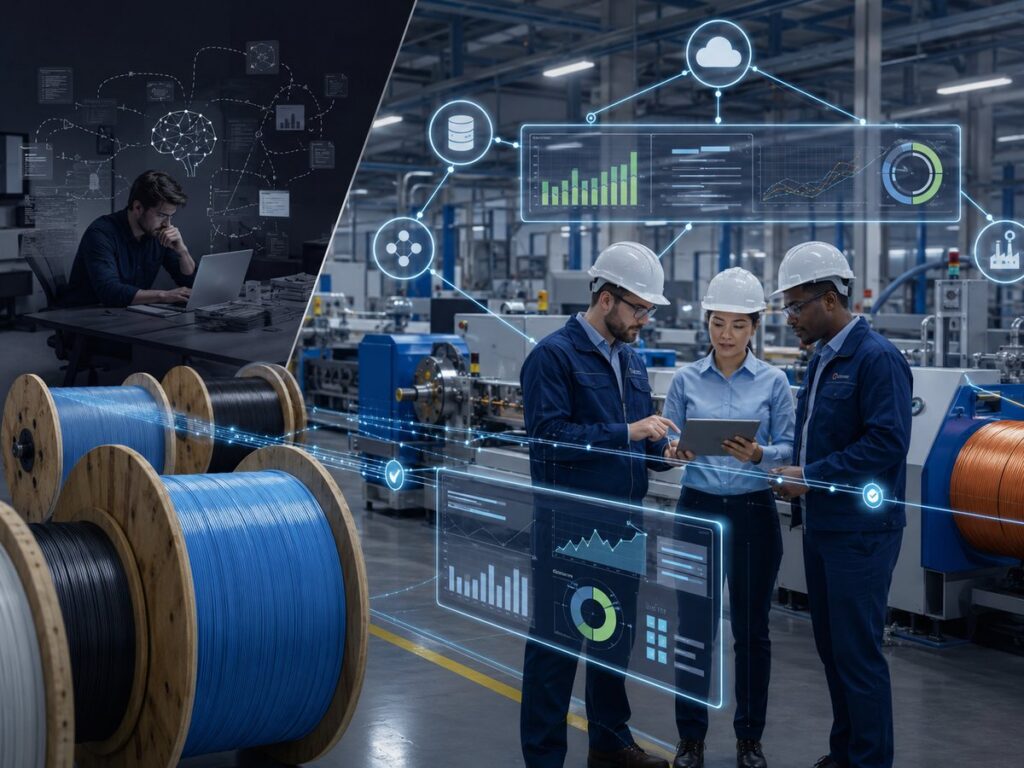
Manufacturing has seen an increase in production demands without an increase in resources. Production teams are being challenged to execute against increased cycle times while responding to unexpected changes in schedules, quality, and general operations despite ongoing labor and supply chain constraints. For wire and cable manufacturers, who depend on closely coordinated processes and consistent material control, managing these expectations by hand can become extremely challenging.
As a result, a new phenomenon is beginning to surface on the shop floor: “shadow AI”.
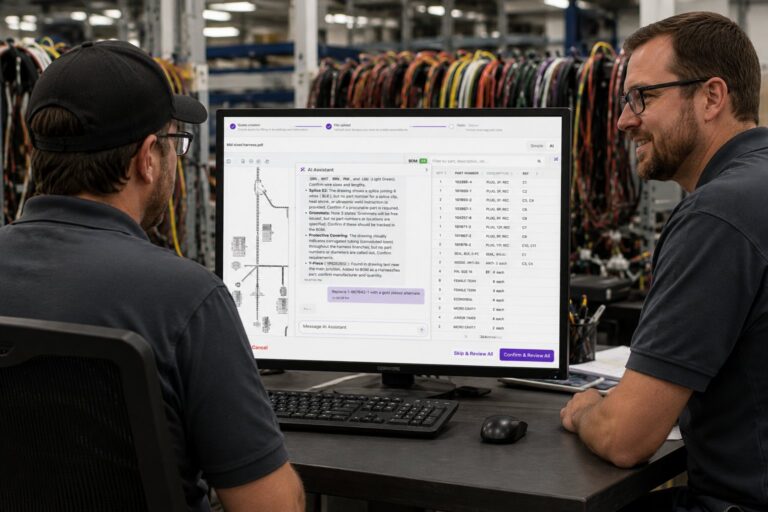
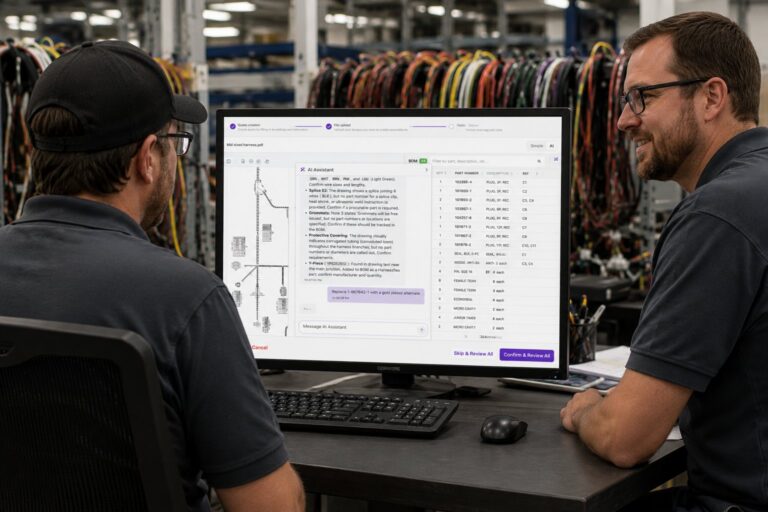
For example, a planner may produce an export of production data to a spreadsheet and then use an AI application to create a new schedule; an operator may consult a chatbot for guidance on troubleshooting regarding extrusion temperatures or line speed adjustments; or a supervisor may create a dashboard to track the movement of reels, because producing a complete view across departments is difficult. These actions are not necessarily an intention to bypass the company’s existing systems or create risk. Rather, they are intended to keep production running at a high level of efficiency.
The problem is not that there’s a technology embracement among manufacturing employees. In fact, this willingness to create some level of innovation can be positive. The issue arises when employees utilize unofficial tools to create solutions to operational issues out of standard work processes, disconnected from real-time production data, and without reporting to management.
For manufacturers, especially those navigating modernization initiatives, shadow AI is less of a technology problem and more of a systems problem. It reveals a growing gap between the operational demands placed on teams and the digital infrastructure available to support them. The conversation around AI in manufacturing often focuses on what the technology might achieve in the future. But on today’s shop floors, the more immediate question is whether the underlying production environment is structured well enough to support reliable automation at all.
Why Shadow AI is Emerging in Wire & Cable Manufacturing
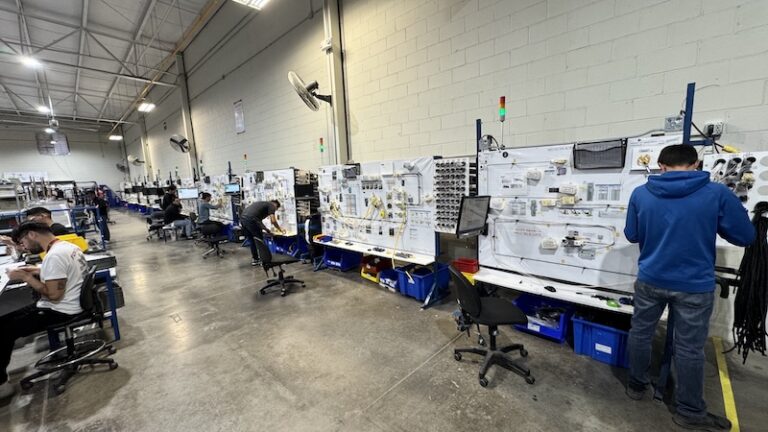
Companies operate with an emphasis on precision, timing, and coordination; this means that even the slightest disruption will have downstream effects, resulting in delays in production, waste, or poor quality in the materials manufactured. Unfortunately, many manufacturers still rely primarily on manual processes, disjointed spreadsheets, and older systems that were never designed to facilitate real-time visibility across the production floor.
The gap that results from this environment is often where shadow AI emerges.
When employees cannot quickly find the information they require to do their jobs, they will look for faster means to resolve issues. In the case of wire and cable specifically, these workarounds can multiply rapidly because of the reliance on production processes. Within a manufacturing environment, parameters can have a major impact on the production schedule and process execution. A single outdated routing or missing production update can create confusion across multiple work centers.
A rising need to sustain throughput and delivery performance has resulted in many workers utilizing external tools because they are both publicly available as well as quick/easy to access. Outside AI tools provide immediate answers, summaries, and/or organizational support—all of which are lacking in most production types. While these third-party tools can assist with productivity on an individual level, they also expose the organization to the risk of operational inconsistency when used outside of validated manufacturing systems. This is where the conversation really begins to shift from AI to something more fundamental and foundational, which is data integrity.
The Bigger Risk Isn’t AI. It’s Bad Data
AI has quickly become one of manufacturing’s most discussed technologies, but many conversations skip an important reality: AI does not create operational accuracy on its own. It depends entirely on the quality and consistency of the information it receives. For wire and cable, that distinction matters. Every day, production environments generate a massive amount of operational data: material usage, quality inspections, labor reports, downtime events, routing updates, and traceability records. When this data is standardized and connected, it becomes a valuable operational resource. When it’s fragmented across spreadsheets, paper documents, different software, or “legacy knowledge,” it becomes very difficult to trust at scale.
This is where shadow AI can unintentionally create greater manufacturing challenges. When an operator references incorrect setup data derived from an incomplete production history, the issues may not manifest immediately. However, over time, errors accumulate, leading to increased scrap rates; greater difficulty in identifying scheduling conflicts; and longer investigations into quality issues due to missing or dispersed traceability records. Relatively small data inaccuracies can have major operational ramifications. Incorrect insulation specifications; outdated conductor measurements; no lot traceability on raw materials used; or inconsistent tracking can all result in compromising production quality, as well as compliance standards. If a manufacturing environment does not have standardized processes, then AI will be unable to independently identify which data is trustworthy.
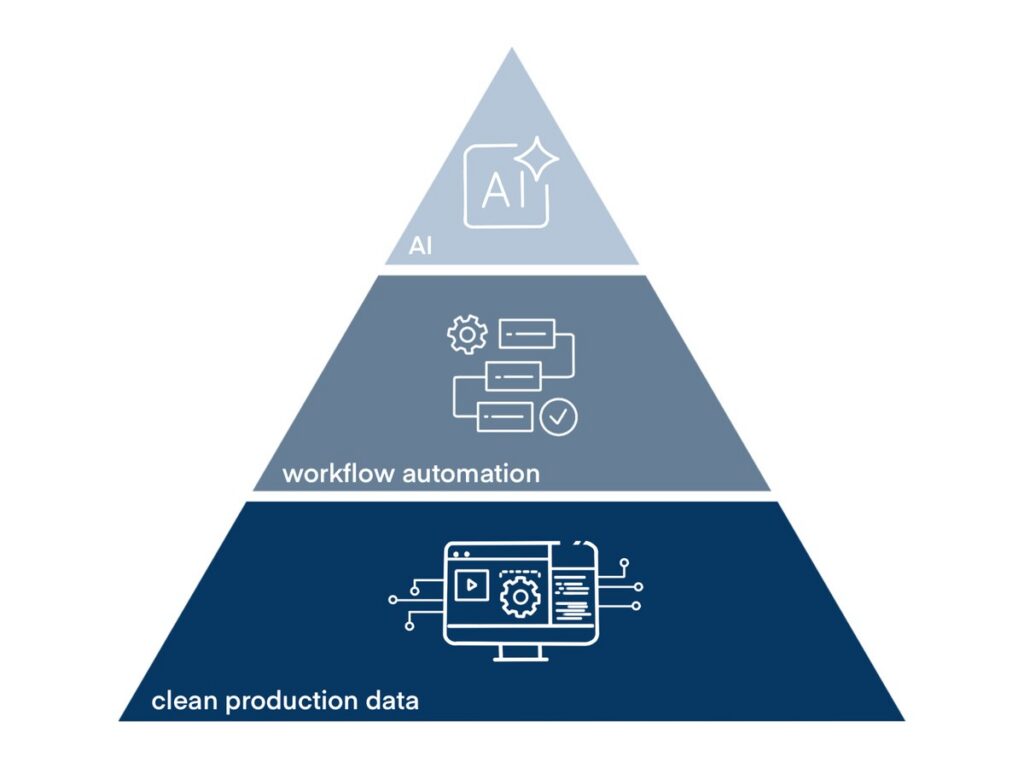
This is why successful modernization efforts begin with operational discipline before advanced intelligence. It is critical to establish an accurate and reliable production environment initially, as this will help ensure that AI is a viable source of accuracy and reliability. By establishing a solid foundation for accurate and reliable data, manufacturers can develop solid frameworks for adding AI to their processes.
Why Smaller Manufacturers Need Practical Automation First
Small to midsized manufacturers often feel overwhelmed by the pressures of modernization. Discussions in the industry tend to focus on cutting-edge artificial intelligence efforts, predictive-analysis trends, and the existence of completely autonomous operations (suggesting that manufacturers need to be able to completely remake themselves in order to remain competitive).
In actuality, most operational improvements start off with something a little more basic: removing friction from everyday activities that make it more difficult for production teams to operate efficiently. For example, your employees may spend valuable time managing repetitive administrative tasks that do little for operational performance. For instance, they manually enter production update information into several different systems; schedulers may chase status updates from across departments; operators may use set-up information recorded on either handwritten notes or spreadsheets; quality documentation gets collected after production has occurred, rather than during production; and supervisors waste time searching for information rather than using that information to improve their processes. Although all these inefficiencies may seem individually insignificant, any one of them can create operational drag when multiplied by the others and compounded throughout an entire company.
This is where built-in manufacturing automation becomes especially valuable. Instead of using the types of disconnected software scripts, individual spreadsheets, or unverified AI programs, embedded automation, built into a manufacturing execution system, operates directly within the production environment itself.
For wire and cable manufacturers, that can translate into meaningful day-to-day improvements:
- Automated work order creation and release
- Real-time production status updates
- Digital routing enforcement across production stages
- Material traceability tracking
- Automated notifications for approvals or production changes
- Integrated quality checkpoints during extrusion or testing processes
- Visibility into performance and downtime trends
These types of automations may not generate headlines in the same way as emerging AI technologies, but they often deliver immediate operational impact because they address the core inefficiencies employees experience every day. When the production teams know that they will have reliable visibility, easy access to data, and that they will be able to share information electronically with other users, they have no reason to develop alternate ways to get work done. This results in the employees using less time creating manual fixes and more time on production, quality, and improvements.
MES as the Foundation for Responsible AI Adoption
AI is transforming manufacturing, but as companies use AI they’ve come to realize the companies that will benefit most from AI are those with strong operational infrastructure. AI is not a replacement for a manufacturing structure. It depends on it.
A Manufacturing Execution System (MES) is critical in today’s manufacturing strategy. Companies looking to scale their business will first need a foundation for accurate, connected, and traceable production data. For wire and cable manufacturers, it’s especially important to have a strong level of control over all aspects of your production, as well as to have accurate production data throughout the entire manufacturing process. Data related to material consumption, process order routing, quality control, and production status must match from when the order is released up through when it is shipped.
An MES provides the ability to consolidate and standardize these workflows into one operational environment. Manufacturers gain the ability to look at production activity on the shop floor in a connected way instead of through disconnected spreadsheets, notes, or software systems. This is where responsible automation begins to take shape. When production systems are connected, you can introduce automation in ways that remain controlled, traceable, and aligned with your operational goals. Instead of employees building individual workarounds outside the system, the system itself becomes the operational support structure. The functionality that these capabilities bring to manufacturers creates greater efficiency today as well as cleaner operational datasets for future AI initiatives to leverage tomorrow.
About CIMx Software
At CIMx, this philosophy has shaped the development of Quantum from the beginning. Rather than approaching modernization as a collection of disconnected tools, Quantum is designed to create a unified production environment where visibility, automation, and operational consistency work together. With more than 100 built-in automations, manufacturers can streamline workflows, reduce manual administrative burdens, and improve process reliability while keeping operational data centralized within a single system.
As the continuous evolution of AI continues through manufacturing, there are new technologies and opportunities for manufacturers to explore; however, sustainable modernization is not focusing on replacing people or chasing trends; it focuses first on establishing trustworthy operational systems for employees, reliable datasets, and workflows capable of scaling with the business.
To find out more about how you can support your production team with Quantum, visit www.cimx.com or email Jack Johnson at [email protected].