











The first Cable & Wire Harness Competition ever held in the United States brought plenty of attention to the show floor at this year’s EWPTE in Milwaukee.
Organized by WHMA and the Global Electronics Association, the competition challenged wire harness technicians to build a functional assembly under tight time limits while meeting IPC/WHMA-A-620 workmanship standards. The event combined speed, accuracy, craftsmanship, and nerves, all while a crowd gathered around the competition area watching every move.
By the end of the event, one competitor stood above the rest.
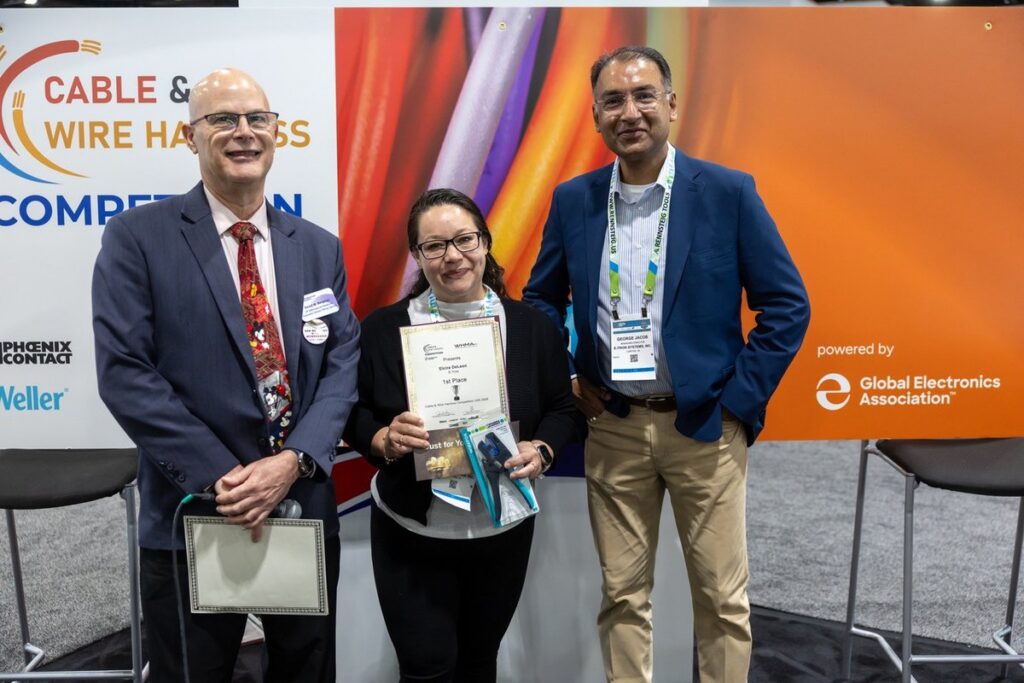
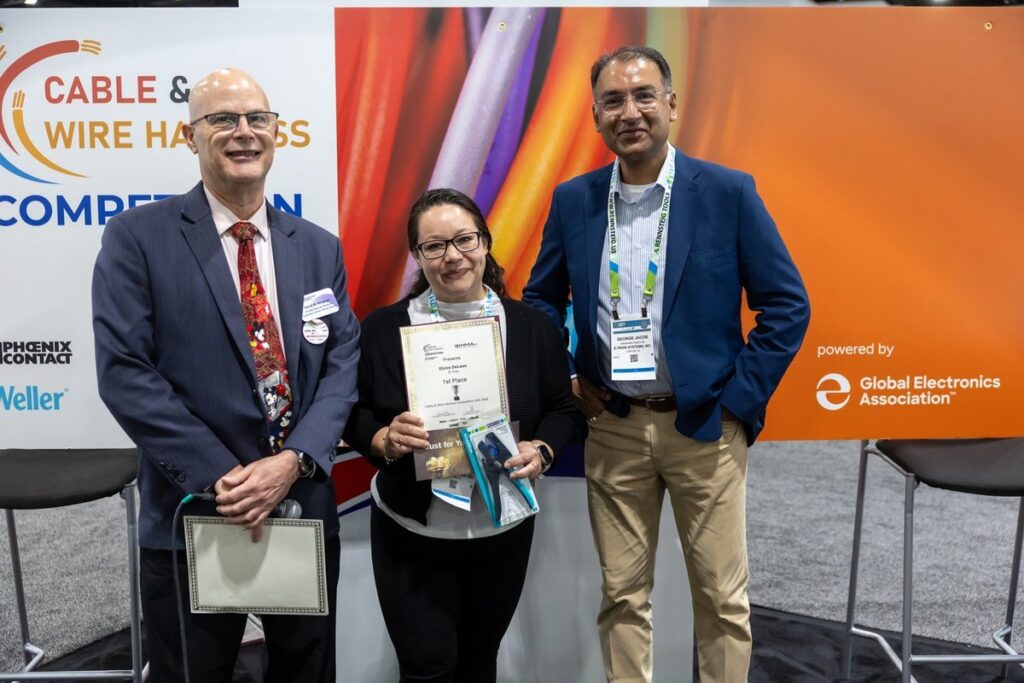
Elcira DeLeon of E-Tron Systems earned first place in the inaugural U.S. competition, taking home the top honors after turning in the winning assembly under the same demanding conditions faced by every contestant.
Second place went to Dennis Delaney of Custom Wire Industries, while Christopher Rios of Senra Systems captured third.
For Elcira, the win represented far more than simply working quickly with tools and terminals.
An electronics assembler at E-Tron Systems since July 2023, Elcira primarily works in wire and cable harness assembly and also assists with quality processes in production. With 10 years of industry experience, she is known for attention to detail, strong focus, and the ability to quickly absorb information.
Those strengths were on full display during the competition.
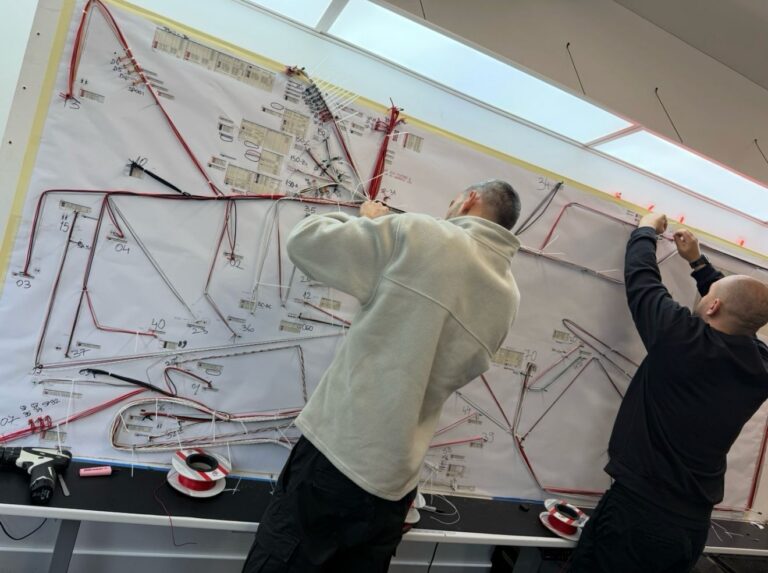
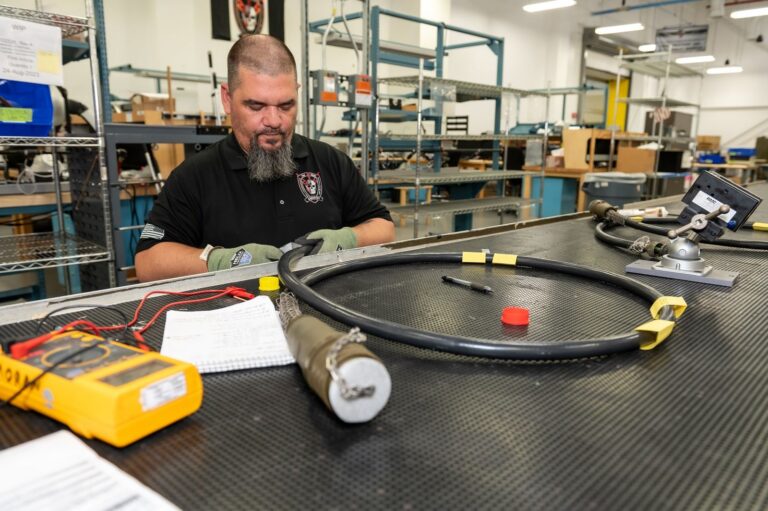
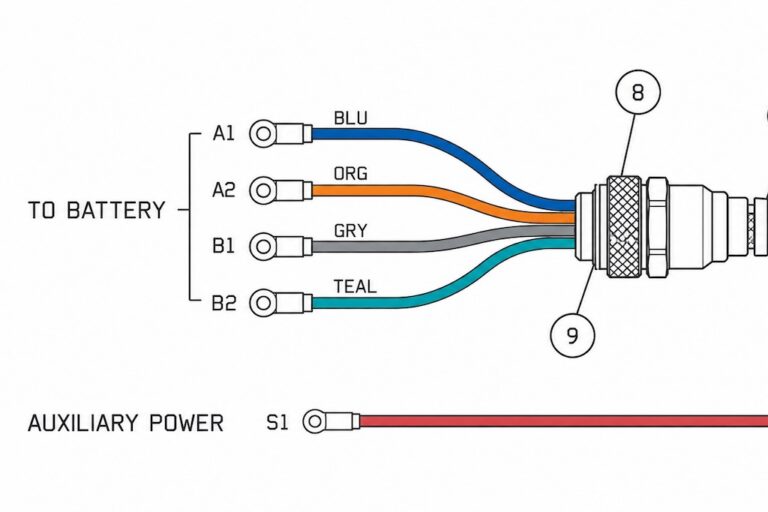
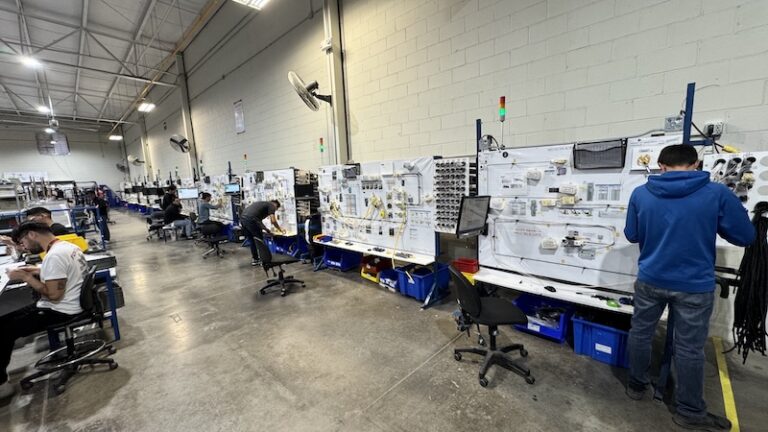
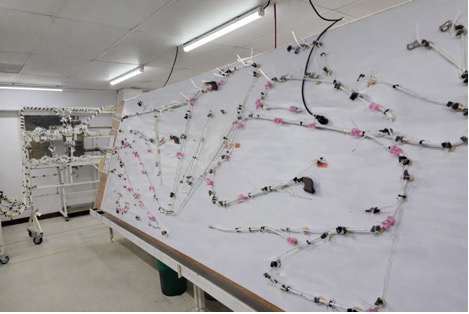
Contestants were required to complete a harness assembly using identical materials, tools, drawings, and documentation while racing against the clock. Tasks included wire preparation, stripping, crimping, soldered terminations, splicing, connector insertion, routing, dressing, BOM verification, and final inspection.
Assemblies were judged according to IPC/WHMA-A-620 requirements, the globally recognized workmanship standard for cable and wire harness manufacturing.
Kris Robertson of Best Inc. served as the event judge. Kris is an IPC/WHMA-A-620 Master Instructor and evaluated entries based on workmanship quality, electrical functionality, cleanliness, and completion time.
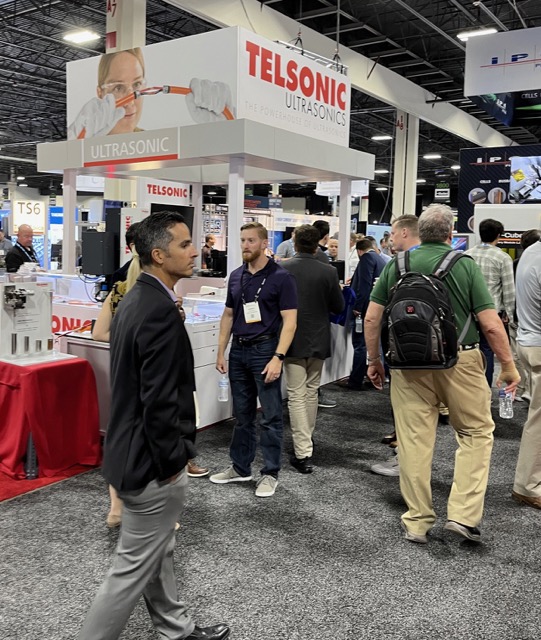
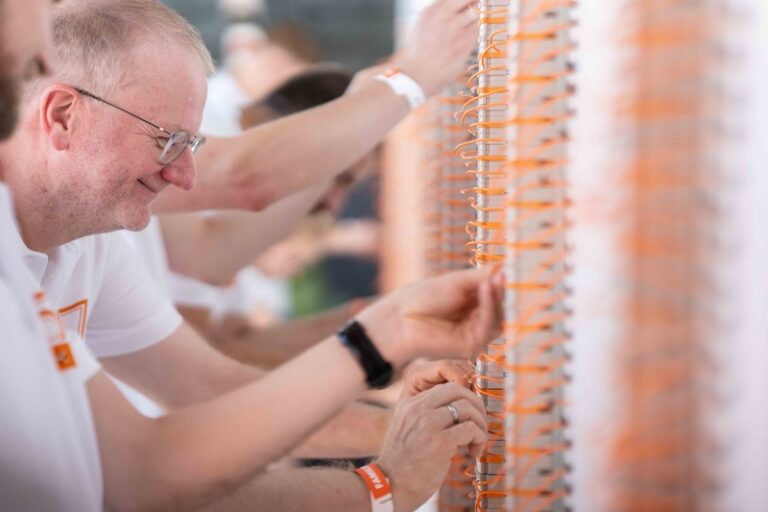
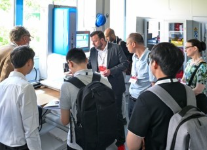
The competition area became one of the busiest gathering spots on the EWPTE show floor. Attendees stopped to watch competitors work through the assemblies while judges carefully evaluated quality, cleanliness, electrical functionality, and completion time.
Similar in concept to IPC’s well-known hand soldering championships, the cable and wire harness competitions were created to showcase the technical skill involved in modern harness manufacturing while also promoting workforce development and standardized workmanship practices throughout the industry.
The roots of the program go back more than a decade.
During EWPTE, Wiring Harness News spoke with David Bergman, Vice President of International Relations for the Global Electronics Association, about how the competitions evolved from IPC’s international hand soldering championship program.
“We started with the hand soldering competition,” David explained. “The objective from the organization standpoint was to highlight the industry standards, the certification programs, and to have something interesting going on at the trade show. The response was overwhelming.”
According to David, the soldering competitions eventually spread throughout India, Southeast Asia, and other regions before organizers began exploring a similar concept for the wire harness industry. “As we got more engaged with WHMA and the certification program for 620 grew, we said, ‘Why not do a wiring harness one?’” he said.
The first harness competitions were launched internationally before finally making their way to the United States this year.
David credited Philippe Léonard, Europe Director for the Global Electronics Association, with helping bring the inaugural U.S. event together.
Philippe has been heavily involved in organizing both the IPC hand soldering championships and the newer cable and wire harness competitions across Europe and internationally. During EWPTE, he explained that the competitions now span multiple regions around the world.
“We are actually delivering 20 regional qualifications all over the planet every year,” Philippe said. “So it means that we have 20 champions every year.”
Those regional winners now feed into an international championship held during electronica in Munich, Germany.
According to Philippe, organizers hope the cable and wire harness competition follows the same trajectory as the hand soldering championship program, which has grown substantially in visibility and participation over the years.
“This is the first time that we are doing this cable and wire harness competition” in the U.S., Philippe said during EWPTE. “We had 16 sessions offered to the participants during these two days, and by Tuesday, all 16 sessions were taken. So we are fully booked.”
One of the major goals behind the competitions is workforce development.
Organizers say the events are designed to elevate the visibility of skilled assembly technicians while encouraging younger workers to view electronics manufacturing as a highly technical trade requiring precision and craftsmanship.
“It gives visibility to the people who have the skills, those experts that we never discuss about,” Philippe said. “It gives a good idea of why education, training and certification is so important.”
For companies like E-Tron Systems, the event also served as an opportunity to showcase the talent already working inside the industry.
Elcira’s win helped put a spotlight not only on her own abilities, but also on the level of skill and workmanship required every day in modern harness manufacturing.
If the reaction at EWPTE is any indication, the competition is likely to become a regular attraction at future events.
The combination of technical precision, time pressure, and visible craftsmanship created exactly the kind of energy organizers hoped for when they first brought the concept to the U.S.
And for one afternoon in Milwaukee, Elcira DeLeon proved she had the fastest and steadiest hands in the building.