









By Joe Tito –
Sometimes a good story comes from a trade show, a referral, or a scheduled interview months in advance. This one came from dinner with friends.
Some dear friends of ours recently joined a new church and, during a social event after the service, found themselves chatting with Jason Starkey. After the usual introductions, they learned he was in the wiring harness business. They mentioned that a friend of theirs was editor of Wiring Harness News. Jason knew the publication well, as he is both a subscriber and a fan. The real surprise came a few moments later when they discovered his company, Starkey Products, was located in DeBary, Florida, about three miles from my house. Jason himself lives about a mile away.
When they told me about this encounter, I knew I had to reach out.
When I arrived at Starkey Products, it was clear this was not a company that fit neatly into a single category. It is part direct-to-consumer automotive aftermarket brand, part contract manufacturer, part product developer, all rolled into a practical harness shop.
Jason was quick to describe Starkey Products as unusual in the wire harness world. A large share of the business comes from products sold under their own brand, mostly automotive lighting kits and adapters sold through the company website, Amazon, eBay, and a growing dealer network. The rest comes from contract manufacturing, where customers provide drawings or concepts and ask Starkey to build a wiring solution.
That mix is interesting enough by itself, but the way the two sides feed each other is what makes the company especially compelling. Many of the contract opportunities come because customers first saw Starkey’s own aftermarket products. They recognize that Jason and his team understand vehicle lighting, OEM connectors, adapters, installation issues, and the needs of the end user. Then they ask if Starkey could build something similar or modify an existing product for a specific application.
As Jason explained it, “We’ll sell a direct-to-consumer product, like an adapter, and we will get approached by companies and they’ll say, ‘can you make a few modifications to this and then produce it for us?’” Two of the company’s largest customers came through that path. The consumer product line has created visibility, and the contract work follows.
The story behind all of this started long before there was a company. Jason’s mom raised both he and his brother Justin. “If we wanted something, we kind of had to earn it ourselves,” he recalled. Justin, five years older, had an entrepreneurial streak early on. Around the late 1990s and early 2000s, when eBay was still a bit of a Wild West, he began selling computer parts.
Justin eventually saved enough to buy a Mustang, and that led him into making parts for them. One of those products was a fog light wiring harness kit that allowed owners to add OEM-style fog lights to their cars. The harnesses were simple. Wire was cut by hand, Delphi hand tools were used, and the kits were built in the back room of the house. Jason was about 12 or 13 when his brother put him to work building them. “He couldn’t afford to pay me much,” Jason laughed, “but the experience he gave me was priceless.”
Justin would go on to play an important role in Jason’s early career, giving him opportunities and guidance that shaped the path. “He has always looked out for me and employed me more than once.”
A few years later Jason went to work at Superchips in Sanford, Florida. He started in tech support at 18 and gained exposure to manufacturing, product distribution and dealing with retail customers. That experience gave him a broad view of how an automotive aftermarket company could function.
Around 2009, Superchips went through a large layoff. Jason kept his job, but the experience made him think seriously about diversification. His brother had not pursued fog light kits for newer Mustangs, focusing instead on performance parts rather than appearance upgrades. The electrical systems had become more complex, and his experience with Justin had given him a working understanding of automotive electronics. Jason saw an opportunity.
For a while, he worked both jobs. He would put in his time at Superchips, then go home to answer tech support calls, build harnesses in his living room, and ship them out. After about a year and a half, he quit Superchips and took the leap.
Like many small business stories, the early version was not glamorous. It was long nights, trial and error, and learning by doing. Jason did not come from a formal wire harness manufacturing background. He did not have an electrical engineering degree. He described much of his path as “school of hard knocks.” Still, the business grew, and over time the product line expanded beyond Mustang fog light kits. “I didn’t start out knowing how to do this…I just figured it out over time,” he said.
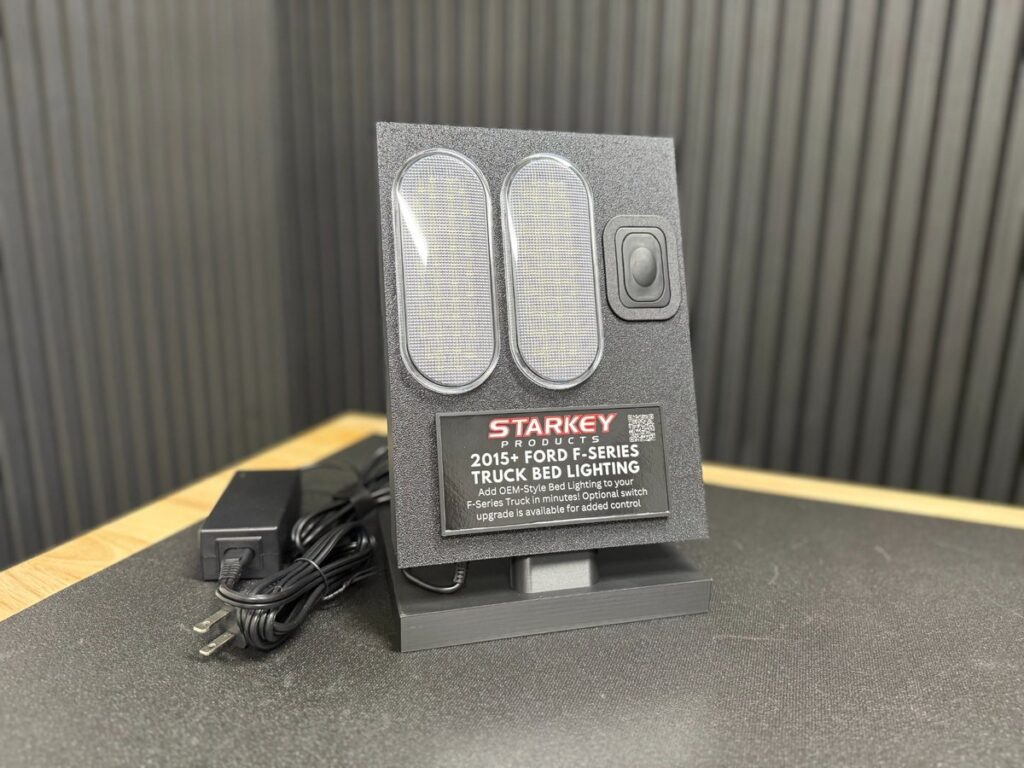
Today, the truck market is especially important to Starkey Products. The company’s flagship product is an F-150 bed lighting kit for 2015 and newer trucks that did not come with factory bed lights. Depending on the model year, the kit includes an adapter or harness, OEM-style plugs that connect to the bed lights, the lights themselves, and everything needed to complete the installation.
That may sound straightforward, but Jason sees the company’s advantage in the details. Some competitors source and resell parts. Starkey builds the harnesses in-house, understands why they are built the way they are, and knows how they integrate with the vehicle. That knowledge shows up not only in the product, but also in the support.
Starkey still has a phone number customers can call, something Jason joked is not always the case with competitors. Most communication comes through email, chat, or Amazon messages, but the company makes a point of helping the end user before support is even needed. For newer and more complicated products, Starkey creates detailed instructions and installation videos.
One recent example is a fender vent lighting kit for F-150s, with a Super Duty version also in development at the time of our visit. The product illuminates the factory fender vent without removing the vent, cutting, or splicing wiring. The company provides a full installation video showing the process. Jason sees that as something low-cost overseas imitators can’t easily duplicate. “They may be able to copy a product, but they cannot stand behind it with the same level of vehicle knowledge or customer support.”
Walking the Floor
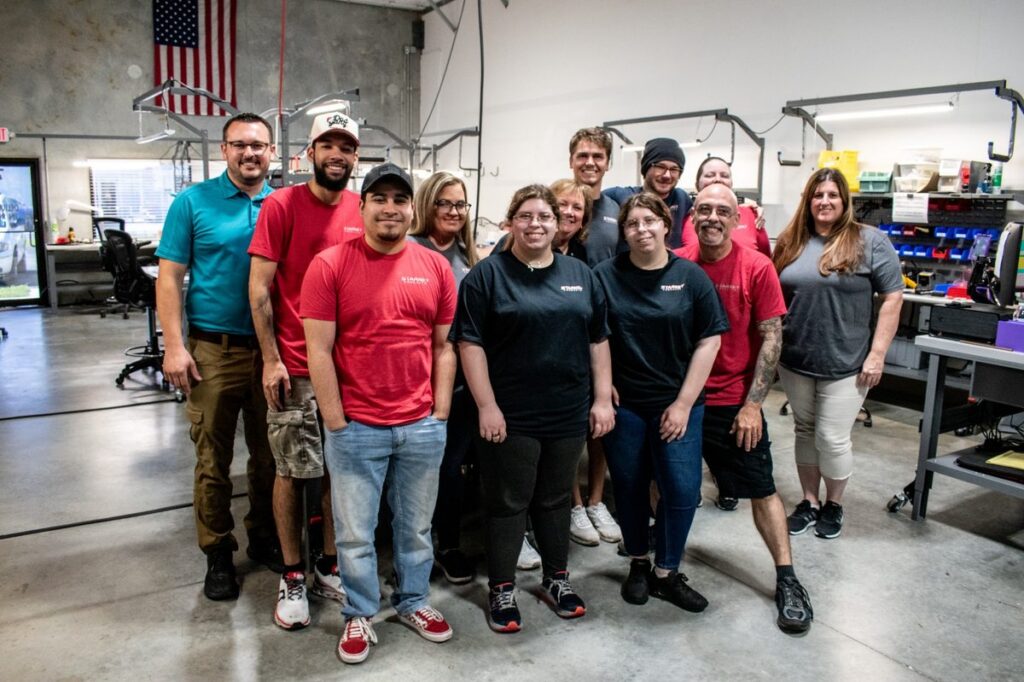
Starkey Products moved into its current building about two years ago, more than doubling its footprint. At 4,000 square feet, it is still a modest facility, but for the company it represented a major step forward. The front area houses sales, marketing, engineering, and a multipurpose space for product photos. That is where I met Peyton, whose title is new product development. Jason noted that Peyton brings electrical engineering knowledge, PCB design ability, and general electrical theory that have allowed the company to do things it could not do even a year earlier.
I also met Hidi, who manages the company’s customer-facing e-commerce platforms, including Amazon, eBay, and the Starkey website. That role is critical because the company’s product brand is not a side project. It is a major part of the business and the front door through which many customers first encounter Starkey.
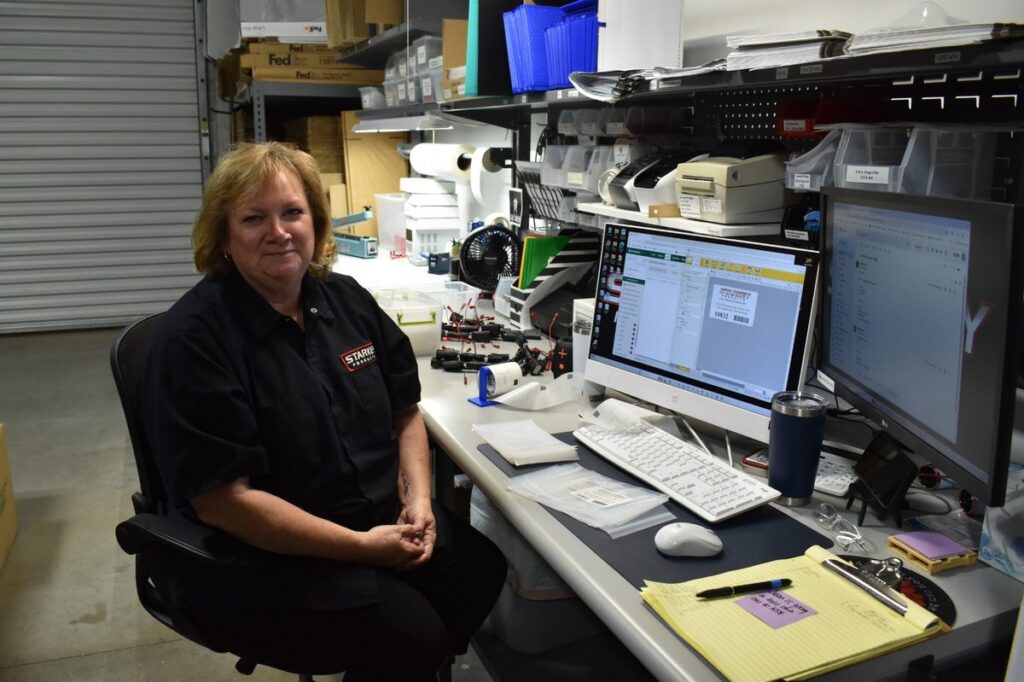
From there, Jason walked me through finished goods inventory, shipping, receiving, raw materials, connectors, terminals, subassemblies, and the production floor. Nadine handles shipping and receiving, along with some accounting work. Like many people in small businesses, she wears several hats.
The heart of production begins with Jeremy, the production supervisor. Jason described him as a problem solver and “fire putter outer.” He handles scheduling and keeps work orders moving through the shop.
One recent change has been the creation of a material prep specialist role. In the past, Starkey tried to train everyone on everything, from running machines to assembly processes and tooling changes. That worked when the company was smaller, but growth exposed the limits of that approach.
Now Zimmer, the material prep specialist, cuts and processes wire, gathers components, and prepares build kits that are ready to go to the production floor. Jason said the change has already helped efficiency. Technicians can grab a prepared box and focus on assembly rather than chasing parts.
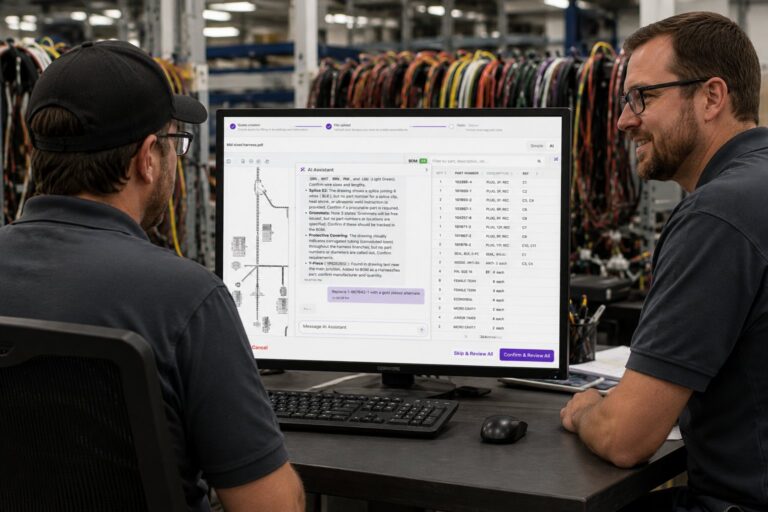
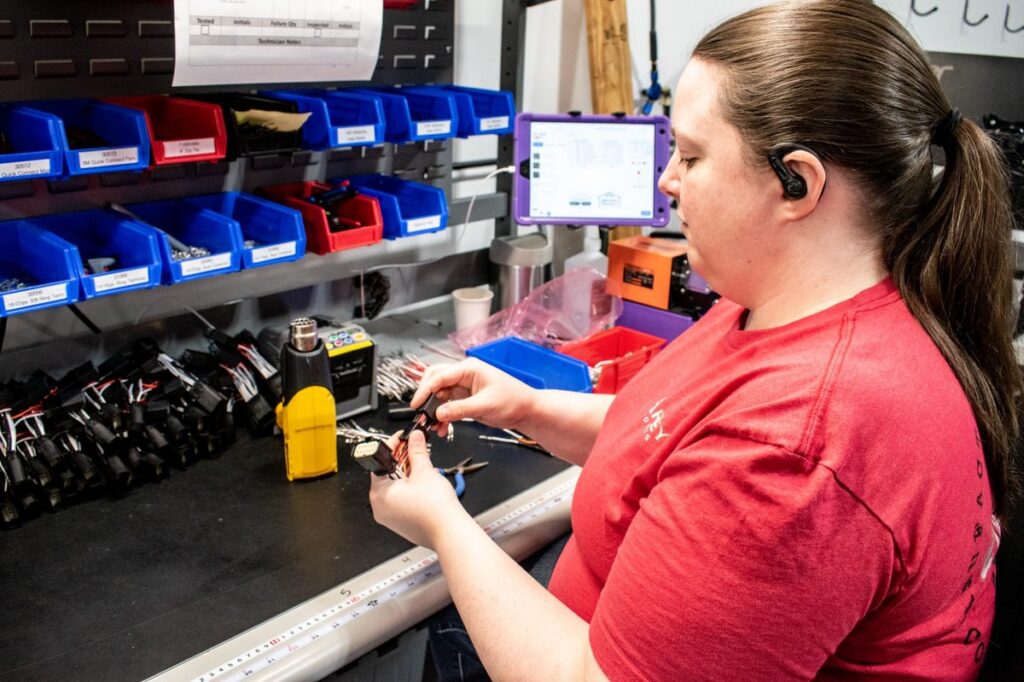
Another important change has been the move to electronic work instructions. In the past, everything was printed. Jason quickly realized that was not scalable, especially in a company where part numbers change, drawings may have small errors, and products are updated frequently. Today, technicians use tablets to pull up the proper SKU and instructions. Changes made in the office can be pushed instantly to the floor.
That matters because many of Starkey’s products are highly specific. Jason gave the example of an adapter for a particular year range of F-150 with LED headlights. They may only sell 30 or 40 pieces a month, and the part may be relatively inexpensive. The company has to be quick and efficient because the market is narrow, but the customer still expects the product to arrive quickly and work properly.
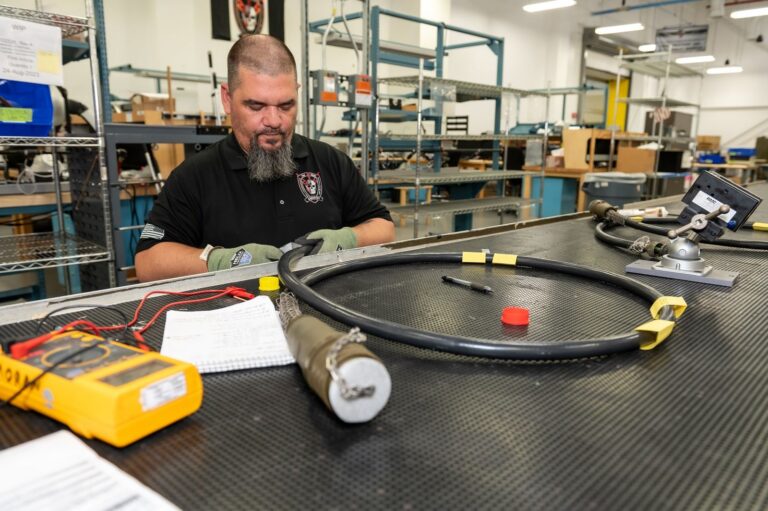
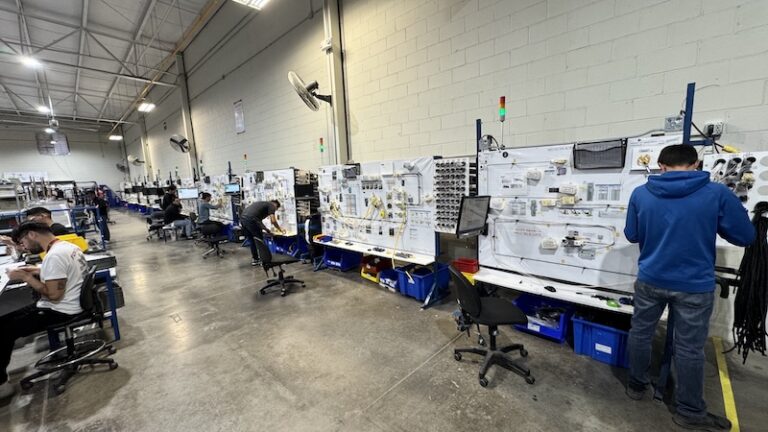
The floor reflects a practical mindset. Starkey has begun organizing work areas into more purpose-built cells, rather than letting any job happen anywhere. At one station, Jennifer was assembling an adapter for a contract customer designed to plug into a GM truck. Jason praised her attention to detail and said she regularly catches mistakes in his work instructions.
The company has also been integrating simple PCB assemblies into both retail products and contract builds. Jason was clear that this is still a growing area for him, but he is excited by the possibilities. Some boards may only contain diodes and resistors, but they serve specific purposes and allow the company to build better solutions.
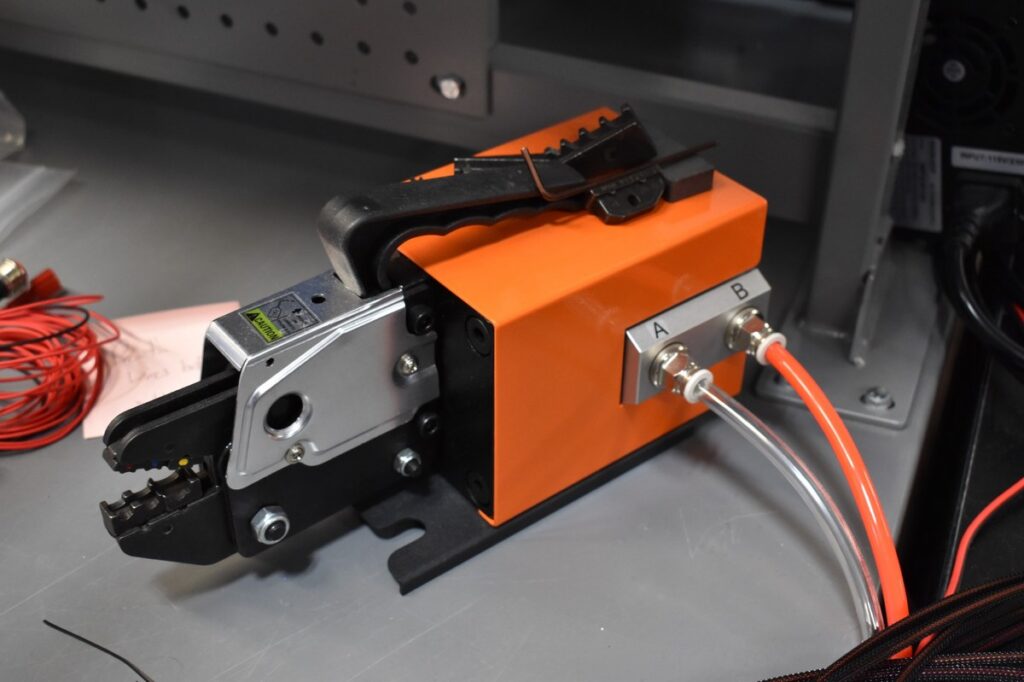
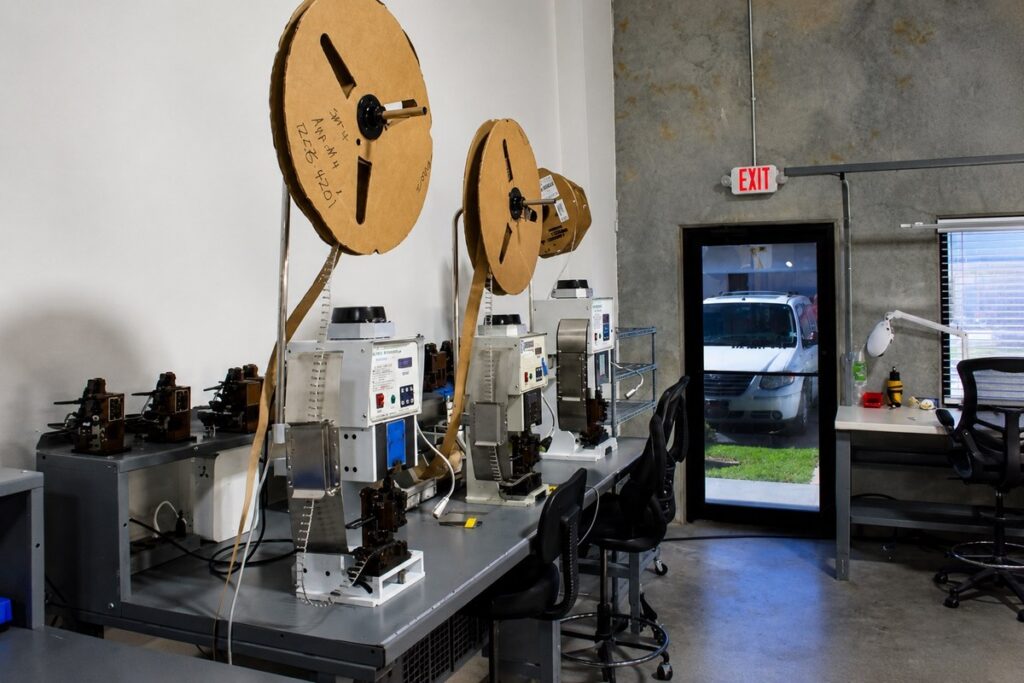
Equipment choices at Starkey are equally practical. Jason has invested heavily in lower-cost presses, applicators, and crimping equipment where he believes it makes sense. His reasoning is straightforward. Starkey is not running every applicator eight hours a day. Some may be used once a month. In that environment, it is difficult for him to justify the cost of OEM equipment for every application. “Use the tools that make sense for you,” he said.
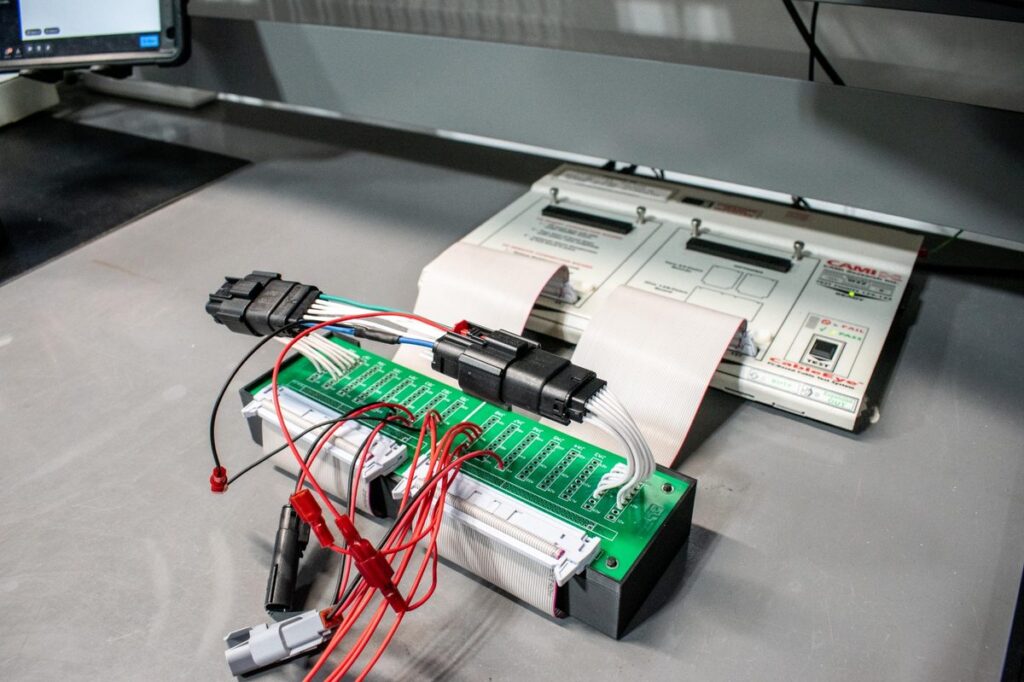
That does not mean the company buys the cheapest option in every case. Jason spoke highly of CAMI Research after trying a lower-cost continuity tester that did not meet his needs. The CAMI tester replaced manual continuity checks and has saved significant time. He was also quick to praise the company’s technical support.
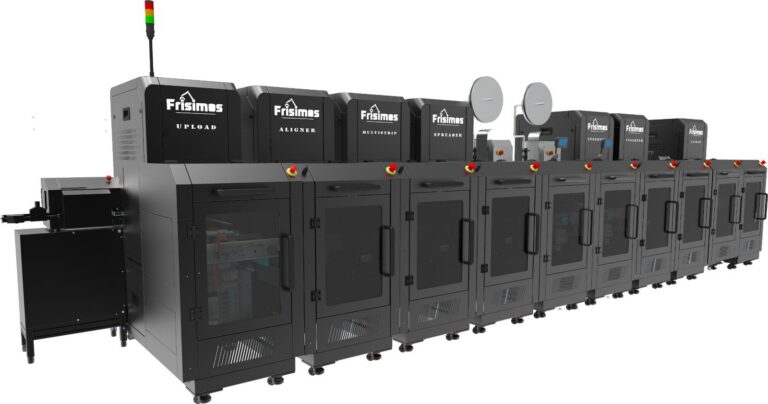
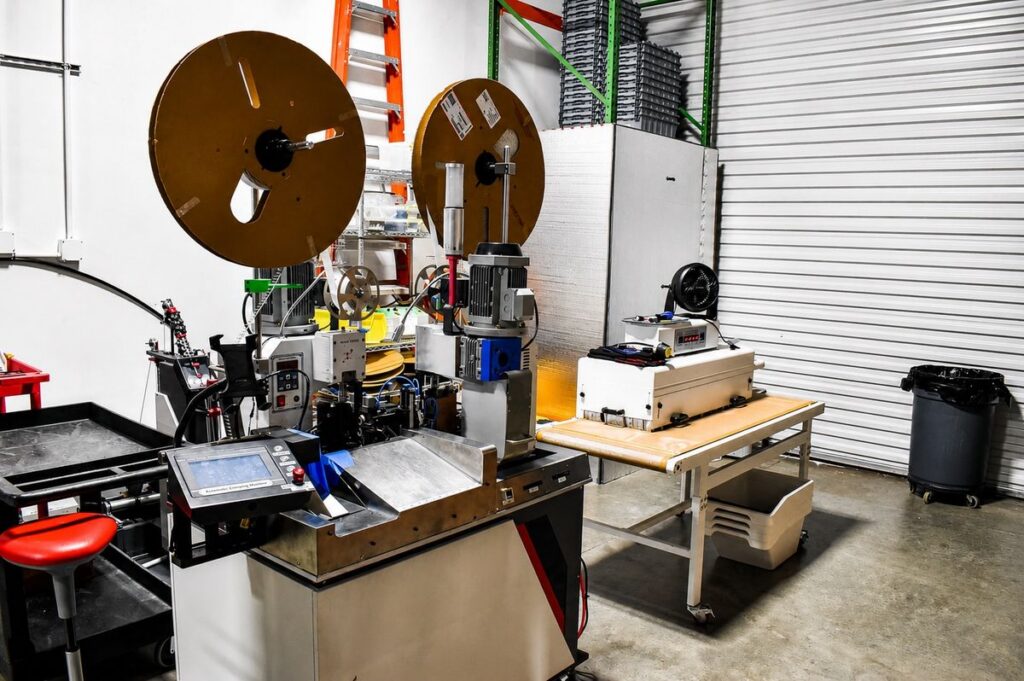
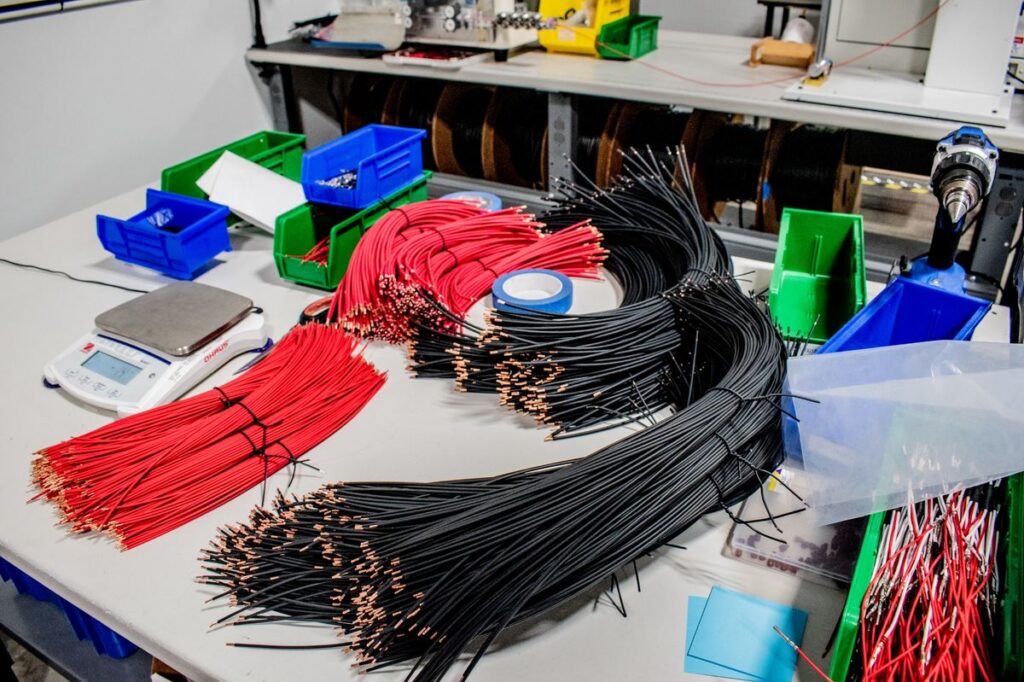
At the other end of the floor sits a fully automated cut, strip, and crimp center that Jason described as a game changer for higher volume work. Depending on the wire and length, it can produce roughly 2,000 pieces per hour. For Starkey, that can turn what might have been 80 hours of manual work into about 10 hours of machine time, while reducing human error.
The contract side of the business includes a mix of well-established manufacturers and smaller companies that upfit trucks with custom packages before they reach dealerships. Starkey builds custom adapters and lighting products for specific applications. In some cases, these customers get early access to new vehicles before they are available, allowing Starkey to develop adapters for their own products before the vehicle hits the market.
That speed fits the company well. The volumes are not massive by automotive standards, but they are meaningful for a company like Starkey. A customer may need hundreds or a few thousand assemblies rather than tens of thousands. That is often a poor fit for offshore production, especially when the product changes with model years or must be developed quickly. It is a good fit for a company that understands the product, can turn quickly, and can communicate directly.
Jason is candid about the economics. The direct-to-consumer product line offers better margins and gives the company control over design, production, fitment, and customer experience. Contract manufacturing is steadier and easier to plan, but generally lower margin. Together, the two sides create balance. “The direct-to-consumer business is what makes this a nice place to work, but the contract work keeps our production team busy.”
Faith as a Business Model
There is no way to tell Jason Starkey’s story honestly without talking about faith. It is not a side note for him. It shapes how he sees the business, his employees, his customers, and his responsibilities as an owner.
Jason said he was not really a person of faith when the business began, but that changed. His Christian beliefs became an important part of his life, something he described as a game changer, especially in recent years. He now looks back and sees God’s hand throughout the business, including the move to the current facility. At the time, the cost increase was significant, and the business was not yet where he wanted it to be. Still, Jason felt led to make the move and believes the company has been provided for since.
He was also honest about his earlier attitude. For the first eight to ten years, he said, he viewed the business as his own possession. “This is mine,” was the basic mindset. That began to change when he reached a low point around 2018. Sales were poor, he was working constantly without seeing the results he hoped for, and he even took a part-time job while wondering if the business might be over.
That period changed his perspective. “This is the Lord’s business,” he remembered thinking. “How do I steward this well?” Since that shift, he believes the company has been blessed, including strong growth since 2020 and a 50 percent sales increase last year.
Faith also shows up in company culture. When Starkey Products moved into the current building, Jason felt prompted to pray before meetings. He resisted at first because it felt uncomfortable, but he eventually followed through. He later invited employees, families, and friends to gather and pray for the company’s success. More recently, he felt led to make that an annual event. He stressed that he is not trying to force anything on anyone. He simply wants to be open about what guides him.
“I just want to give God the glory,” he said. Even when employees or customers may not share his faith, Jason hopes they see the love and care that come from it. In his view, those things cannot be separated from the way he runs the company.
That sincerity was easy to see during the visit. This was not a slogan on a wall or a marketing position. It was part of the way Jason spoke about stewardship, gratitude, customers, employees, and growth, and it’s not unlike sentiments expressed in past Company Profile interviews. This seems to be an industry where owners speak freely about faith, relationships and doing right by people. Jason places those convictions at the center of everything he does.
As we wrapped up, I kept thinking about how close this story had been all along. Starkey Products was not across the country, or in a distant industrial park, or found through a long chain of industry introductions. It was just down the road, built by someone who started with Mustang fog light harnesses in a back room and slowly grew into a company serving both individual vehicle owners and larger contract customers.
As Jason continues to grow the company, he is also growing his family. He and his wife Jenna have six children, with one more on the way. With a family that size, I joked that he may already have a deep bench of future employees. Time will tell how many of them take an interest in the business.
Starkey Products is still learning, still growing, and still figuring out where the next opportunity will come from. That seems to suit Jason just fine. He did not build the company from a formal business plan or a traditional industry background. He built it by solving one problem, then another, then another. Along the way, a product line became a marketing engine, customers became partners, and a small shop in DeBary became a company with a story worth telling.