




















Some of the most important innovations in electrical engineering are also the smallest. Terminals and connectors rarely attract attention, yet they determine whether appliances heat, vehicles start, and industrial systems operate safely. As manufacturing environments evolved over the past several decades, ETCO Incorporated began noticing a pattern. Traditional blade and spade terminals were no longer keeping pace with the demands of modern equipment. Vibration, repetitive assembly, and increasingly compact designs were exposing the limitations of legacy connectors.
This growing mismatch between established connector technology and modern manufacturing requirements set the stage for the development of the FlatSnap® Connector. The concept emerged from practical observation on factory floors and a commitment to improving both electrical reliability and worker safety.
Identifying the Problem
By the early 2000s, ETCO engineers were hearing similar concerns from multiple industries. Appliance manufacturers reported that traditional disconnects required high insertion force, contributing to repetitive stress on assembly lines. Marine and off-highway equipment builders struggled with terminals that could loosen under vibration. Industrial OEMs wanted connectors that could be reconnected repeatedly without losing retention strength.
The issue appeared across several sectors. Appliance manufacturers experienced it, marine equipment builders encountered it in high-vibration environments, and automotive and off-highway OEMs faced similar reliability concerns. ETCO recognized that the industry needed a connector capable of addressing several challenges simultaneously.
Specifically, engineers were looking for a terminal that could:
• Resist vibration separation better than traditional disconnect terminals
• Reduce the physical strain associated with installation
• Simplify inventory by eliminating separate male and female components
Meeting all three objectives within a single connector design had not previously been achieved. The FlatSnap concept was developed to address that gap.
Engineering the FlatSnap Concept
The FlatSnap was designed with a clear objective: to create a connector capable of performing reliably in demanding environments while improving assembly ergonomics.
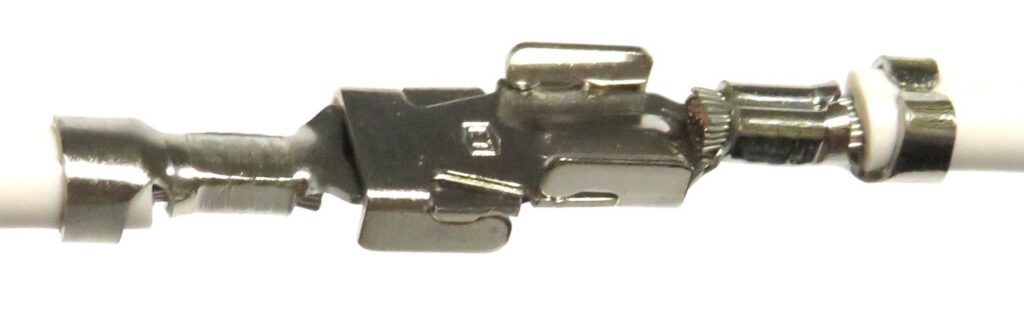
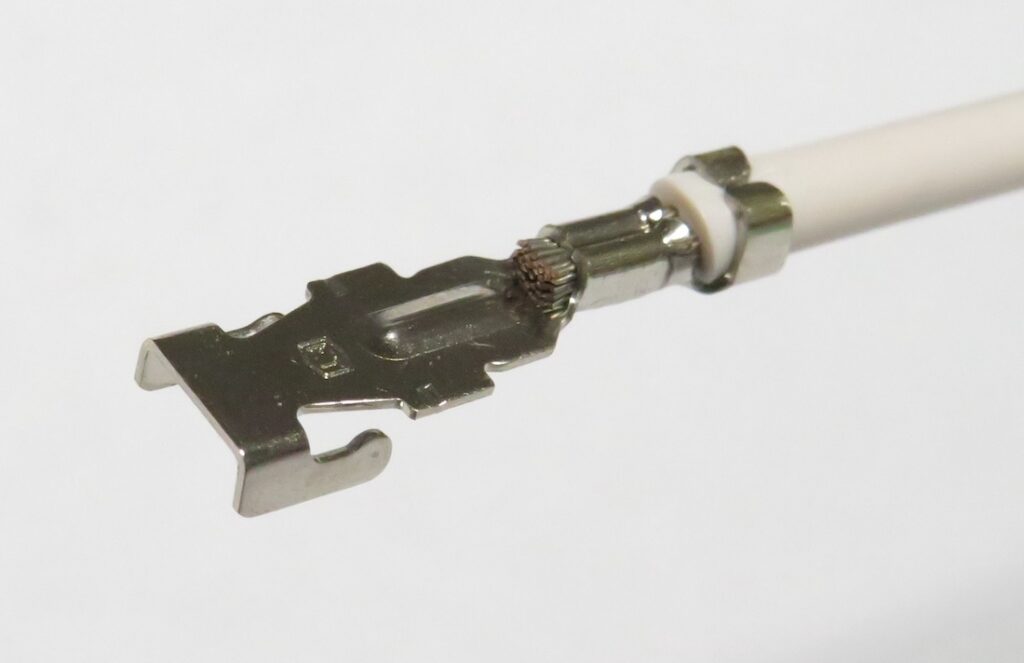
ETCO engineers began by rethinking the geometry of the traditional disconnect terminal. Rather than relying solely on friction between mating parts, they developed a dual-ear positive locking clip designed to snap into place with a tactile click during installation.
This locking mechanism became the defining feature of the FlatSnap connector. Once engaged, the connector forms a secure mechanical connection designed to resist separation in environments subject to significant vibration.
A second key innovation was the connector’s unisex design. Instead of separate male and female components, the FlatSnap uses identical mating halves. This approach reduces part counts, simplifies inventory management, and eliminates the possibility of mismatched connectors during assembly.
Ergonomics also played a central role in the design. The FlatSnap’s push-pull engagement requires less force than many traditional disconnect terminals. ETCO notes that the design helps reduce the physical strain associated with repeated terminal insertion during high-volume assembly operations.
The result is a connector designed to address several long-standing issues at once, particularly vibration resistance and easier installation.
From Prototype to Production
Following completion of the design phase, ETCO began manufacturing the FlatSnap connector at its Bradenton, Florida facility.
Early adopters included major appliance manufacturers that saw immediate benefits on their assembly lines. Workers could terminate wires with a single motion, and the connectors maintained secure engagement during shipping, installation, and product operation.
Over time, adoption expanded into additional industries, including marine equipment manufacturing where corrosion-resistant materials are valued, automotive and off-highway applications that demand vibration resistance, and industrial equipment requiring modular assembly or periodic service access. This reflects the connector’s ability to perform across a wide range of operating environments.
Real-World Applications
The FlatSnap connector has been adopted across several industries. Applications include marine electrical systems where salt exposure, moisture, and vibration place demands on connection reliability, appliance assemblies such as heating elements in dishwashers and electric ranges, automotive and off-highway equipment where shock and movement are common operating conditions, and industrial systems including modular equipment and underground sprinkler systems.
In each of these environments, maintaining electrical integrity despite vibration, moisture, or repeated reconnection is an important performance requirement.
Technical Characteristics That Define the FlatSnap
Several engineering features contribute to the FlatSnap connector’s performance. A positive locking clip produces a tactile click during engagement and helps prevent accidental pull-apart. The connector uses a unisex, low-profile geometry with identical mating halves that simplify inventory and eliminate separate male and female terminals.
To accommodate different environmental and thermal requirements, FlatSnap connectors are available in several materials including brass, tin-plated brass, nickel-plated steel, and high-temperature copper alloys. These material options allow the connector to perform reliably in environments involving heat, corrosion, or vibration.
Common configurations include terminals measuring 0.032 inch by 0.250 inch, with supported wire ranges typically from 22 AWG to 14 AWG. Multiple insulation and plating options allow the connector to be adapted to different electrical and environmental requirements. ETCO also provides modified geometries, specialty platings, and application tooling designed to support integration into automated manufacturing systems.
Installation Practices That Ensure Performance
To ensure optimal performance, ETCO recommends using specified crimp tooling to achieve consistent termination quality, selecting plating materials appropriate for the intended environmental exposure, and matching wire gauge and insulation diameter to the connector’s rated specifications. Following these guidelines helps maintain reliable electrical connections and reduce the likelihood of premature failure.
Supporting Manufacturers through Digital Resources
As interest in the FlatSnap connector increased, ETCO launched a dedicated microsite designed to centralize technical information and application guidance. The site provides downloadable datasheets, product specifications, and quotation request tools that allow engineers and purchasing teams to evaluate the connector quickly.
A Continuation of ETCO’s Manufacturing Legacy
Founded in 1947, ETCO has spent nearly eight decades producing terminals and precision metal stampings in the United States. With manufacturing facilities in Bradenton, Florida, and Warwick, Rhode Island, the company has built a reputation for engineering-focused product development and consistent manufacturing quality.
As ETCO approaches its 79th year in 2026, the FlatSnap connector represents a recent example of the company’s continued focus on practical engineering solutions for electrical interconnection challenges.
*
Top of Form