
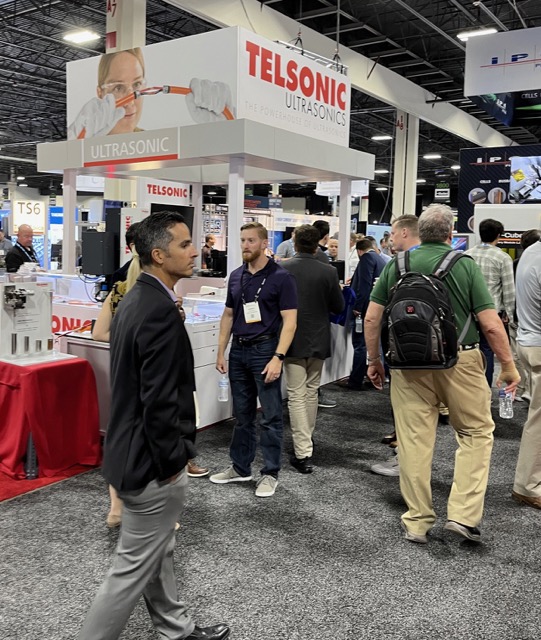
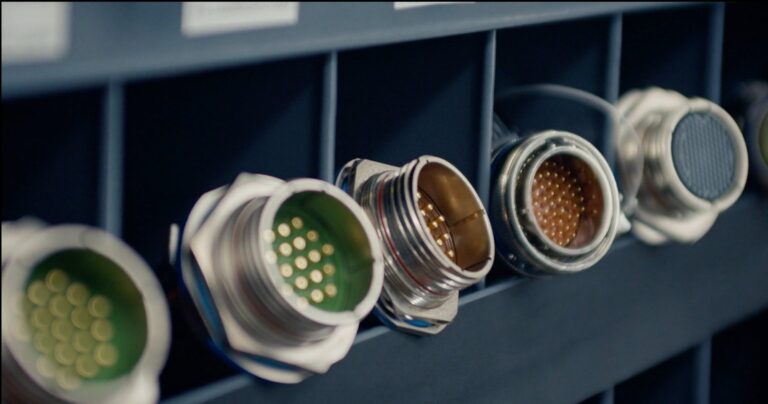

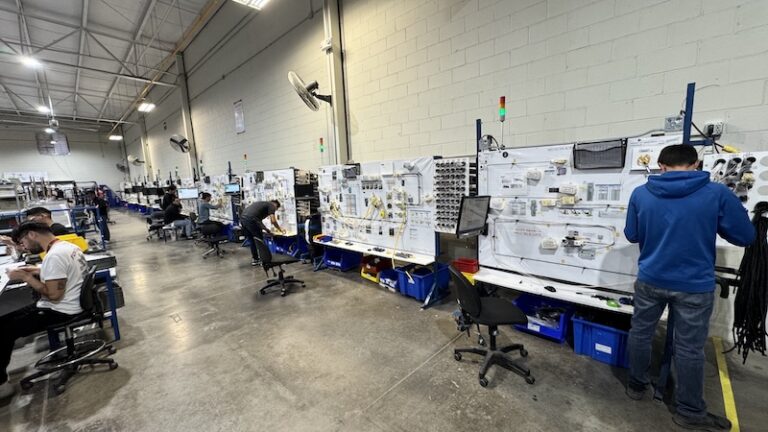







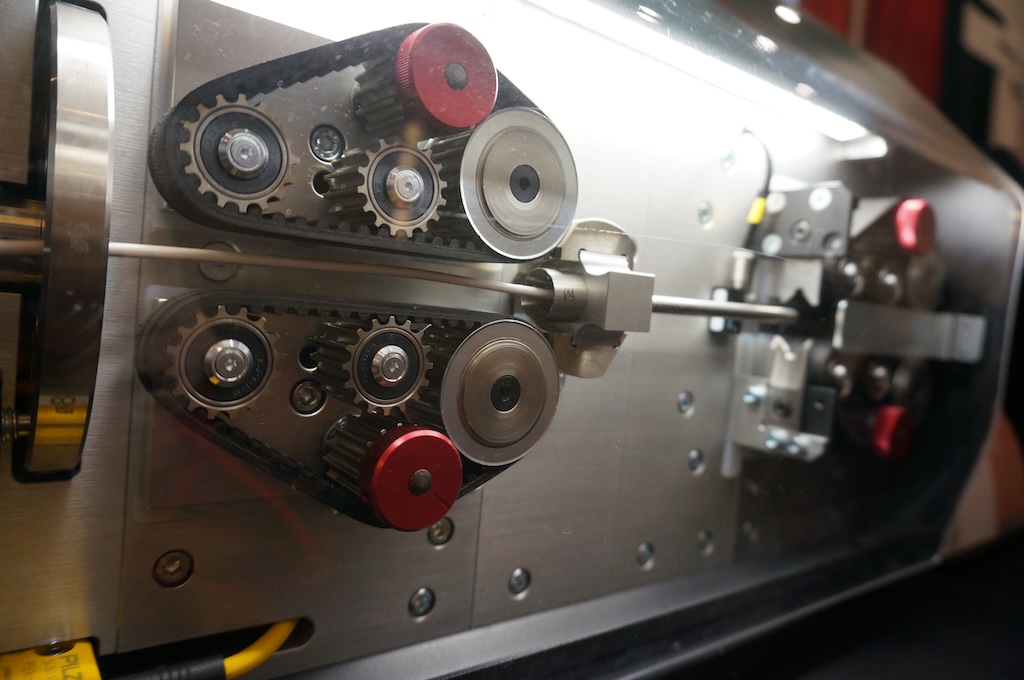
Each year, the Electrical Wire Processing Technology Expo brings together a wide cross-section of the harness manufacturing industry, from equipment suppliers and tooling specialists to software developers and automation providers. For visitors walking the show floor in Milwaukee, the challenge is often deciding where to spend their time.
Komax, a longtime supplier to the wire harness industry, will once again have one of the larger presences at the event, with a booth showcasing a range of automation solutions for wire processing. With so much equipment on display, it can be difficult to know where to start.
To help narrow the focus, we asked Komax to highlight several systems they believe are particularly relevant for manufacturers navigating today’s production challenges, whether that means improving throughput, simplifying changeovers, or maintaining consistent quality across increasingly complex harness designs.
The result is a short list of four systems that illustrate how automation in wire processing continues to evolve. If you’re planning a stop at the Komax booth during EWPTE, these are a few machines worth taking a closer look at.
Komax Alpha 650 with IQC Technology
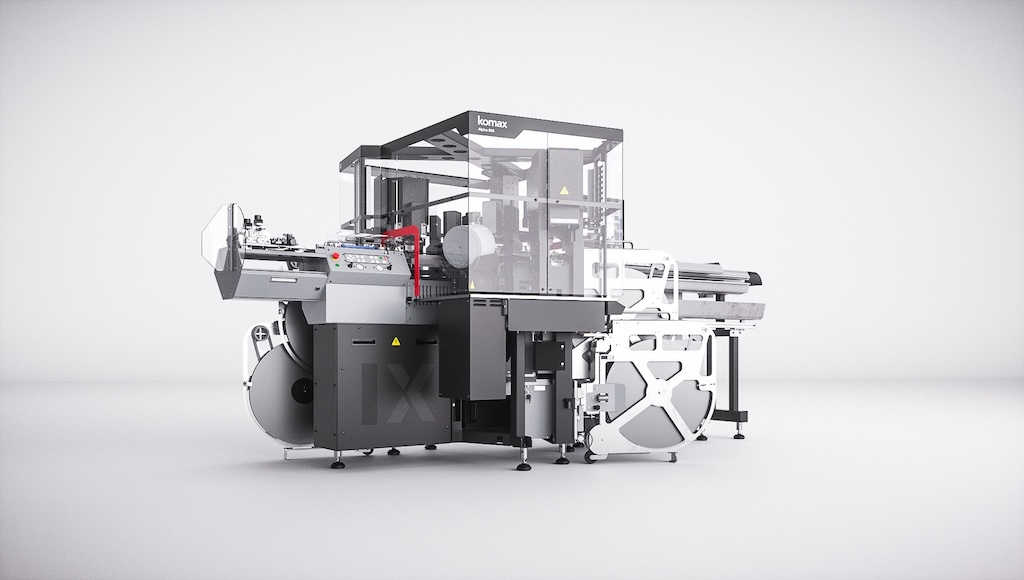
One of the systems Komax will be highlighting at EWPTE is the Alpha 650 equipped with the company’s IQC Technology, an approach designed to address one of the most persistent inefficiencies in automated wire processing: changeover time.
In many production environments, switching terminals, replacing applicators, and completing setup tasks can quietly consume valuable production time. A typical changeover process may take around fifteen minutes and occur multiple times per shift, resulting in hours of lost machine availability each day.
IQC Technology is designed to reduce much of that lost time.
At the center of the concept is a cassette-based system that combines the crimp applicator and terminal reel into a single unit. Rather than manually swapping tooling and materials, operators insert a preconfigured cassette into the machine. The Alpha 650 then automatically loads the parameters associated with the production order and calibrates the process accordingly.
The result is a much faster setup process. According to Komax, the automated applicator change can be completed in about one minute, helping reduce nonproductive time while improving process consistency.
Reducing manual intervention can also improve process stability. By storing machine and process parameters in advance, the system ensures that each production run operates within tightly controlled tolerances. This reduces the need for repeated sampling runs and helps minimize material waste during setup.
Field trials conducted under real production conditions demonstrated significant gains in productivity, with output increasing by as much as 50 percent while maintaining consistent quality.
For manufacturers dealing with increasing product complexity, shorter production runs, and ongoing labor constraints, the Alpha 650 with IQC Technology represents a step toward more autonomous wire processing.
While high levels of automation can dramatically improve throughput, maintaining consistent preparation quality remains equally important. That’s where precision stripping technologies like the Schleuniger B300 come into play.
Schleuniger Strip Series B300 with AIC and ACD Quality Monitoring
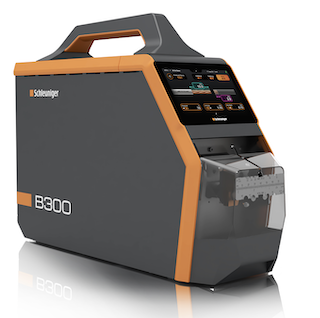
Among the key highlights at the Komax booth is the Schleuniger Strip Series B300, a compact yet highly capable stripping machine engineered for precision, repeatability, and ease of use. As wire sizes continue to shrink and insulation properties become more complex, manufacturers face growing challenges in achieving consistent, damage‑free stripping while operating within increasingly tight tolerances. The B300 was developed to address this challenge directly.
Recently recognized with a Productronica Innovation Award, the B300 establishes a new benchmark in automated quality monitoring for wire preparation. At the core of the system are two integrated technologies, Adaptive Incision Control (AIC) and Automatic Conductor Detection (ACD). Each technology can operate independently, either to regulate incision depth or detect conductor contact, and when used together, they provide a higher level of process control. This combined approach ensures every stripping cycle is executed with consistent accuracy and stability.
Stripping remains one of the most sensitive operations in wire processing. The blades must cut deep enough to remove insulation cleanly, but not so deep that they nick or damage individual conductor strands. Even minor strand damage can compromise electrical performance or long‑term reliability in the finished harness. The B300 mitigates this risk through intelligent, adaptive process control.
AIC automatically determines the optimal incision depth for each cable, eliminating the traditional trial‑and‑error setup process. Rather than relying on manual programming or operator experience, the system dynamically measures and adjusts cutting parameters. This allows the B300 to deliver stable, repeatable results even when material tolerances fluctuate or when processing a wide variety of wire types.
ACD adds another critical layer of protection. By detecting the smallest contact between the blades and the conductor, the technology can identify when the permissible cutting depth has been reached or if the conductor has been touched. In either case, the machine immediately alerts the operator, ensuring that potential defects are caught the moment they occur.
Together, AIC and ACD form a closed‑loop quality monitoring approach that increases process security, reduces scrap, and simplifies operation for users at all skill levels. The result is a controlled, reliable stripping process that helps manufacturers achieve consistent, high‑quality outputs across diverse applications.
Once wires are prepared to the required specifications, verification becomes the next essential step. Systems such as the Cirris 8250 provide the high‑speed electrical testing capabilities needed to confirm that every connection meets the required standards.
Cirris 8250 High Voltage Tester
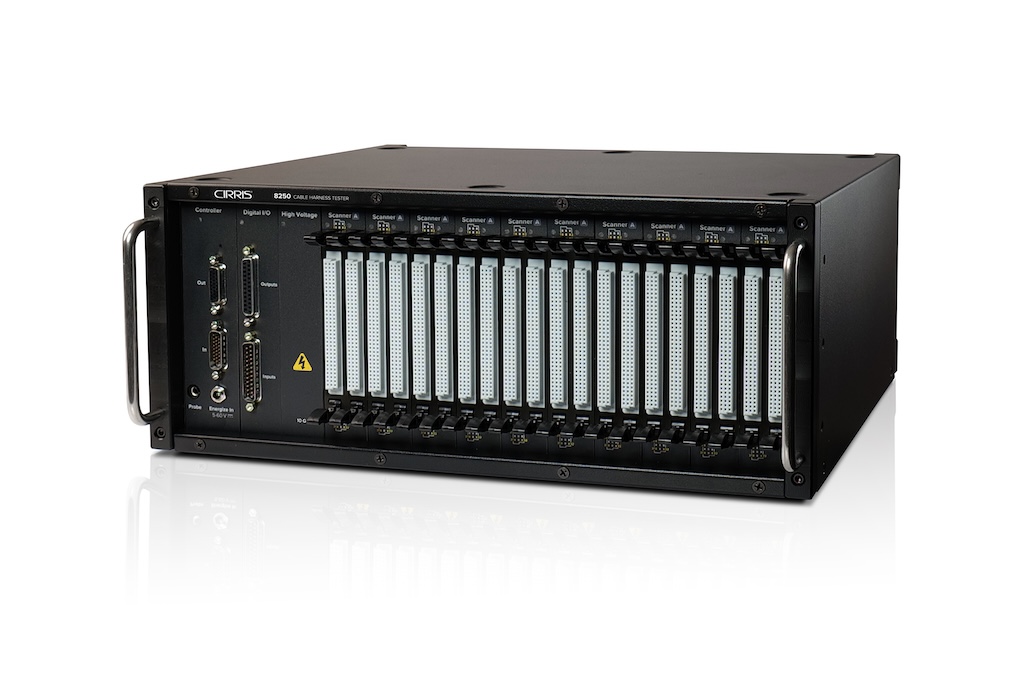
Testing is often the final safeguard in wire harness production, verifying that every connection, component, and insulation path performs as intended before a harness moves further down the production line. At EWPTE, Komax will also be highlighting the Cirris 8250 High Voltage Tester, a platform designed to handle complex electrical assemblies and demanding test requirements.
Cirris, a Komax Group company specializing in harness testing systems, developed the 8250 for applications where large numbers of test points and multiple types of measurements must be handled efficiently.
The system supports testing of harnesses, backplanes, and assemblies that incorporate passive components such as diodes, capacitors and resistors. It can also integrate with external instruments such as power supplies and meters, allowing manufacturers to expand testing capabilities when needed.
One of the platform’s defining characteristics is scalability. The tester can be configured with anywhere from 64 test points to more than 100,000, allowing the system to grow alongside production requirements. Multiple base units and expansion modules can be combined to accommodate large assemblies and then reconfigured for smaller setups when needed.
In addition, the platform can energize relays, lights and other active components during testing, allowing manufacturers to verify both wiring continuity and functional behavior within the harness.
Beyond machines on the production floor, software platforms are also beginning to play a larger role in streamlining wire preparation and assembly workflows.
WIRE Mind Cloud Platform for Wire Set Production
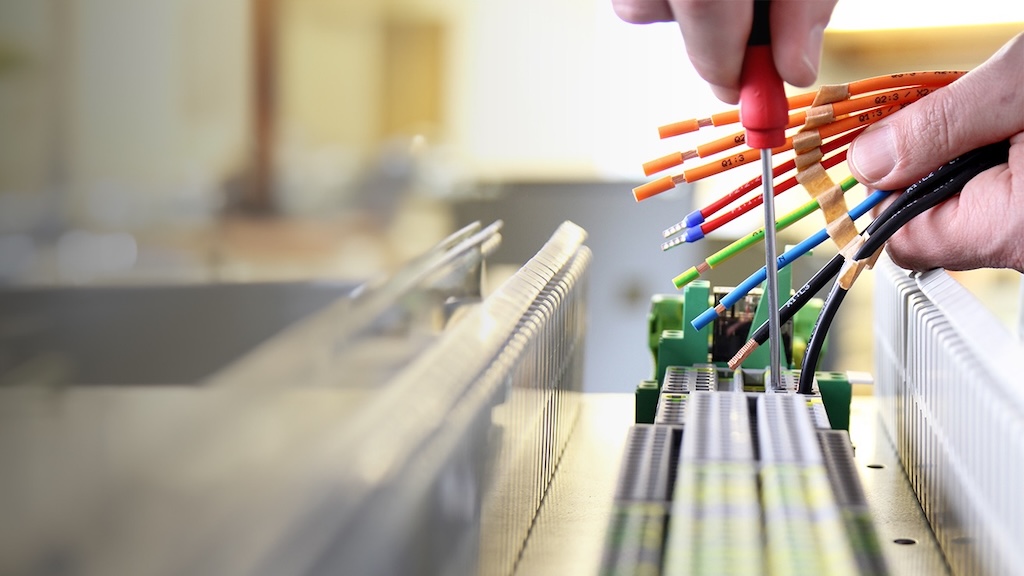
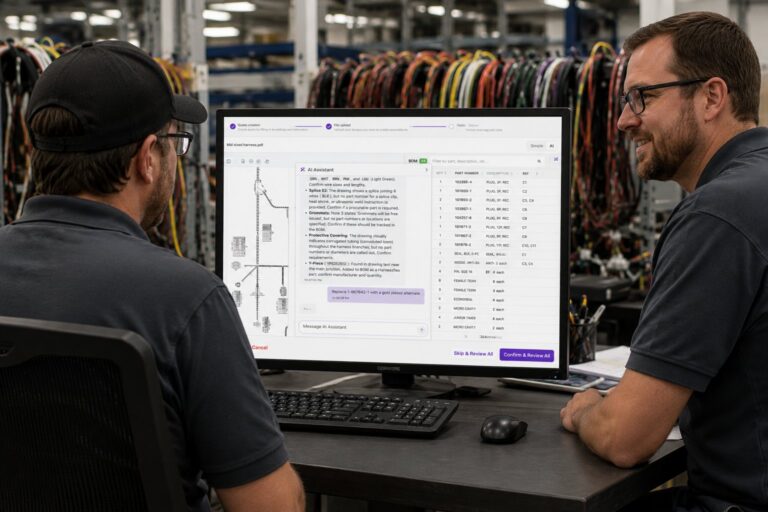
While much of the innovation in wire harness manufacturing happens at the machine level, software tools are increasingly playing an important role in improving overall production efficiency. Komax will also be showcasing WIRE Mind, a cloud-based platform designed to simplify the preparation and production of wire sets.
WIRE Mind focuses on one of the more time-consuming aspects of control cabinet and panel wiring: interpreting wire lists and preparing production-ready bundles.
In many control cabinet environments, technicians must read circuit diagrams, determine wire lengths, prepare labels, and organize bundles before wiring can begin. These steps can be labor-intensive and prone to errors when performed manually.
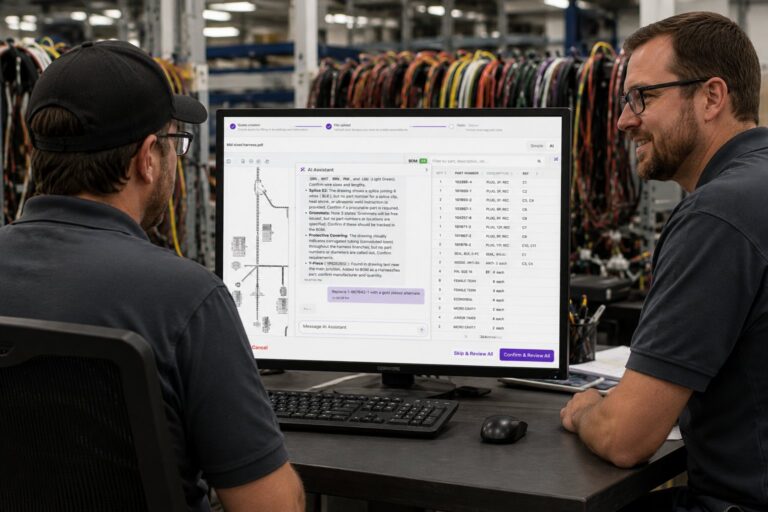
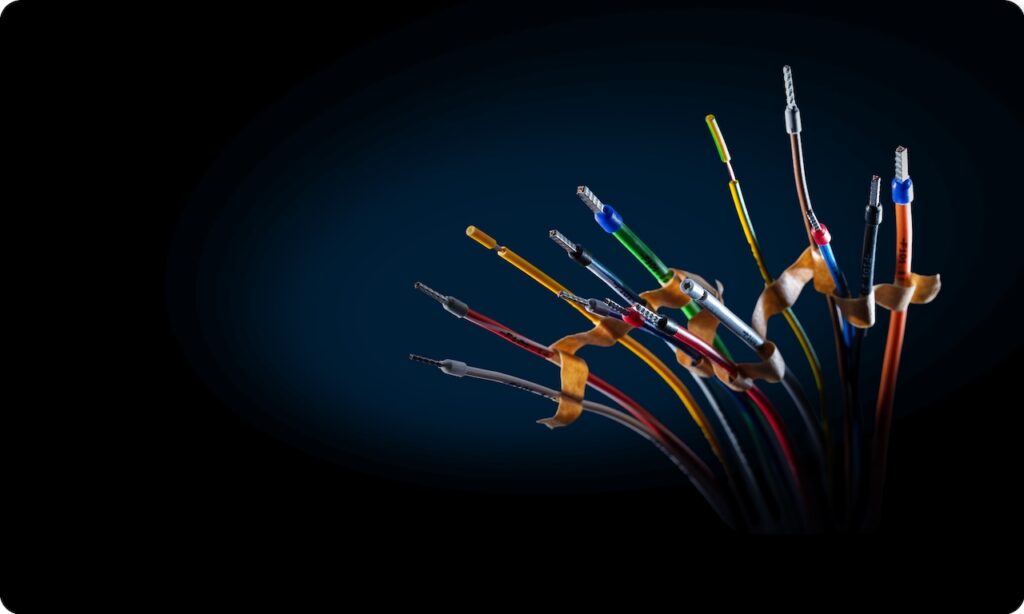
WIRE Mind automates much of that preparation process. Users upload wire lists into the platform, where the software automatically interprets the data, applies predefined bundling rules, and generates production-ready wire sets.
The system can automatically generate sequence-based or round wire bundles and assign appropriate labeling information for wire identification. These prepared wire sets can then be processed and labeled with the correct identification text printed directly on wires or shrink tubes.
WIRE Mind is also designed to integrate with wire processing machines such as the Komax Zeta platform, allowing wire sets to be produced in the correct sequence for installation and supporting just-in-time production workflows.
For manufacturers involved in control cabinet construction or distribution board assembly, digital workflow tools like WIRE Mind demonstrate how software is becoming an increasingly important part of modern wire production environments.