



















IPC/WHMA-A-620, Requirements and Acceptance for Cable and Wire Harness Assemblies,sits at the center of cable and wire harness manufacturing, defining the requirements and acceptance criteria used across much of the industry. Despite its widespread use, many manufacturers misunderstand how the document is intended to function. Teresa Rowe, senior director of industry standards for the Global Electronics Association, says two areas in particular continue to create confusion: the role of process control and the importance of understanding Chapter One of the standard.
Process Control: Understanding the Requirement
IPC/WHMA-A-620 requires manufacturers building Class 3 products to maintain a documented process control system. However, the concept is often misunderstood.
“Process control is about making certain that you understand what it takes to build the product and which parts of that process must be controlled to produce a consistent result,” Teresa explained.
This does not necessarily mean statistical process control or complex measurement systems. Instead, it involves analyzing how work is actually performed and determining where oversight is needed. Examples include controlling tool calibration intervals, verifying operator proficiency, managing inventory and kitting practices, or establishing procedures that ensure consistency across production runs.
The key question an auditor ultimately asks is straightforward: how does the organization ensure that its process consistently produces an acceptable product?
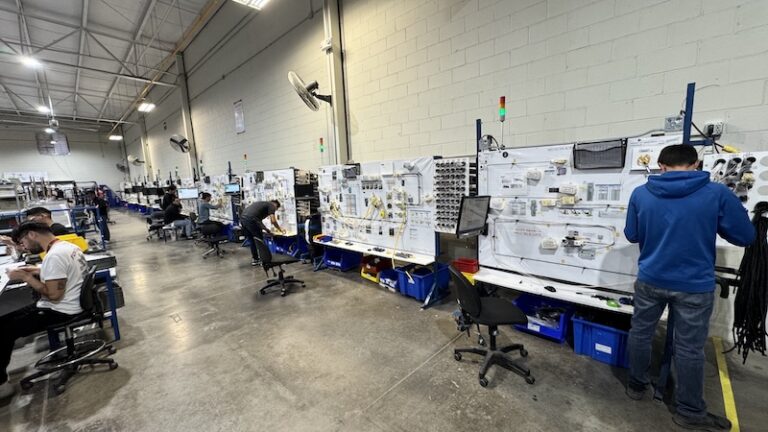
Audits therefore focus on understanding how the manufacturer’s process works in practice. Auditors typically begin with a tour of the production floor to visualize how the operation functions before asking detailed questions. From there they follow audit trails that may lead into areas such as tool management, training records, or error tracking systems. The goal is not to enforce a single model of process control but to verify that the organization understands and manages its own process.
ISO Systems and IPC/WHMA-A-620
One common misconception is that a company already certified to an ISO quality management system automatically satisfies IPC/WHMA-A-620 process control expectations. While the two systems complement one another, Teresa stresses that they serve different purposes.
“ISO systems tend to address the organization at a business level,” she said. “A-620 focuses on the specific activities that lead to building a compliant cable or harness.”
In other words, ISO provides the broader framework for managing quality across an organization, while IPC/WHMA-A-620 examines the operational details of the manufacturing process itself.
Process Control for Smaller Manufacturers
For smaller manufacturers, the idea of implementing process control can sound intimidating. Teresa emphasizes that the requirement does not demand a large quality department or extensive documentation.
“This is about process control methodologies and the thought process behind them,” she said. “It is not about how many pages your system has.”
Organizations should instead focus on understanding their own operations. Questions such as how tools are controlled, how operators are trained, and how final acceptance decisions are made can often be addressed through straightforward procedures and clear accountability. The objective is not complexity but clarity.
Why Chapter One Matters
While process control is frequently misunderstood, Teresa believes an even more fundamental issue lies in how users approach the document itself. Many readers skip directly to the illustrated acceptability sections.
“That is one of the biggest misconceptions,” she said. “People look at the document as a set of independent chapters. In reality, IPC/WHMA-A-620 is a complete set of requirements from the beginning of Chapter One to the end.”
Chapter One establishes foundational concepts that apply across the entire document, including definitions, process control requirements, and other overarching rules.
During a recent revision of the standard, for example, the task group moved the minimum electrical clearance requirement into Chapter One to clarify that it applies universally rather than only to specific sections. The change prompted questions from some users who assumed the requirement had been removed.
“The requirement did not disappear,” Teresa stressed. “It was moved so that it would apply everywhere.”
The same logic applies to “shall” statements throughout the document. If the standard uses the word “shall,” the requirement is mandatory regardless of where it appears. Users therefore must read the standard as a whole rather than relying only on the illustrated defect and acceptability tables.
Applying the Class Definitions
Teresa also noted that questions sometimes arise when manufacturers apply product classes. The definitions of Class 1, Class 2, and Class 3 products have remained stable for many years, but their application requires thoughtful evaluation of how a product will actually be used.
In some cases a system may contain elements that fall into different classes. Mission-critical functions may require Class 3 reliability, while other elements may not.
“Companies sometimes choose to build everything to Class 3 because it simplifies their internal processes,” Teresa said. “That can be a business decision. The important thing is that the organization understands why it is making that choice.”
Culture and Leadership
Ultimately, Teresa believes successful implementation of IPC/WHMA-A-620 depends less on documentation than on organizational culture. Companies that treat the standard as a compliance checklist often struggle, while those that view it as a framework for improving their operations tend to gain the most value.
“It really comes down to culture,” she said. “Everyone in the process contributes, from the person making the acceptance decisions to the person managing tool calibration.”
Leadership plays a critical role in establishing that culture. When leaders view the standard as a tool for strengthening the company rather than simply meeting a requirement, that mindset spreads throughout the organization. Audits then become opportunities for improvement rather than exercises in compliance.
For an industry that relies heavily on workmanship standards, Teresa’s message is straightforward. IPC/WHMA-A-620 is not simply a collection of photographs and acceptance tables. It is a system of requirements built on process control and the foundational principles outlined in Chapter One, and understanding that framework is essential if the standard is to be used as intended.