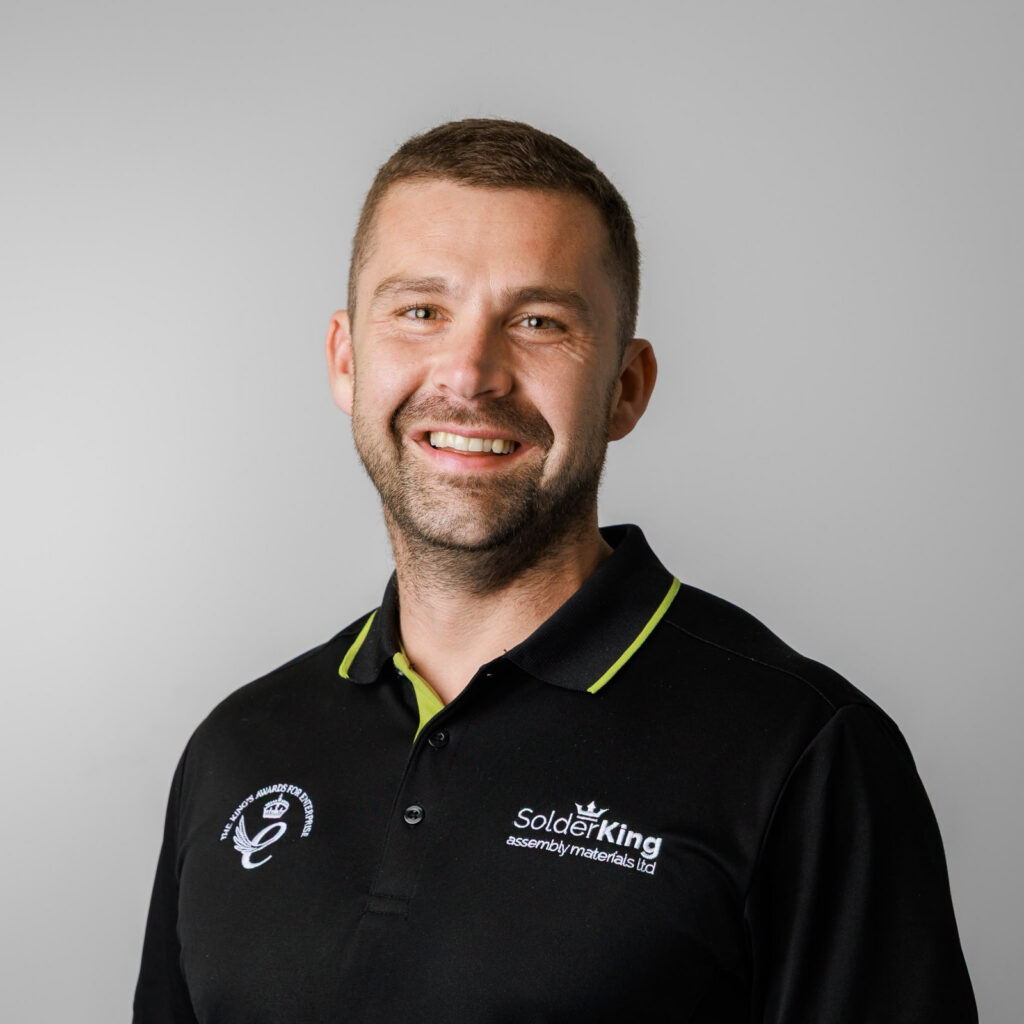









There is something familiar about the way Chris Ward discusses his customers. He talks about production challenges, process consistency, material selection, and the importance of responding quickly when something isn’t working. It’s the same language heard from successful wire harness manufacturers, where technical expertise is essential, but understanding the customer’s problem is often what makes the difference.
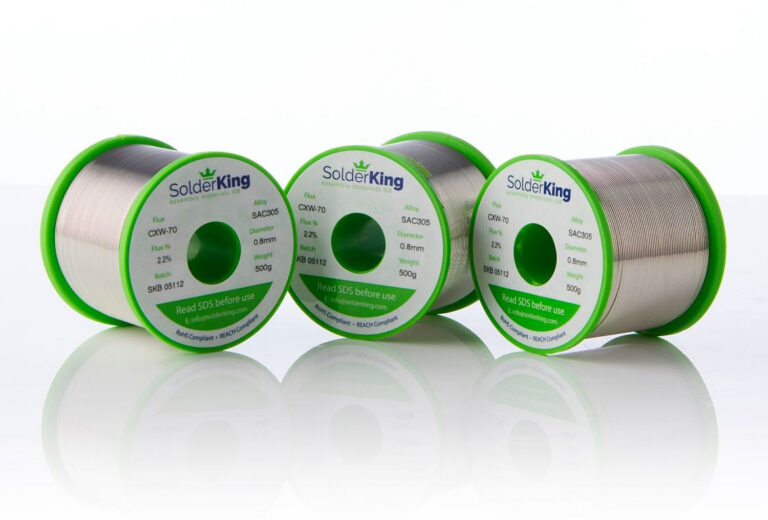
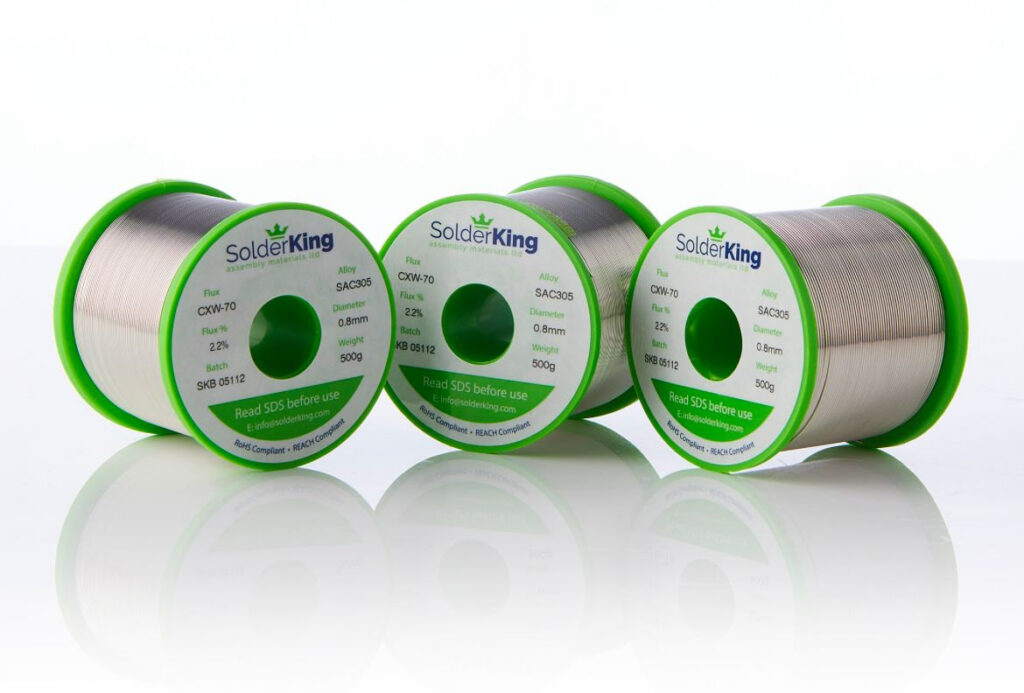
What’s interesting is that Chris isn’t a wire harness manufacturer. He’s the co-founder and director of SolderKing, an independent British manufacturer of soldering materials headquartered in Bridlington, England. For many harness manufacturers, solder is simply another consumable. It arrives on a spool, gets used at an assembly bench, and hopefully performs as expected. The chemistry behind it rarely enters the conversation unless something goes wrong.
At SolderKing, however, the chemistry and the customer relationship are closely connected. Chris and his father, Chris Ward Sr., have built a business around developing soldering materials that address specific manufacturing requirements, rather than expecting manufacturers to adapt their processes to whatever happens to be available.
A Family Business Built on Chemistry
Chris’s introduction to soldering began long before SolderKing existed. His father worked as a development chemist for a solder manufacturer, and discussions about soldering technology were a regular part of family life. Chris remembers being fascinated by the materials, their applications, and the evolution of electronics. While other teenagers might have been discussing sports or music around the dinner table, the Ward household apparently had room for a little flux chemistry.
That early exposure developed into a career. Chris entered the soldering industry after leaving school and has spent essentially his entire working life in the business. In September 2018, he and his father established SolderKing as an independently owned British manufacturer of soldering consumables. The company develops and manufactures solder wire, solder paste, fluxes, and related materials for electronics manufacturing and other soldering applications. Although SolderKing is relatively young, the experience behind it extends much further.
Chris credits the company’s independence and relatively modest size with giving it an advantage in a market populated by much larger manufacturers. “There are some inspiring solder manufacturers out there,” he acknowledged. Rather than competing on scale, SolderKing concentrates on responsiveness, flexibility, and close customer relationships. Whether a customer operates a large production facility or a handful of soldering benches, the objective is to work directly with that manufacturer to address its particular requirements.
Controlling the Chemistry
One of SolderKing’s defining characteristics is its ability to formulate and manufacture its own fluxes. According to Chris, that capability gives the company control over the chemistry incorporated into its soldering products, along with consistency and traceability throughout manufacturing.
“We manufacture all of our own fluxes,” he explained. “We are in full control of the products that are going down onto, for instance, cables and PCBs.”
Knowing what goes into each batch allows SolderKing to adjust formulations for different applications. Variables such as flux activity and solids content can be tailored to meet particular processing requirements. As Chris explained, “We can give customers a flux that is suited to their process rather than having to change a process to suit a flux.”
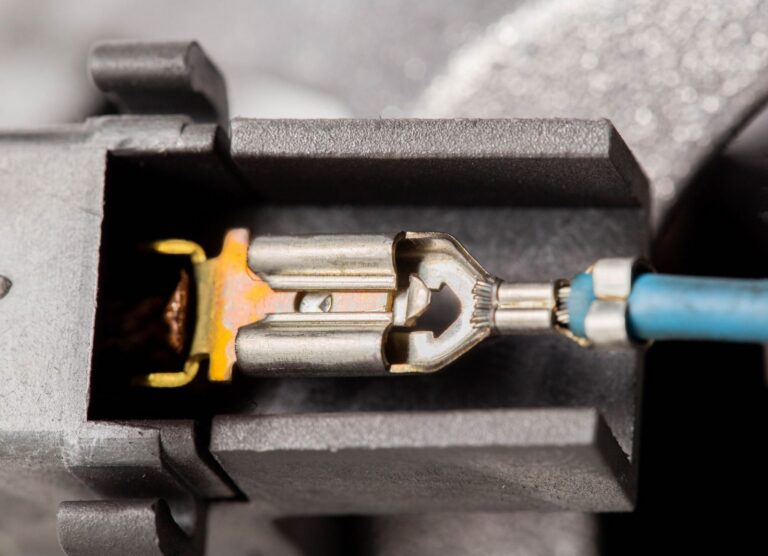
To understand why this flexibility matters, it helps to consider the role of flux in soldering. A crimped connection relies on mechanical deformation to establish intimate contact between the conductor and terminal. Soldering works differently. Molten solder must wet the surfaces being joined and form a metallurgical bond. Unfortunately, metal surfaces are rarely perfectly clean. Oxides and other contaminants can interfere with wetting, preventing solder from spreading and bonding properly. Flux addresses that problem by removing surface oxides and helping protect the surfaces during soldering.
While the metallic alloy influences a solder’s melting characteristics and other properties, Chris believes flux formulation is often what distinguishes one soldering product from another in actual production. For manufacturers, those differences can become apparent in how readily solder flows, how consistently joints form, how much residue remains, and how the material behaves during application. Chris also considers the operator’s experience. Flux formulations can influence spattering, odor, and residue characteristics, all of which affect the production environment.
An interesting example involves manufacturers using solder wire, supplemental flux, and solder paste from different suppliers. Each product may perform satisfactorily on its own, but the formulations can contain different activators and other chemical constituents. When those materials are combined during production, their compatibility becomes another consideration.
Chris explained that SolderKing develops its solder wires, fluxes, and pastes as related chemical technologies intended to work together. “All of those products are all part of the same chemical family and they work in unison.”
Using products developed to work together can simplify material selection and technical support. While products from different manufacturers are not necessarily incompatible, their chemistry should be evaluated when used together.
When asked about the most common soldering problems manufacturers encounter, Chris identified using the wrong solder for the application. “People outside the industry might think solder is just solder, but they couldn’t be more wrong. There’s a lot of technology behind it.”
Different applications require different levels of flux activity. A relatively clean, readily solderable surface may need only a mildly active formulation, while more challenging oxides can require stronger chemical action. The difficulty arises when a manufacturer chooses a highly active flux without considering what happens after soldering.
Chris offered the example of an aggressive flux used on a cable assembly that will subsequently operate in a humid environment. If potentially corrosive residues remain, the connection may experience problems long after the initial soldering operation appeared successful. He also pointed out that some fluxes capable of soldering difficult materials, such as stainless steel, would be inappropriate near sensitive electronics because of their corrosive characteristics. The lesson is that the most aggressive flux is not automatically the best flux.
This is one reason SolderKing has been developing materials with ROL0 flux classifications. Under the IPC classification system, ROL0 identifies a rosin-based, low-activity flux with no detectable halides under the applicable test. These formulations are of interest in applications where residue characteristics, corrosion resistance, and long-term electrical reliability are important. Chris emphasized, however, that more active formulations have legitimate applications, and material selection must account for the manufacturing process, cleaning requirements, and conditions the finished assembly will encounter.
That practical approach also guides SolderKing’s technical support. When a manufacturer reports a problem, the company’s team can review the soldering operation, examine the materials being used, and discuss difficulties operators are experiencing. Chris mentioned solder wire that contributes to premature soldering iron tip deterioration as an example. Repeated tip replacement and production interruptions can become costly, even when the problem initially appears minor. Customers can submit photographs and work directly with SolderKing’s technical team to evaluate possible solutions.
Regardless of the proposed solution, Chris insists on one guiding principle. “Test, test, and test again.”
His recommendation is to evaluate materials under conditions relevant to the product’s actual end use rather than assuming that a satisfactory initial solder joint guarantees long-term reliability. It’s a philosophy that would be equally at home in a wire harness operation qualifying a new terminal, crimping tool, or assembly process.
Recognition and International Growth
SolderKing’s international business has grown considerably since its founding in 2018. The company has established a presence throughout the United Kingdom and expanded into European and Eastern European markets. In 2025, that growth earned SolderKing a King’s Award for Enterprise in International Trade, one of the United Kingdom’s most prestigious forms of business recognition.
According to Chris, exports represented approximately 44 percent of the company’s business at the time of the award. For a family-owned manufacturer established only seven years earlier, the recognition was particularly meaningful. Chris described it as a source of pride for his family, the company, and British manufacturing.
The company’s next major opportunity is the United States. Chris confirmed that SolderKing is actively seeking American sales partners as it expands into the market. Rather than simply establishing distribution channels and shipping products, the company intends to extend the support model it has developed in Europe, including technical training, customer visits, participation in industry events, and direct assistance to distributors working with manufacturers.
Chris explained that SolderKing’s European sales partners represent the brand exclusively, allowing them to develop specialized product knowledge and maintain a close working relationship with the manufacturer. The objective in America is to build similarly committed relationships that can support customers beyond the initial product sale.
Toward the end of the interview, Chris described the satisfaction he gets from seeing photographs of SolderKing products being used by customers, whether close to home or thousands of miles away. For someone who grew up listening to discussions about solder chemistry around the family dinner table, seeing the products he helped develop reach manufacturing benches around the world carries a special significance.
“It’s a beautiful thing,” he said.
And perhaps that explains SolderKing’s approach better than any discussion of alloys, flux formulations, or market strategy could.