














Most quotes take three to five hours of active touch time. More than half take six business days or more to deliver. The new WHMA survey shows where the rest of the time goes.
By Arik Vrobel, Founder and CEO, Cableteque
The WHMA Innovation Advisory Team (IAT), which I co-chair, has just released its 2026 Wire Harness Industry Survey[1] . Several of the findings connect directly to two pieces in the September/October issue of WHN, and together they point to a problem the industry rarely talks about: where the time in a quote actually goes.
The survey asked manufacturers how long their quotes take and what slows them down. The most common answer for active touch time was three to five hours per assembly. Yet more than half of respondents (57%) say an RFQ takes six business days or more to turn around. Thirty percent say more than ten.
The survey doesn’t measure how those two numbers relate. But when we asked what holds up an RFQ, the answer was clear. Seventy percent cite waiting for supplier pricing and lead times. Sixty-one percent cite waiting for customer clarification. Only 17% name estimating or engineering work.
The quote isn’t waiting on the estimator. The estimator is waiting on everyone else.
Built for speed, stuck in the queue
Varghese John’s article in the September/October issue of WHN, “The Challenge of Making a Perfect Prototype in Wire Harness Contract Manufacturing,” is one of the most practical pieces I’ve read on what happens between a customer drawing and a finished harness. His 34-point checklist for prototype readiness belongs on every NPI engineer’s desk.
John explains that at the quotation stage, the focus is usually on component availability and manufacturer part numbers “so that a quotation can be provided quickly.” The in-depth drawing review comes later. The quote stage is designed to be fast.
So why does it so often take weeks?
The gaps are predictable
The survey is specific about what manufacturers are waiting for. The most frequently cited gaps in customer RFQ data are manufacturer part numbers (70%), missing or unidentified parts (61%), and customer specifications or workmanship requirements (39%). Seventy percent of respondents say their quoting process is limited by poor or incomplete inputs.
These are the same items John describes as the focus of the quote-stage review. We already know which questions stall a quote. The problem is when we ask them.
I’ve spent more than 35 years in this industry, and the sequence hasn’t changed much. An RFQ arrives and joins the queue. Someone opens it a few days later and finds a missing part number. An email goes to the customer. The answer comes back, the materials list gets completed, and only then do the supplier requests go out. When the pricing returns, a spec question surfaces that nobody caught the first time. They find every gap, chase it, and resolve it one by one. Every one adds days.
Ask every question on day one
John’s tenth golden rule is clearly from experience. Customers can get frustrated by questions that weren’t raised during quotation but come up during the prototype build. He’s also right that not every technical query can be found at the quote stage. Many only surface once the build begins.
That’s true of the build. The questions that hold up the quote are different. Missing part numbers, unidentified components, and missing specifications sit in the RFQ package the moment it arrives. The difference between a two-day quote and a two-week quote is often whether those questions go to the customer together on day one, or one at a time as each is discovered.
The same goes for suppliers. You can check pricing and stock for standard parts in real time. Requests for custom or long-lead items can go out at the start and run in parallel with the rest of the quote.
None of this asks the estimator to work faster. It asks the waiting to start sooner and happen all at once.
Automation has reached the drawing, not the gaps
The industry is investing in automation. Seventy percent of survey respondents are using, piloting, or evaluating tools that extract data from drawings and PDFs. Only 26% are doing the same for design-package validation. Just one respondent describes their quoting process as highly automated and scalable.
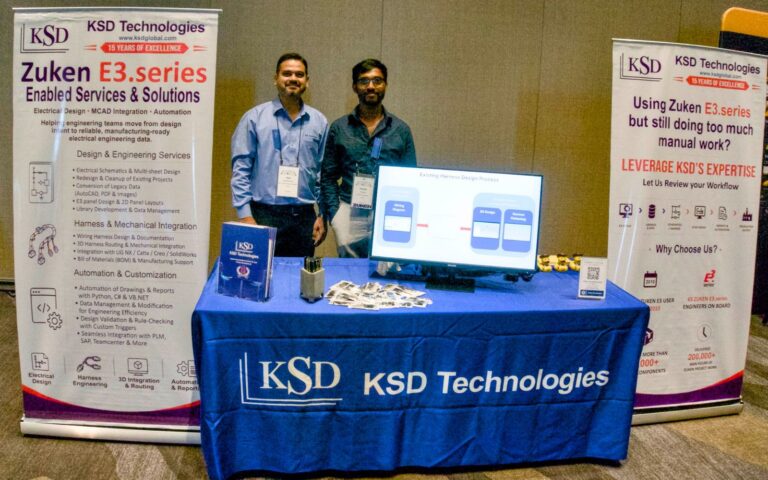
That imbalance matters. A tool that reads a drawing faster only gets you to the waiting sooner. In his interview in the same September/October issue, Vipul Deshbhratar, Manager of Electrical & Embedded Systems at KSD Technologies, made a related point: “We talk a lot about automation, AI, digital transformation and new design tools. But none of those things work particularly well when the basic engineering data is unreliable.”
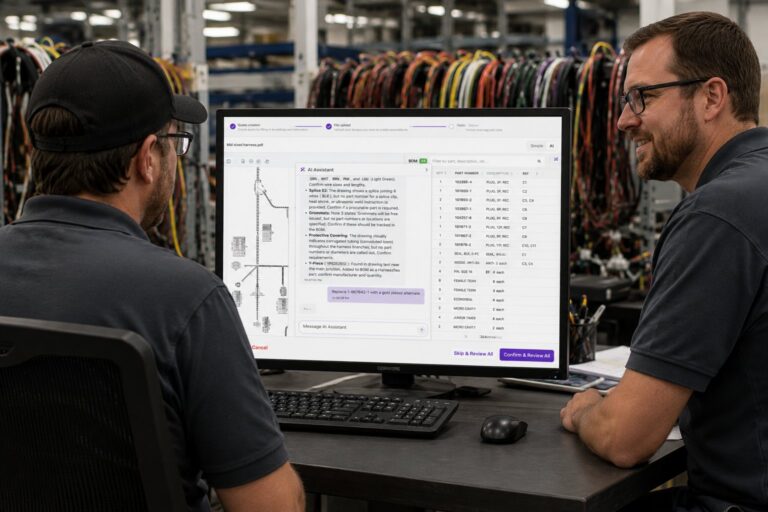
The next step for automation in quoting isn’t reading the RFQ package faster. It’s recognizing what’s missing, filling in what it can, and connecting engineering to live supplier pricing so questions and requests go out on day one.
In practice, that means reviewing the full RFQ package as soon as it arrives. Flag what is missing or inconsistent. Fill in what can be filled in. Check live supplier pricing and stock for standard parts, and request everything else at the same time. The estimator starts with a list of open questions on day one, not a week later.
Electri-Cord Manufacturing is a good example. A complex RFQ could take its estimating team two weeks, most of it spent sending requests out and waiting on suppliers. The volume of emails and calls was so high that suppliers began to show signs of quote fatigue. Once supplier pricing and re-costing were automated, an update became a refresh rather than another round of emails. Those same complex RFQs now turn around in one to two days, and same-day quotes are no longer unusual.
A standard would help everyone
Tools can catch what’s missing. A shared standard means less goes missing in the first place.
The survey shows a real appetite for one. Seventy-four percent of respondents rate a standardized RFQ minimum data checklist as very or extremely useful. Sixty-five percent would use it internally to evaluate incoming RFQs, and 57% would share it with or request it from customers. Developing and piloting that checklist is one of the IAT’s recommended next steps, and it’s work I’m looking forward to.
John’s checklist sets out what a drawing needs before building a prototype. A quote-readiness equivalent, agreed across the industry and shared with OEMs, would fix the problem at the source. Customers would know what to send. Manufacturers would have a clear basis for asking.
The most expensive part of a quote
John closes his article by noting that the drawing is the master document, but during the prototype build it “finally has to meet physical reality.”
The quote has its own moment of truth: when the customer decides whether you were fast enough. For most manufacturers, the time lost before that moment isn’t spent working. It’s spent waiting. Waiting produces nothing. It costs time, and it risks the order.
That’s the part worth fixing first.
The 2026 Wire Harness Industry Survey includes 23 respondents across executive, engineering, operations, and quoting roles. The IAT presents the results as directional, not representative of the entire industry.
[1]should be able to send a link if WHMA posts before WHN goes out.