














By Joe Tito, Wiring Harness News
A couple of times a year, TE Connectivity opens its doors to the trade press for Media Technology Days—a sort of open lab where editors and journalists get to peek behind the curtain at developing technologies in the world of interconnects, sensors, and application tooling. For those of us covering wire processing and harness assembly, it’s a goldmine of perspective on where the industry is headed.
At this year’s session, I had the opportunity to speak with Stefan Glaser, Director of Product Management, New Technologies & Standardization Automotive at TE Connectivity Germany GmbH, and Ruediger “Rudi” Ostermann, Vice President and Chief Technology Officer for TE’s Automotive Business Unit. Our discussion revolved around the company’s participation in Next2OEM, an ambitious, government-supported initiative in Germany aimed at developing a fully automated wiring harness production and installation process. It’s one of those projects that could change where, how, and by whom the wiring harness of the future is built.
Next2OEM: Building a Fully Automated Future
The Next2OEM initiative is led by Audi and funded by Germany’s Federal Ministry for Economic Affairs and Energy. The goal is deceptively simple: make fully automated harness assembly a reality. The project brings together ten partners—ranging from OEMs and harness manufacturers to automation specialists and component suppliers—and commands an investment of roughly €27 million over three years.
“The objective,” Stefan explained, “is to develop a fully automated process of harness assembly and integration into the car. What makes this project unique is that we are not just working on paper. We are building the actual hardware that will run in Audi’s Ingolstadt plant.”
By late this year, TE and its partners expect to begin “show production weeks” at Audi—demonstrations of live, automated harness manufacturing cells capable of assembling and installing wiring systems directly into vehicle modules. From there, the automaker will assess which processes are mature enough for series production and which still require refinement.
Why Bring Harness Production Home?
For decades, harness manufacturing has been a labor-intensive process carried out in low-cost regions like North Africa or Eastern Europe, with harnesses shipped thousands of kilometers to assembly plants. That approach no longer makes sense in a world facing geopolitical disruptions, rising labor costs, and tightened CO₂ regulations.
“There are multiple drivers,” said Stefan. “OEMs want shorter supply chains, smaller carbon footprints, and the ability to react quickly to design changes. But you cannot just move manual harness production into a high-cost country. You need automation to make it viable.”
If automation enables wiring harness production directly next to—or even inside—the vehicle assembly plant, it fundamentally alters the relationship between OEMs and their traditional suppliers. Harness manufacturing could shift from offshore operations to modular production cells embedded in the vehicle assembly ecosystem.
Automation Begins at the Component Level
TE Connectivity’s role in this transformation is pivotal. As one of two connector suppliers in the project (alongside Kostal), TE is responsible for ensuring that components themselves are designed to enable automation.
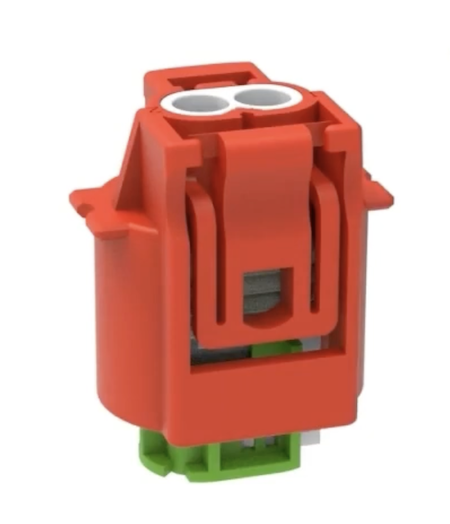
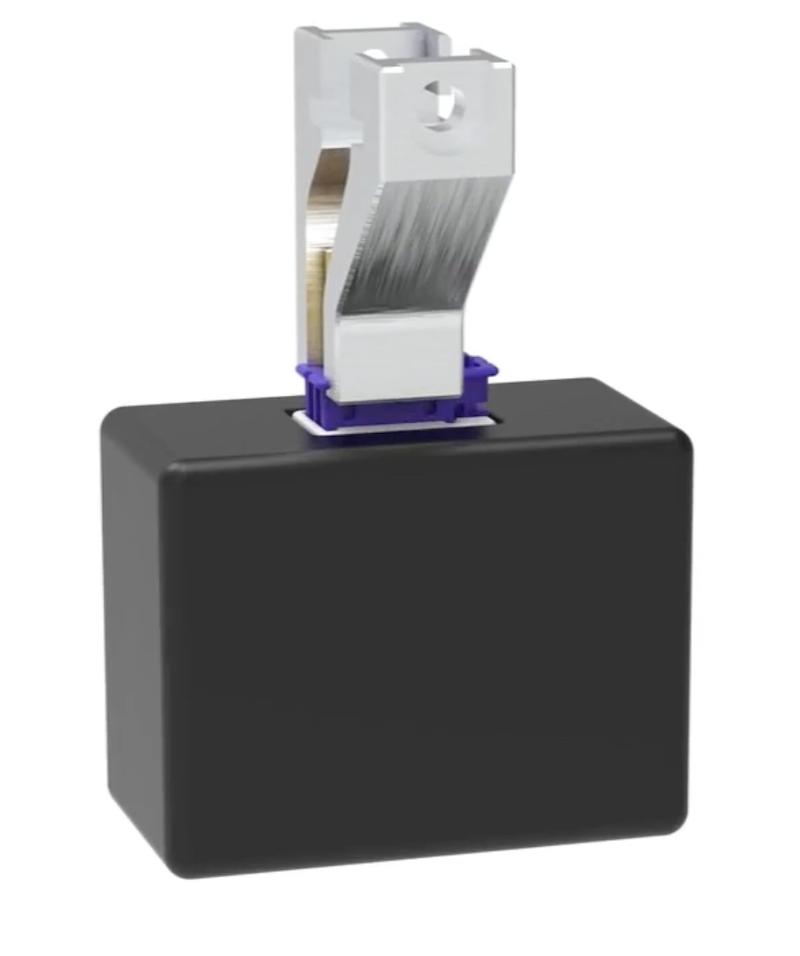
“Our focus is on making connectors that can be reliably gripped, oriented, and inserted by robots,” Stefan noted. “For the first time, we’re standardizing connector geometry specifically for automated processes—from the supplier to integration into the vehicle.”
As Stefan put it in TE’s official release, “We don’t just think in terms of electrical performance, but also in terms of automated process chains.” It’s a deceptively simple statement that captures a profound shift. For TE, this is about designing components that can survive—and thrive—in an automated production environment.”
A Changing Ecosystem
CTO Rudi Ostermann emphasized that automation isn’t new for TE. “In other business units—like appliances—we already perform subassemblies using automation,” he said. “The requirements differ, but the philosophy is the same: automation becomes a differentiator.”
He sees a future where the wiring harness industry’s traditional structure evolves into a more integrated ecosystem. “Some harnesses may no longer be produced in low labor-cost countries like North Africa or Asia,” Rudi said. “They might be produced right at the door of the OEM—or even inside the plant itself.”
Software-Defined Vehicles and Modular Architectures
The wiring harness, long considered a necessary evil, is now a bottleneck in vehicle design. Today’s cars carry miles of wire, hundreds of connectors, and an array of control modules that make software updates cumbersome. That’s where the software-defined vehicle comes in—a new architecture built around zonal controllers and modular harness sections.
“This architectural shift makes automation much more practical,” Rudi explained. “If you cut the harness into smaller pieces, it becomes manageable for robots. Full-size harnesses are incredibly complex, but zonal architectures change that equation.”
Stefan added, “We have the fortunate situation that many parallel changes—architecture, automation, and quality requirements—are all pulling in the same direction.”
A Redefinition of the Harness Industry
As these new architectures take hold, traditional harness suppliers face a potential identity crisis. “Today, their business model is built around managing complexity,” Stefan said. “They build thousands of unique harnesses by hand, often with a batch size of one. That’s not sustainable when automation enters the picture.”
If wiring harnesses become simpler, modular, and locally produced, the advantage of high-labor, low-cost regions diminishes. “Production cells may be located directly at the OEM or at module suppliers,” Stefan continued. “It could mean that the traditional separation between harness maker and car builder disappears.”
Automation-Ready Connector Design
Developing connectors for automation isn’t simply a matter of tweaking existing designs. Robots don’t have the nuanced touch of a human operator, so every interface must account for gripping stability, insertion angles, and tolerance compensation. “Just one small slip in a gripper can stop the entire automated process,” Stefan explained.
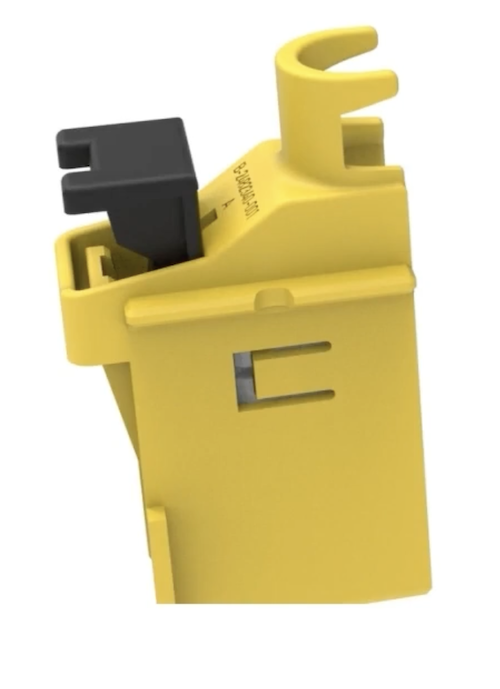
A good example lies in modular vehicle construction, such as so-called “unboxed” concepts, where large vehicle modules are wired in parallel and later joined. “If wiring is done in modules upfront,” said Stefan, “you need connectors that can tolerate significant misalignment when those modules are brought together.”
These design requirements extend beyond connector housings to include things like brackets, seals, cable ties, and splices, all of which must support automated handling and installation.
A Broader Industrial Ripple Effect
While Next2OEM is an automotive initiative, its implications stretch across industries. Automation-ready connectors and robot-friendly design principles will inevitably migrate into industrial, aerospace, and heavy equipment sectors.
I mentioned to the TE team that even small harness producers in North America are embracing automation. One mid-sized manufacturer near TE’s Pennsylvania facility recently invested six figures in automation equipment—something unthinkable two decades ago for a 20-person operation. “We see the same trend everywhere,” Rudi said. “High-mix, low-volume production is starting to adopt automation, and that’s exactly where these technologies will have the biggest impact.”
No Single Solution—And That’s the Point
“For all the optimism around automation, there won’t be one universal path forward,” said Rudi. “Some talk about unboxing and ribbon cables; others are focused on modularity or hybrid harness designs. The important thing is that TE is participating in all of these directions.”
Whether the next revolution in automotive wiring comes from Ingolstadt or Silicon Valley, TE intends to be part of the foundation.
The Road Ahead
The Next2OEM project is set to culminate in early 2026, but for TE, it’s not an endpoint—it’s a proving ground. The company’s automation-ready connector geometry, standardized for robotic handling, will almost certainly influence future industry norms.
“With its advanced level of robotic automation readiness,” Stefan said, “this innovative gripper interface has the potential to set a new industry standard.”
For decades, the wiring harness has been an indispensable tangle of complexity—one of the few remaining islands of manual labor in an otherwise automated world. Next2OEM suggests that even this island’s days may be numbered. And TE Connectivity, with its combination of deep component expertise and automation know-how, is helping chart the course toward that new mainland.