










As wire harness manufacturing advances, TE Connectivity’s Application Tooling Division helps customers balance cost, flexibility, and scale by combining semi-automatic and fully automated solutions.
Automation is no longer a binary choice. In the world of wire processing, manufacturers are moving beyond the old question of whether to automate and instead asking how much and where. That’s the perspective of Dr. Nengquan (Nick) Liu, CTO of the Application Tooling Division at TE Connectivity, whose discussion with WHN during TE’s Media Technology Days breaks down the evolving relationship between semi-automatic and fully automated tooling in harness production.
“Smart manufacturers don’t think in absolutes anymore,” Nick noted. “It’s about the optimal mix of technologies that supports your product variation, your labor strategy, and your long-term ROI.”
Understanding the Automation Spectrum
In TE’s framework, automation in wire harness production spans a spectrum—from manual with hand tools to fully automated systems—with semi-automatic solutions occupying the crucial middle ground. Fully automatic systems deliver speed and consistency, especially in high-volume, low-mix environments. But they come with steep upfront costs and rigid part-specific tooling requirements.
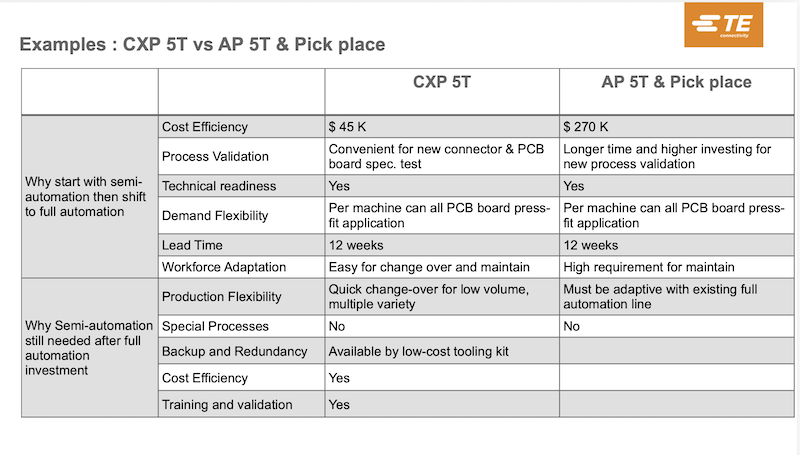
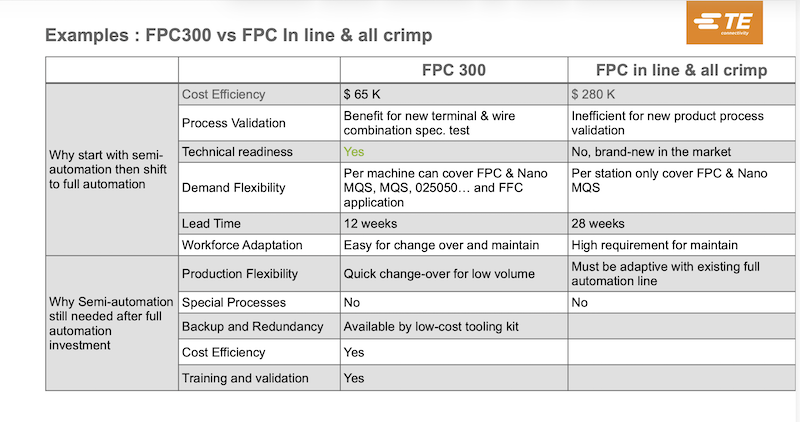
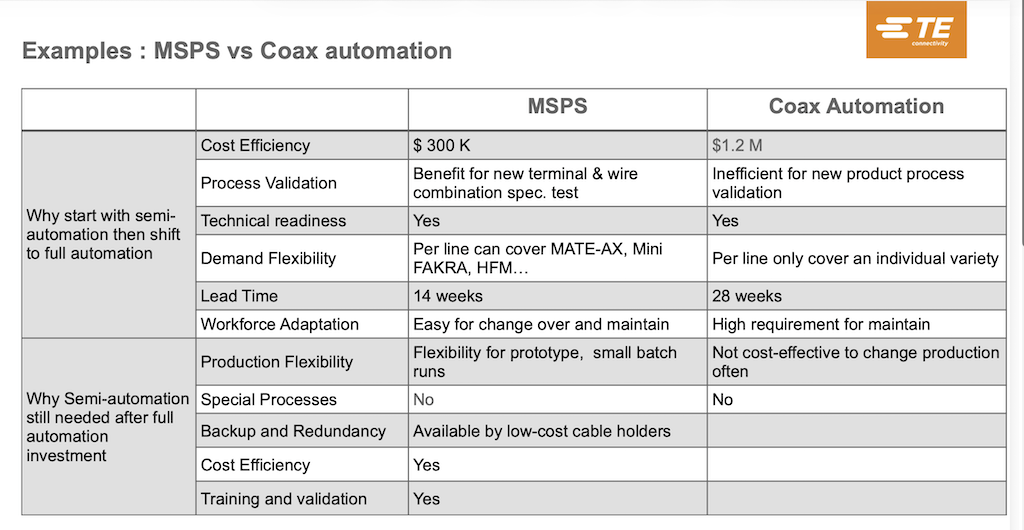
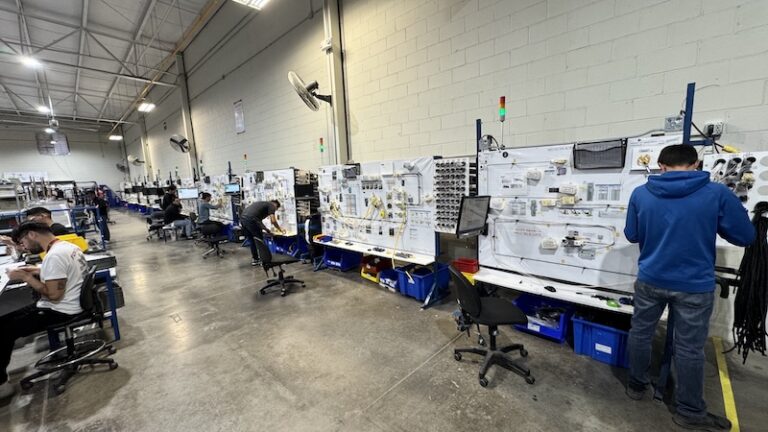
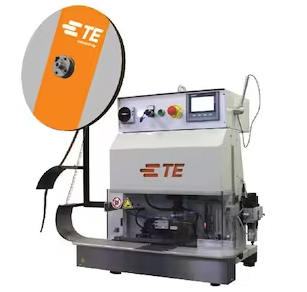
Conversely, semi-automatic solutions offer more flexibility, lower capital investment, and quicker changeovers. They rely on human-machine interaction, often combining automated crimping, stripping, or terminal insertion with operator handling and verification.
Rather than seeing semi-automation as a compromise, Nick sees it as a strategic tool. “Semi-automatic solutions are not just a steppingstone,” he explained. “They are often the best long-term solution for certain products or businesses.”
The Case for Semi-Automation
Nick noted that TE identifies several scenarios where semi-automatic tooling is not only viable—but optimal:
- High product variation: If your product portfolio includes frequent design changes, short runs, or customized builds, semi-automatic workstations offer a faster return on investment by reducing changeover times and tooling costs.
- Workforce integration: For manufacturers who want to empower skilled labor while reducing repetitive strain, semi-automation enables operator-guided production while automating precision-critical steps.
- Incremental investment: Not every company can (or should) leap directly to full automation. Semi-automatic systems provide a more accessible entry point with shorter training curves and easier retooling.
Nick emphasized that many of TE’s customers choose semi-automation intentionally, not as a fallback. “Some of the most advanced operations we support are running semi-automatic systems by choice.”
When Full Automation Makes Sense
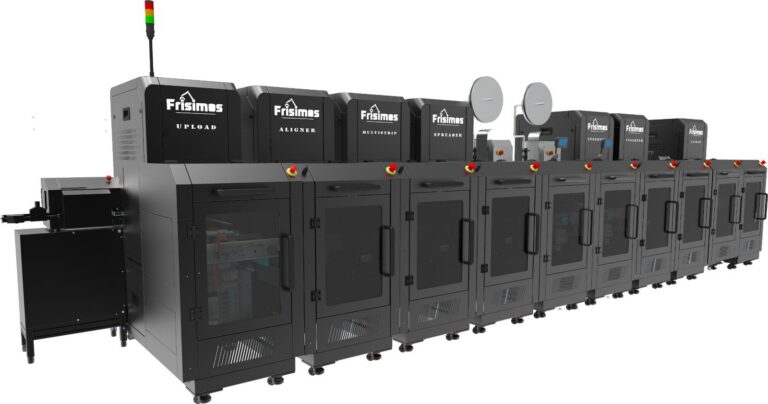
Of course, there are clear-cut cases where full automation is the obvious answer. High-volume, low-mix environments—such as automotive Tier 1 production lines—stand to benefit the most.
In these settings, the payoff is clear:
- Speed: Fully automated lines can exceed human throughput by significant margins.
- Consistency: Automated systems eliminate variability and minimize the risk of defects due to operator fatigue or error.
- Cost over time: Though capital-intensive, the long-term ROI often favors full automation once production volume crosses a certain threshold.
But Nick cautioned that even in full automation, risk exists. “If your product changes mid-cycle, or if your demand forecast drops, you may be stuck with expensive equipment that no longer fits your need.”
This risk is especially acute in industries with volatile demand or evolving standards, such as EVs or aerospace, where design changes are frequent and regulatory compliance can shift rapidly.
Combining Forces: The Hybrid Model
While the debate between semi-automatic and fully automatic tooling often centers on choosing one over the other, many manufacturers are finding success in combining both approaches. This hybrid strategy leverages the strengths of each method, applying them where they make the most sense across the production line.
For example, high-volume wire processing operations with consistent cable lengths and minimal variation are well suited to fully automated systems. These machines can handle repetitive tasks with maximum speed and minimal operator input, delivering efficiency and consistency. However, not all harness assemblies follow this model.
In cases where the wire lengths vary, or when flexibility is needed to accommodate frequent changeovers or lower production volumes, semi-automatic tooling becomes the more practical option. These machines often require more operator involvement but provide greater adaptability. They can be ideal for prototype builds, short runs, or when unique component handling is necessary.
The presentation emphasizes that rather than forcing a one-size-fits-all solution, manufacturers should evaluate each stage of their production flow independently. This ensures that the right tooling is selected for the right task — optimizing both quality and throughput across the board.
Inside a Real-World Hybrid Line
One of the most compelling takeaways from the was the hybrid approach Nick outlined—where semi-automatic and fully automated systems coexist within a plant or even within the same process chain.
Nick describes a real-world scenario: a harness assembly that begins with automated wire cutting and stripping, followed by operator-assisted seal insertion and terminal crimping using semi-automatic benchtop machines, and concludes with an automated quality check.
“This is where smart line balancing comes into play,” he said. “We optimize each step based on complexity, required precision, and operator fatigue.”
TE even offers tooling that can be scaled over time. For example, a semi-automatic crimping platform today might be upgradable to full automation down the road via modular attachments or robotic integration.
Making the Right Choice
So how should manufacturers decide when and where to automate?
TE offers several guiding questions:
- What is your product complexity and variation?
- What is your expected volume over the next three years?
- How often do you expect design or customer changes?
- What is the skill level and retention rate of your workforce?
- What kind of ROI timeframe are you targeting?
Nick and the Application Tooling team often work directly with customers to simulate scenarios, using internal ROI calculators and line balancing tools to compare investment paths.
“The right choice is different for every company,” he insisted. “We don’t sell equipment—we deliver outcomes.”
The Big Picture
As the harness industry faces increased demand for customization, data traceability, and labor efficiency, Nick believes the companies that thrive will be those that treat automation not as a checkbox but as a configurable strategy. He highlighted the importance of modularly, maintaining flexibility through hybrid setups, and thinking long-term.
For TE Connectivity, that means continuing to offer everything from hand tools to benchtop presses to fully automated work cells—and helping customers navigate the space in between.