












A Discussion with LPMS USA
For wire harness manufacturers, sealing and protecting electrical connections remains a persistent challenge. Traditional potting methods have long been used to encapsulate connectors, circuit boards, and sensitive electronics, but they often come with tradeoffs in production time, material usage, and manufacturing efficiency.
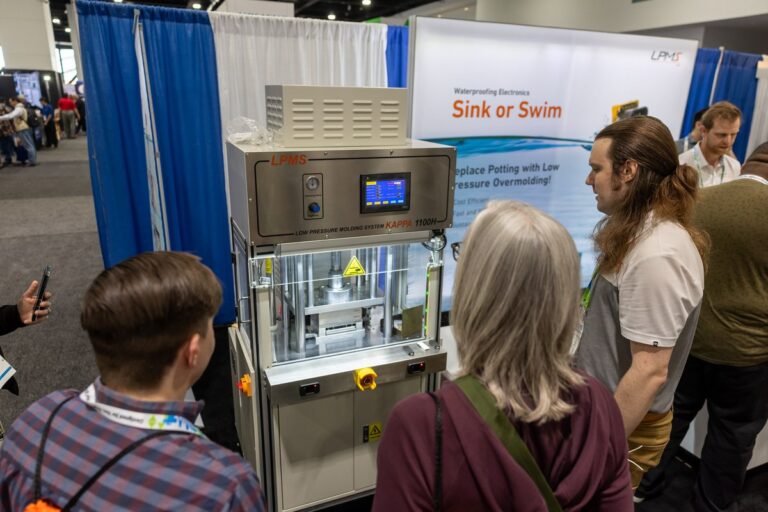
Low-pressure molding (LPM) offers an alternative approach. LPMS, a global supplier of low-pressure molding equipment and materials, helps harness manufacturers protect electronics and cable assemblies using thermoplastic encapsulation processes that operate at relatively low injection pressures.
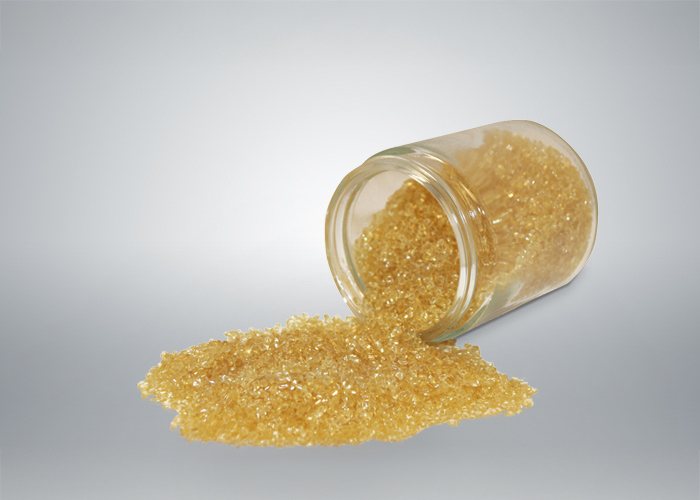
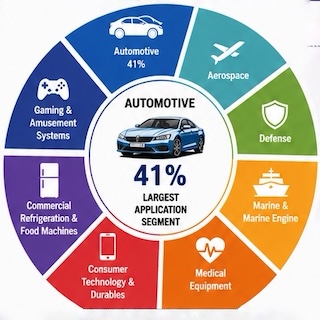
LPMS systems are used across a wide range of industries, including automotive, agriculture, medical, and industrial electronics. Using specialized polyamide and polyester hot‑melt materials, the process can seal delicate components while simultaneously forming strain relief and environmental protection features in a single step.
Wiring Harness News recently spoke with Brian Betti, President of LPMS, about the differences between traditional potting and low‑pressure molding, the challenges harness manufacturers face when sealing connections, and how the technology can affect production efficiency, durability, and long‑term reliability.
WHN: What are the most common challenges wire harness manufacturers face when sealing and protecting connections?
Brian: There are three main challenges. The first is adhesion to the cable jackets. To create a watertight seal, the molding resin must bond to the cable jacket, and some materials such as Teflon are extremely difficult to adhere to.
The second challenge is environmental protection. In many cases, manufacturers are not simply protecting a connection from water. Components may be used in automotive, medical, or other demanding environments, so we must understand what materials the molding resin may contact and the temperature range the part must withstand.
The third challenge is cable tolerances. When designing a mold, it is critical to understand the dimensional tolerances of the cable. In some cases those tolerances vary significantly, so replaceable mold inserts may be required to accommodate the variation.
WHN: In what applications does traditional potting still dominate, and why?
Traditional potting is still commonly used to encapsulate very large circuit boards that generate significant heat. Potting resins typically have better thermal conductivity, which allows them to extract heat from the components effectively. In contrast, the resins used in low‑pressure molding do not have high thermal conductivity, and the size of the part that can be molded is also limited.
WHN: What are the key limitations of conventional potting in cable assemblies?
Most customers who contact us already understand the limitations of potting and are looking for ways to improve efficiency and quality. Low‑pressure molding can improve repeatability while reducing costs, manufacturing time, and production floor space.
WHN: Where do you most often see unnecessary cost or inefficiency in current sealing methods?
A good example is potting a circuit board inside a housing. The potting material must fill up to the height of the tallest component. Low‑pressure molding can eliminate the housing entirely and “skyline” around the components, minimizing the amount of material used and lowering the overall cost of the part.
WHN: At a high level, how does low‑pressure molding differ from traditional potting?
Low‑pressure molding creates an environmental seal around electronic circuits to meet the customer’s requirements. The process is faster and more repeatable than potting. Because the process uses a thermoplastic, it eliminates the work‑in‑process time associated with room‑temperature curing.
WHN: What impact does injection pressure have on delicate connectors or electronics?
The molding resins used in our equipment were designed to flow at very low viscosity, which means very little pressure is required to move them through the mold. We have been overmolding SMT components for decades without issues.
WHN: How does cycle time compare between the two processes?
With low‑pressure molding, parts can be molded in seconds. Once the mold opens, the part is complete and ready to move to the next step in production. With potting or coating processes, the material must cure, which can require hours or even days.
WHN: How do labor requirements differ?
For coating processes, multiple people may be required to manage the line, including masking, coating, curing, demasking, and repeating the process. With low‑pressure molding, typically only one operator is required, and in some cases automation systems can load and unload parts.
WHN: How does cure time affect production flow?
The materials used in low‑pressure molding are single‑part thermoplastics and do not require curing. The resin is heated until it transitions from solid to liquid, injected into the mold, and then cooled back to a solid state. When the part is ejected, it is already solid and cool to the touch. The entire process typically takes only seconds, depending on the geometry of the part.
WHN: Are there meaningful differences in material waste?
Yes. Potting processes require purging the dispensing nozzle, which results in wasted material. Low‑pressure molding materials can be used with essentially no waste.
WHN: How does low‑pressure molding improve strain relief compared to potted assemblies?
With LPMS technology, strain relief can be molded at the same time the electronics or electrical connections are encapsulated. This means the entire process can be completed in a single step, whereas potting typically requires an additional strain‑relief operation.
WHN: What differences show up in high‑vibration environments?
Low‑pressure molding has been used in the wire harness and electronics markets for more than 40 years. Automotive and agricultural equipment are core markets, both of which involve high‑vibration environments.
WHN: How do the two approaches compare in moisture resistance or IP‑rated applications?
Low‑pressure molding is commonly used to create IP‑rated seals. Depending on the substrates and part geometry, ratings up to IP69K have been achieved. There are also applications where sealed components remain submerged in fresh or salt water for extended periods.
WHN: What have you seen in terms of long‑term durability or field reliability?
The technology has been used to seal high‑reliability automotive components for more than four decades. Some materials also include UV stabilizers that allow them to withstand direct sunlight for up to 20 years.
WHN: How does adhesion compare between molded polyamides and typical potting compounds?
Low‑pressure molding materials create a mechanical bond as the hot adhesive flows over the substrates. Potting materials are thermosets that create a chemical bond during curing. Both approaches can create effective seals when applied to the correct substrates.
WHN: How does low‑pressure molding affect throughput?
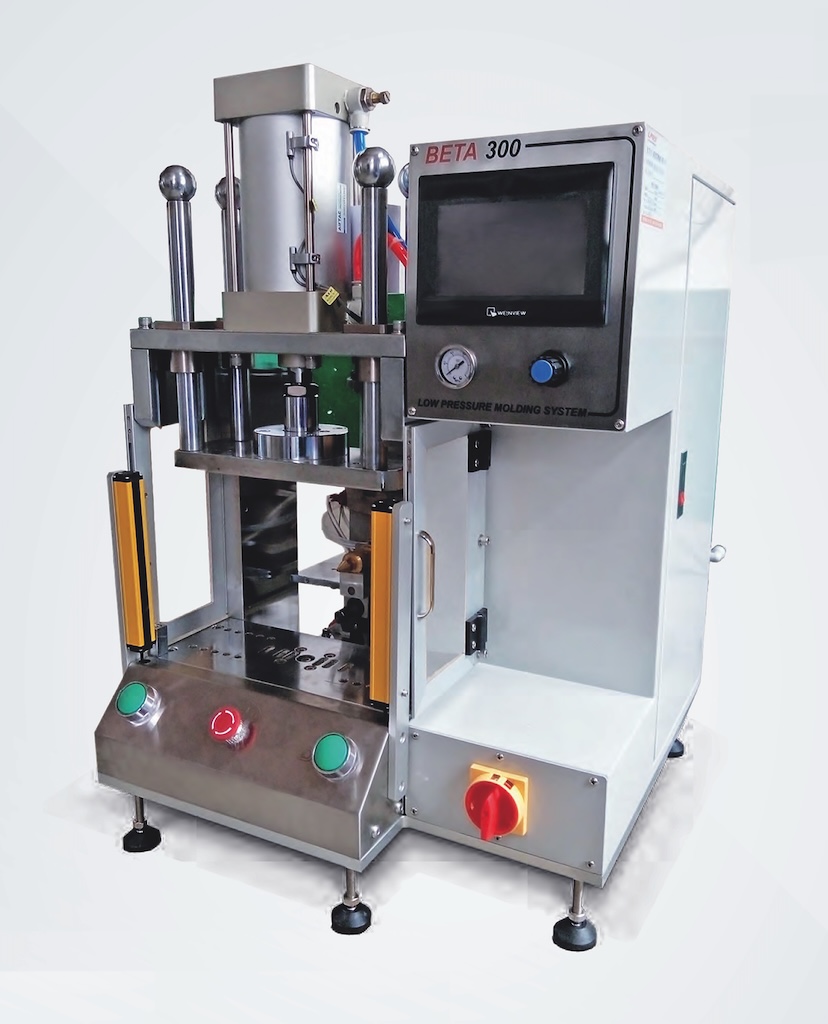
The fast molding cycle and LPMS equipment platforms allow manufacturers to use the technology for very high‑volume applications.
WHN: What impact does it have on scrap rates and consistency?
The molding process is highly repeatable, which reduces quality defects compared with other encapsulation technologies. One customer has molded more than two million parts with a 99.5 percent yield.
WHN: How does automation factor into low‑pressure molding systems?
Our equipment works very well with automation. Rotary and shuttle molding platforms provide easy access for robotic systems to load and unload parts.
WHN: What kind of ROI timeline do manufacturers typically see when switching from potting?
The exact timeline depends on many factors, but many manufacturers see a return on investment in less than 24 months.
WHN: When does potting still remain the better choice?
For new applications we review the customer’s requirements and CAD geometry. If the design does not easily allow molding in two steps or fewer, we work with customers to suggest design adjustments such as moving components, adjusting cable routing, or reducing thickness to make the part more suitable for low‑pressure molding.