

















Wiring Harness News recently spoke with Karl Bangert, General Manager of fleXstructures North America; Daniel Dengel, Global Business Development Director at fleXstructures in Kaiserslautern, Germany; and John Lewkowicz, Technical Lead, Digital Engineering at fleXstructures North America, to discuss developments since our January/February 2024 coverage of the company’s IPS 3D modeling software. Readers seeking background on fleXstructures and IPS may wish to visit wiringharnessnews.com and enter “fleXstructures” in the search bar to revisit the original feature.
Since that earlier conversation, fleXstructures has continued to refine and expand its physics-based simulation tools, addressing what Daniel describes as three major design challenges facing today’s wiring harness engineers: architecture transformation, electrification complexity, and multi-criteria validation in dynamic environments.
Architecture Transformation and Early Topology Decisions
Daniel began by framing the discussion around ongoing changes in vehicle architecture. Automotive OEMs are transitioning from centralized electrical systems to zonal architectures, driven by the need to reduce harness length, weight, and cost. That shift often requires repositioning ECUs and redesigning routing topologies from the ground up.
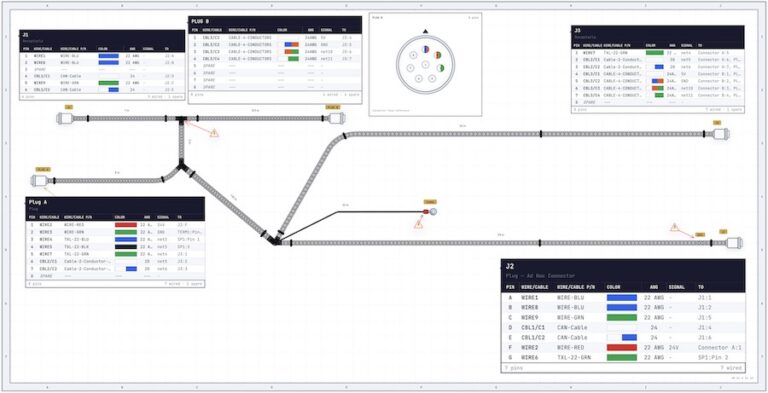
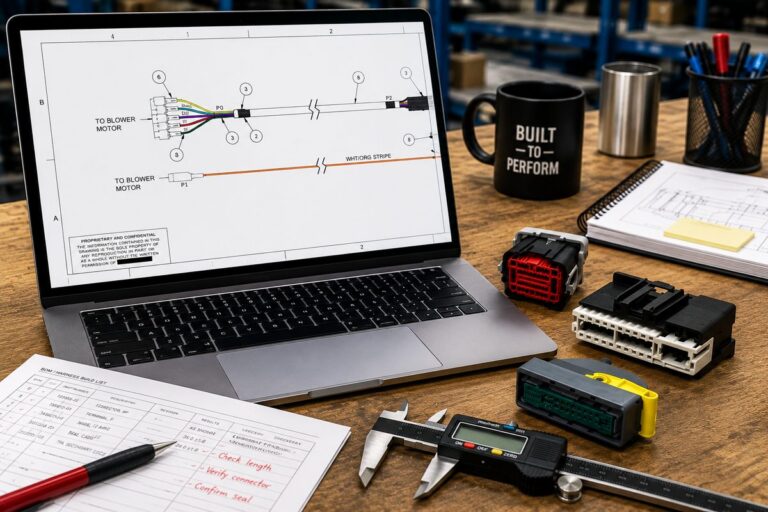
Traditionally, topology decisions are made in 2D electrical design environments such as Zuken E3.series. These tools define pin-to-pin connectivity and functional logic, but they do not fully account for how the harness will physically behave once installed. Engineers may know how a system functions electrically, yet remain uncertain whether it is mechanically robust, serviceable, or even installable. IPS is not intended to replace these 2D design tools; instead, it builds on their topology definitions by bringing electrical intent into a physics-based 3D validation environment.
Daniel explained that IPS enables engineers to move directly from a 2D topology decision into a physics-based 3D validation environment with minimal friction. Designers can evaluate different routing options, test cable lengths, and assess serviceability early in the process. If a physical conflict or reliability concern is discovered, the engineer can return to the 2D design, adjust the topology, and re-evaluate in 3D. This iterative loop supports early, physics-correct decision-making rather than late-stage correction.
The goal is not simply to reduce length or cost, but to preserve reliability and serviceability. Engineers must consider the logistics of harness installation during assembly, whether a technician can access a connector in the field, or whether packaging constraints introduce unintended stress. IPS allows those considerations to be integrated at the architecture phase rather than discovered after prototypes are built or vehicles are delivered.
Electrification and Voltage Coexistence
A second challenge involves electrification and the coexistence of 12-volt and 48-volt systems. As OEMs weigh the benefits of shifting to 48 volts, lower current demands and reduced conductor diameters create new packaging opportunities, but also new design variables.
According to Daniel, IPS treats cables, hoses, and other flexible components as mechanical entities defined by stiffness, diameter, and physical tolerances. Whether a system is 12 volts, 48 volts, or higher, the software simulates packaging behavior based on measurable physical properties. The emphasis is on realistic mechanical performance within tight design spaces.
This capability becomes particularly important when electrification drives tighter packaging and weight reduction targets. Designers must validate clearances, bending radii, and mechanical loads across multiple configurations, something that is difficult to accomplish accurately in a purely 2D environment.
MeSOMICS and Measured Cable Data
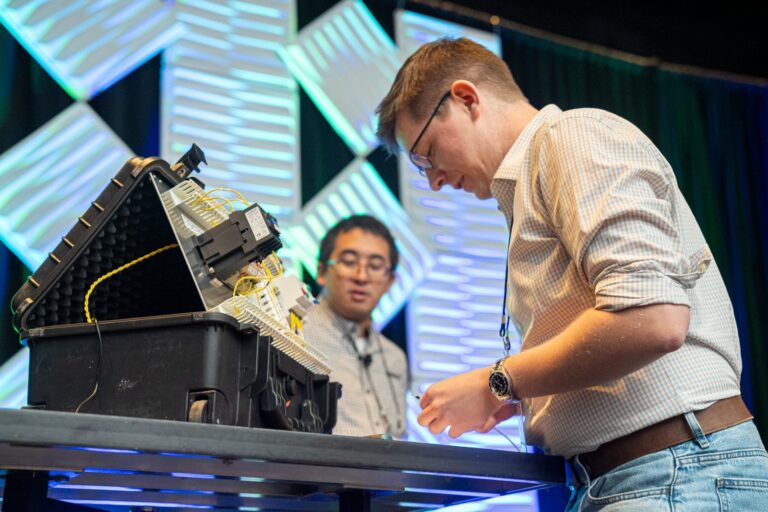
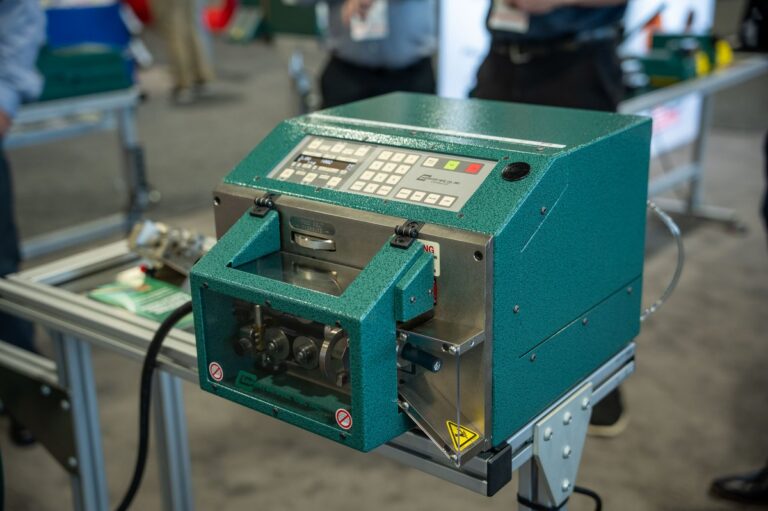
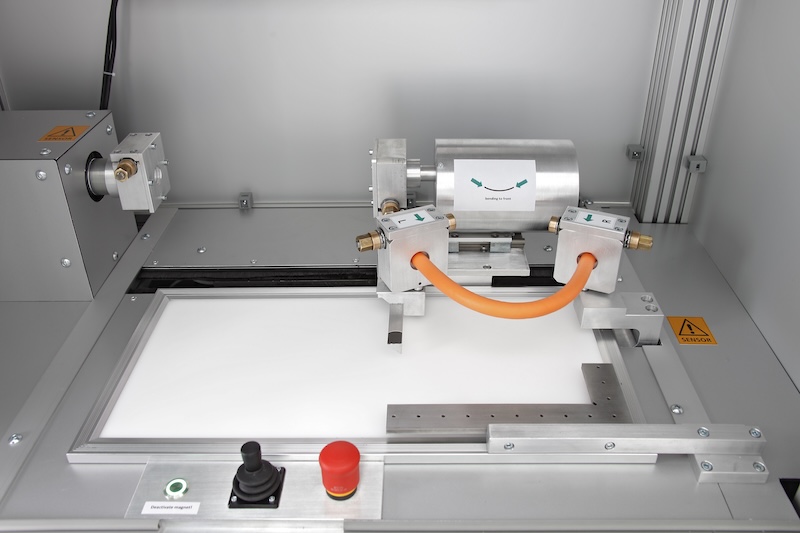
An important development supporting this physics-based approach is MeSOMICS, a measurement system developed in conjunction with research partners in Germany. Daniel explained that fleXstructures Germany emerged as a spin-off of a Fraunhofer Institute and continues to work closely with that organization. MeSOMICS is a patented measurement machine that captures the mechanical properties of individual cables.
Karl summarized it simply: “It’s fair to say that we developed it in house in order to provide trust for our users that what they are seeing on the computer screen with virtual testing in IPS Cable Simulation matches physical testing in MeSOMICS. This is the essence of Virtual Validation using Digital Twins: the math of the program must capture the physics of the real world.”
Measured cable data is now available through a centralized digital library, enabling engineers to pull physically accurate cable properties directly into IPS. Rather than approximating stiffness or behavior, designers can simulate harness assemblies using real, measured data from an expanding component database. This approach strengthens the link between physical testing and digital validation, embedding empirical mechanical properties directly into the design workflow.
This represents a shift from theoretical modeling toward empirical validation embedded in the design workflow.
Closing the Loop Between 3D and the Form Board
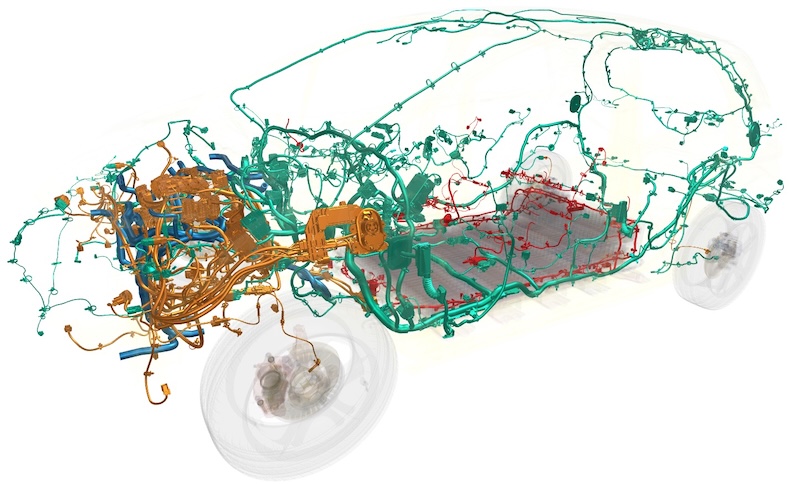
A common industry concern is what happens when designs move from 3D modeling back to 2D production documentation.
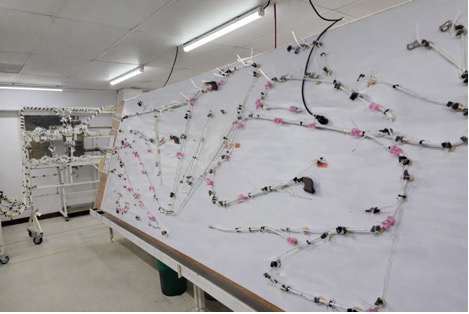
Daniel acknowledged that when harnesses are flattened into 2D drawings for form boards, significant mechanical information can be lost. Torsion, force distribution, and physical strain are not visible in a static PDF. These omissions can lead to late-stage failures, requiring redesign of the harness, mounting hardware, or even vehicle packaging.
IPS addresses this gap by creating a loop between 3D vehicle context and 2D form board design. Engineers can flatten a harness while preserving mechanical information, make orientation or routing changes in 2D, and then immediately re-evaluate the impact in the virtual vehicle. Karl noted that this approach can reduce process time dramatically, compressing weeks of iteration into days.
The implication is significant. Instead of building, testing, correcting, and repeating, teams can validate decisions virtually and arrive at a more mature design before physical builds begin.
Beyond Automotive
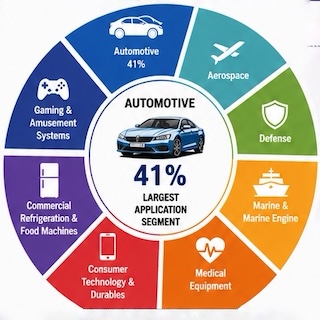
While automotive remains a primary market, the methodology is not limited to passenger vehicles. Karl estimates that automotive represents roughly 60 percent of their activity, with additional applications in off-highway vehicles, commercial equipment, rail, aerospace, and even consumer products.
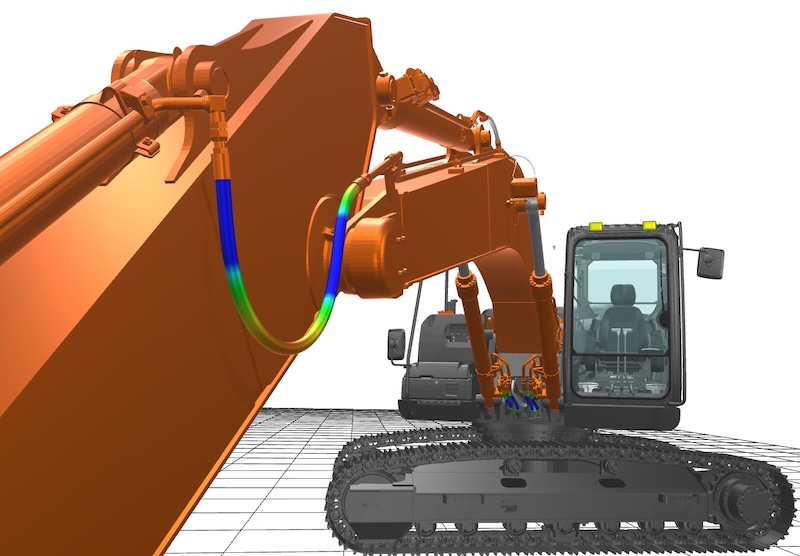
Daniel emphasized that IPS does not distinguish between a cable, hose, or other flexible component. Any flexible part defined by mechanical properties can be simulated. As systems grow more complex across industries, the need for physics-based validation extends well beyond traditional automotive programs.
Design for Manufacturing and Assembly
Karl highlighted a recurring theme raised at industry conferences: design for manufacturing. Harness manufacturers increasingly emphasize that elegant electrical designs are of little value if they cannot be built reliably and repeatably.
Aligning design and manufacturing early in the process reduces downstream friction. fleXstructures is also seeing interest in in-plant assembly validation, including digital human modeling to evaluate how large harnesses are installed. Simulation tools can assess ergonomics, installation sequence, and the potential role of collaborative robotics in assisting assembly.
The broader objective is to move toward integrated development, where harness design, manufacturing, installation, and even service considerations are addressed within a continuous digital framework.
Automation and Intelligent Assistance
Daniel outlined a three-step progression: quality, automation, and artificial intelligence.
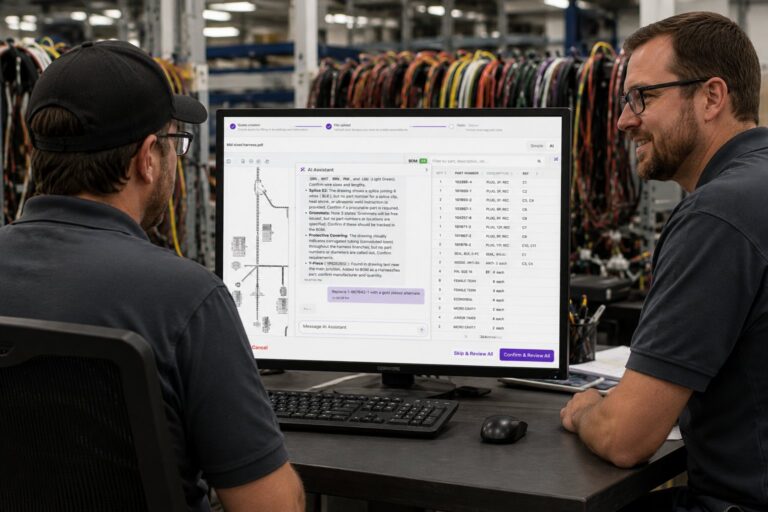
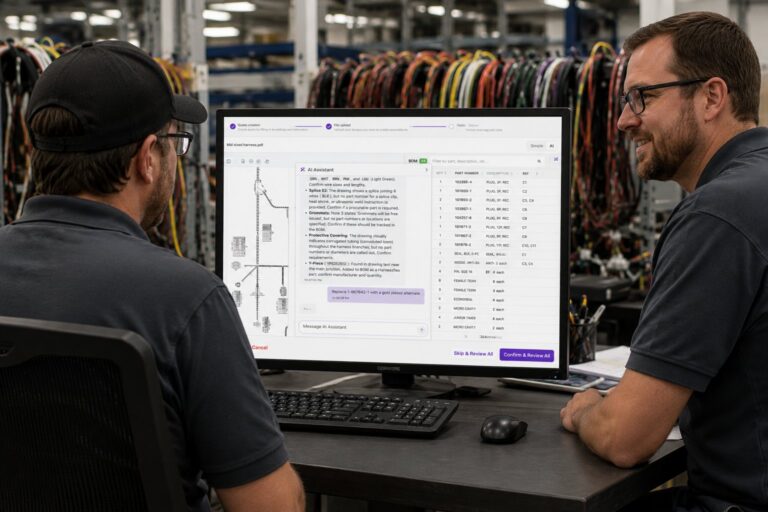
Quality forms the foundation. Without physically accurate models, speed gains are meaningless. Automation follows by eliminating repetitive tasks and improving efficiency. Artificial intelligence then builds on both, enabling intelligent assistants that can support component searches, catalog navigation, and design modifications.
Daniel noted that global competition, particularly in regions with lower labor costs, reinforces the need for efficiency gains in Western markets. Simulation, automation, and intelligent tooling provide a path to maintaining both quality and competitiveness.
A Holistic Development Approach
Taken together, the updates reflect a continued push toward holistic digital validation. From early architecture decisions to final installation and service considerations, IPS is positioned as a bridge between electrical intent and physical reality.
As Karl summarized, the goal is to help customers lead with the right design rather than rely on a build-and-correct cycle. By embedding physics-based validation across the development process, fleXstructures aims to reduce risk, compress timelines, and improve design confidence before the first prototype harness is ever built.