













In the power cord business, there is very little room for error. Specifications tighten, compliance requirements evolve, and logistics can shift overnight. And customers; whether they are hospitals, OEMs, or defense contractors, expect the product to work every time.
Webber Electronics was built with that reality in mind. Founded in the early 1990s in the basement of Rick and Trish Webber’s home, the company began by solving a specific challenge: supplying higher-quality hospital-grade power cords at a time when regulatory expectations were becoming more demanding. Rick Webber, drawing on nearly two decades of experience at Belden, recognized that reliability and compliance were not just boxes to check; they were differentiators.
That focus on doing it right from the beginning became the foundation of the company, and it still shapes how Webber operates today.
“At the time, hospitals were starting to demand higher standards for power cords,” Jamie Wiggs, COO at Webber, explained. “My dad saw that coming and realized there was an opportunity to do it better.”
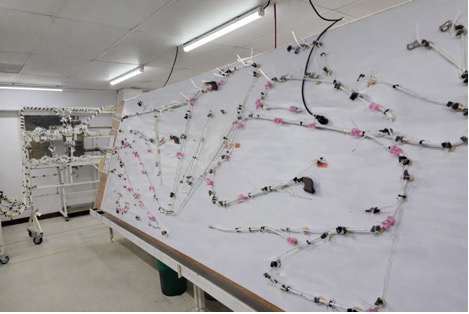
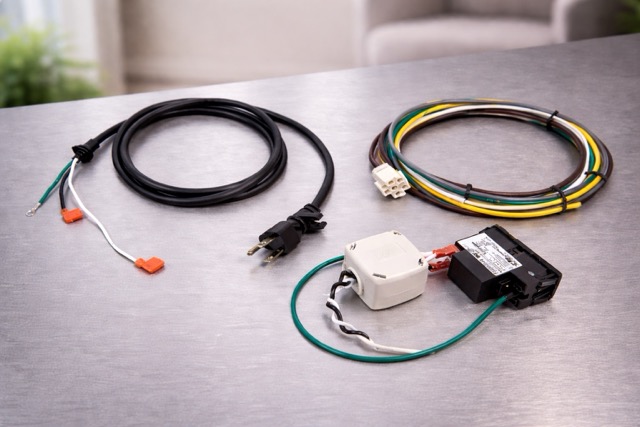
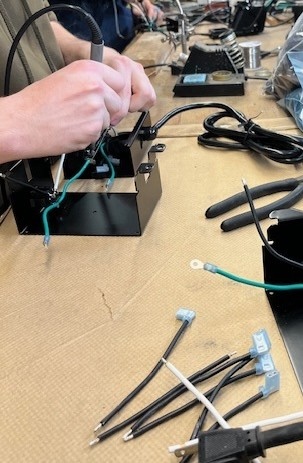
Today, Webber Electronics specializes in standard power cords and cordsets, while also supplying custom cable assemblies and wire harnesses for OEM customers across medical, industrial, defense, dental, and commercial markets. While most production is handled through long-standing global manufacturing partners, Webber maintains in-house capabilities for inspection, rework, modification, and prototyping. This allows the company to stay nimble without carrying unnecessary overhead.
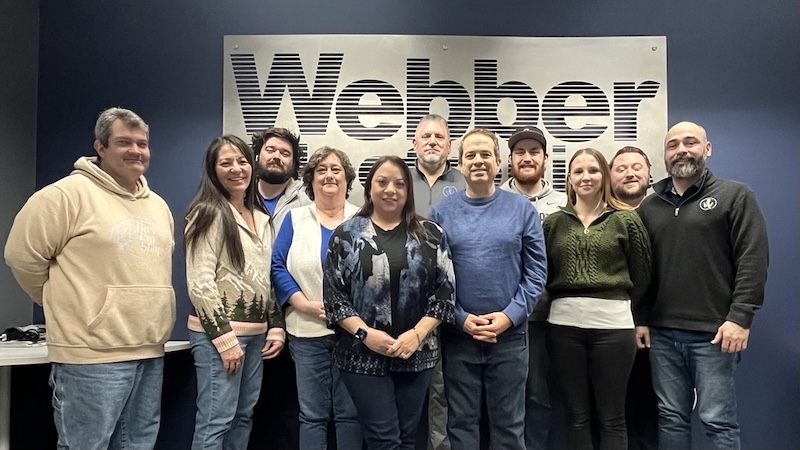
More importantly, Webber has quietly built a reputation for reliability that extends well beyond the product itself.
In the early days, Rick Webber understood the product better than he understood the scale the business would eventually reach. What started as a solution for hospital-grade power cords quickly grew beyond local demand. Rick was a salesman at heart, but he also knew he couldn’t cover the country alone. Within the first few years, Webber leaned heavily into a national sales representative model, activating trusted relationships across multiple territories.
The growth came much faster than expected. Within three years, Webber outgrew the basement and moved into the Ohio facility it still operates from today.
That early expansion wasn’t just about sales volume. It established a pattern that still defines the company: identify a narrow problem, solve it well, and then build outward without losing discipline. Power cords were the entry point, but they were never meant to be the limit.
Webber manufactures and distributes a broad catalog of standard power cords while also supporting custom cordsets and assemblies. According to Jamie, that combination became a competitive advantage earlier than many people realize.
Supporting both standard and custom work simplified the customer experience. OEMs didn’t need one supplier for catalog items and another for special requirements. Webber could stock standard products while remaining flexible enough to design and manufacture custom solutions alongside them. That principle gave Webber a meaningful competitive edge early on, and it remains just as effective today.
Over time, that flexibility expanded into additional product categories, including wire harnesses, Cat 6 cabling, and related components. The products have evolved over time, but the approach behind them has stayed the same: predictable where needed and adaptable where necessary.
Jamie noted that the cords themselves have not changed much over the years. What has changed is everything around them. Compliance requirements and global supply dynamics have driven most of that shift.
At one point, roughly 90% of Webber’s manufacturing was concentrated in China. While that model made sense economically, it introduced risk. The pandemic exposed just how fragile single-source global supply chains could be. Shipping disruptions, labor shortages, and extended lead times forced many companies to rethink long-standing assumptions.
For Webber, the pandemic accelerated a transition Rick had already begun. Today, approximately 95% of Webber’s production is outside China, diversified across partners in Taiwan, Vietnam, the Philippines, Singapore, and North America, while still retaining the ability to source from China when it makes sense.
Tariffs reinforced the decision, but they weren’t the only driver. Environmental regulations and chemical compliance requirements have also become more complex, particularly for products sold internationally. To manage that complexity, Webber partnered with Assent, a sustainability and compliance platform designed to help manufacturers cut through the chaos of global regulations.
Through Assent’s data-driven system, Webber is able to track supplier compliance, manage environmental requirements, and communicate evolving regulatory obligations across regions, keeping its supply chain transparent, audit-ready, and aligned with international standards. The result is a supply chain that prioritizes resilience over the lowest-possible cost.
When customers approach Webber with custom cordsets or harness designs, the most common issues surface early, and almost always on paper.
With power products, a single overlooked specification can force a full redesign, scrap an entire order, or introduce compliance risk that no one wants. Webber works closely with customer engineers at the front end, reviewing drawings, confirming specifications, and addressing manufacturability before production begins.
Samples are a non-negotiable part of that process. Nothing moves forward until both sides are confident that every detail, from connectors to strain reliefs, has been signed off. It slows the front end slightly, but it removes costly guesswork downstream.
Ask Jamie how Webber thinks about quality, and the answer comes quickly: “Quality isn’t a department, it’s a discipline.”
From design through delivery, quality is embedded into every step. That philosophy extends beyond product conformance to include communication, accountability, and ownership. If something goes wrong, even if it’s outside Webber’s direct control, the company takes responsibility and addresses it head-on.
In an industry where reputations travel quickly, that approach matters. Repeat business depends not just on meeting specifications, but on how issues are handled in the real world.
Producing standard products and custom assemblies simultaneously presents a challenge, especially for a lean organization. Webber addresses that operationally.
Standard power cords remain the company’s bread and butter, and maintaining availability is critical. To support that, Webber has expanded storage capacity and actively works with long-term customers to establish safety stock agreements. These agreements stabilize demand, reduce panic during supply disruptions, and allow Webber to plan inventory more effectively.
At the same time, custom work flows through a separate operational framework, one built for flexibility rather than predictability. By consciously separating standard catalog business from custom and large-account work, Webber avoids the trap of letting one side starve the other.
Successful long-term relationships tend to share common traits. Clear communication is the first. Customers who engage early tend to see smoother execution. That usually means aligning purchasing and engineering, locking designs, and approving samples up front.
The second is transparency across the lifecycle. Webber frequently supports customers with logistics solutions such as scheduled releases, allowing them to place larger orders for better pricing while taking delivery over time.
In some cases, customers place a large annual order and schedule releases throughout the year. That allows them to lock in pricing while still receiving shipments in manageable quantities.
Those arrangements create mutual commitment. Customers gain reliability and cost control, and Webber gains stability and partnership. Some of their customer relationships span more than two decades. That longevity isn’t accidental.
There are rules at Webber that won’t bend, even when it means turning away work. As Jamie put it, “We won’t sacrifice quality or compliance standards to make a sale.” Those standards are non-negotiable. If Webber can’t meet a customer’s expectations on timeline, price, or regulatory requirements without compromising integrity, the answer is no.
That honesty extends to pricing. Webber will work aggressively to remain competitive, but not at the expense of sustainable margins. Customers are told clearly where the floor is, and why. It’s a stance that occasionally costs short-term opportunities, but it preserves long-term credibility.
One of the most consequential moments in Webber’s history came in 2022, with the passing of founder Rick Webber. “There was a lot of risk involved,” Jamie recalled. “It was more in the sense of the unknown…where do we take this from here?”
That loss forced an immediate reckoning. Ownership passed to Trish Webber, and difficult questions followed: sell the business, close it, or keep it in the family.
That decision ultimately brought Jamie Wiggs, Rick and Trish’s son, back into the business. Relocating from Texas to Ohio, Jamie stepped in to help stabilize operations, navigate legal complexities, and define a path forward.
A key move during that transition was bringing back Ken Puskas, now Webber’s General Manager. With deep familiarity with the company and experience at larger organizations, Ken helped formalize internal operations while preserving the culture Rick had built. The result has been a deliberate evolution rather than a reset.
When asked what operational capability would matter most over the next five years, Jamie didn’t point to a product. He pointed to automation.
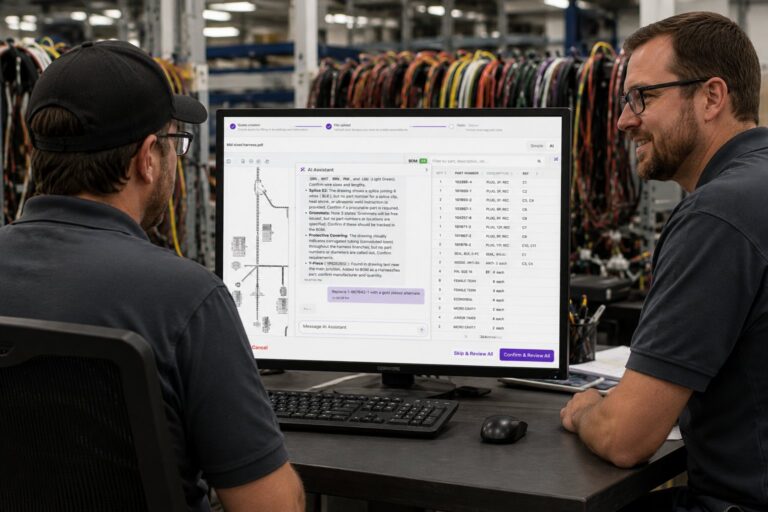
With a headcount of roughly 12 to 15 people, Webber relies heavily on software systems for compliance management, sales tracking, inventory control, and MRP. Automation allows the company to compete with much larger organizations, without becoming one. It also enables smarter decision-making: clearer inventory cycles, better purchasing visibility, and more targeted customer outreach.
What Makes Webber Unmistakable
At its core, Webber Electronics sees itself as both a material expert and a logistics expert. “We’re material experts in the product we sell, and we’re logistics experts in how to get it here to where the customer is,” Jamie detailed.
The company sells a single power cord to an Amazon customer with the same care it brings to supplying millions of units to a major OEM. That “one piece or one million” philosophy shapes everything from customer service to factory relationships.
Webber’s global manufacturing partners treat the products they build as Webber’s products, not commodities. Domestically, the company maintains trusted supplier relationships for compliance-driven and time-sensitive work, including defense and military applications.
Webber Electronics remains small enough to be flexible, yet established enough to be trusted. That balance, built over three decades, may be their greatest competitive advantage of all.