

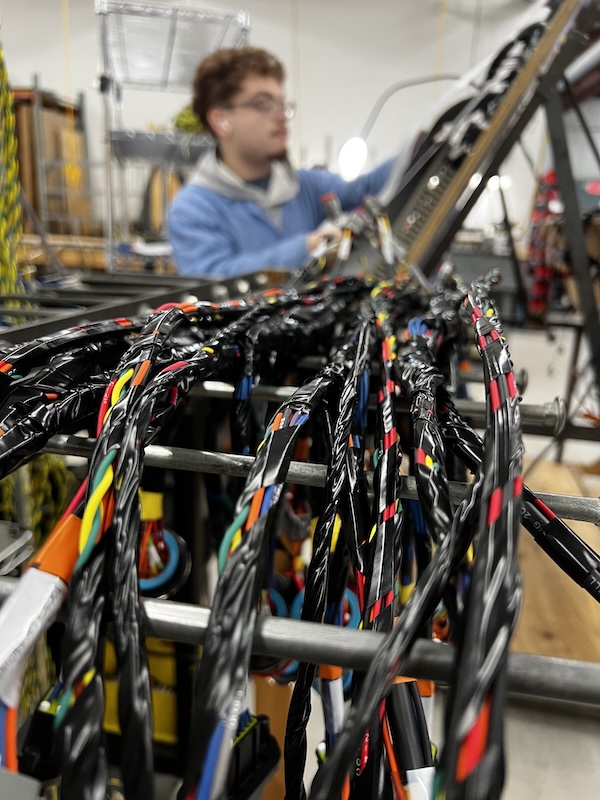
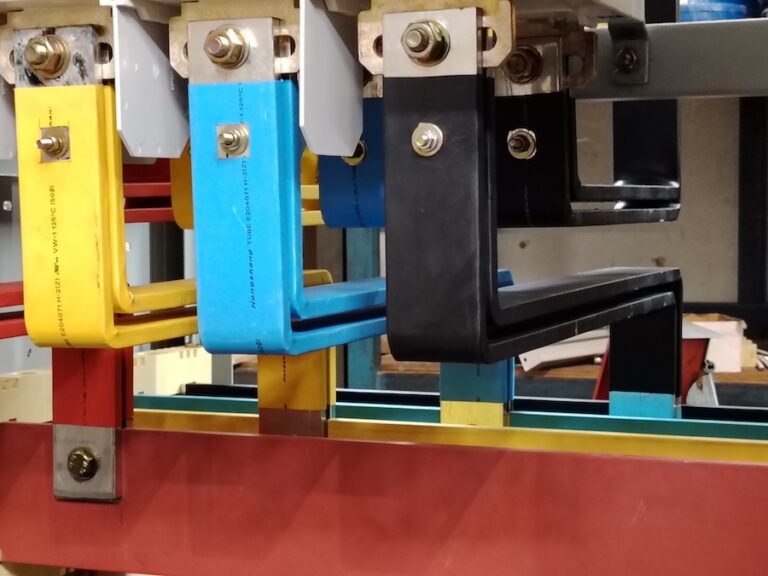

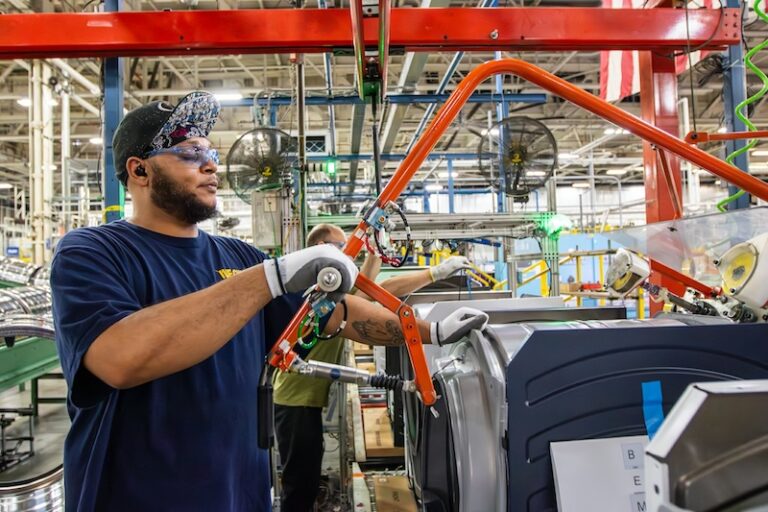






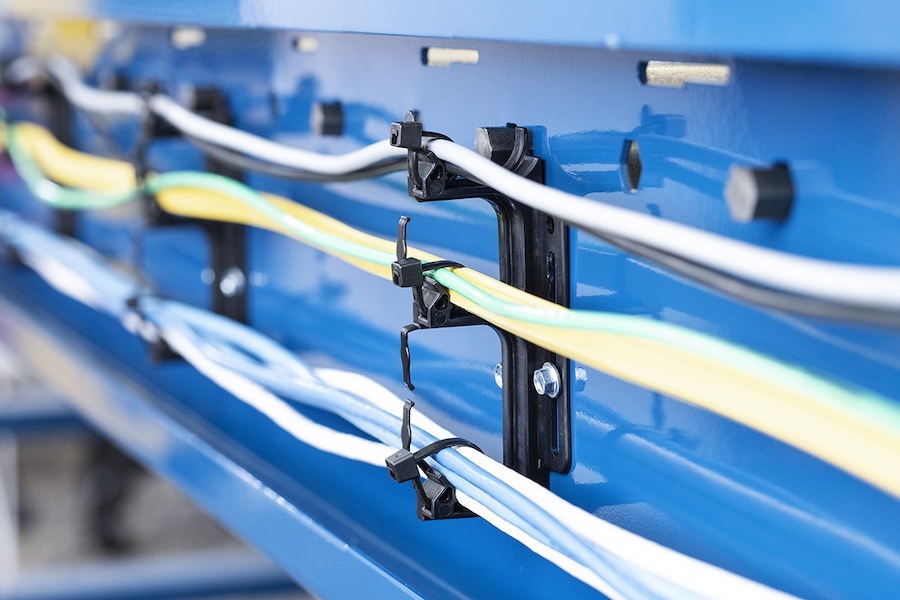
When HellermannTyton Design Engineer Mark Cors walked through the company’s Milwaukee production facility one afternoon, he noticed something odd. The wire management on the automated machinery—equipment built and assembled by outside contractors—didn’t look like HellermannTyton’s own best work. The routing was functional but uninspired. “We can do better than this,” he recalls.
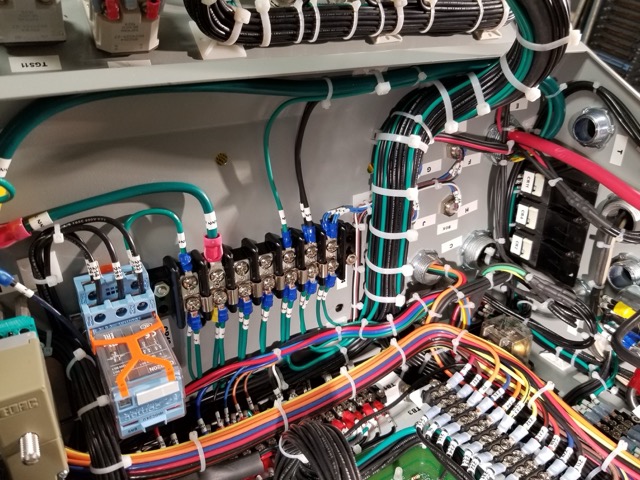
That realization sparked an experiment that would influence how the company develops its automation products today. Cors and his colleagues began retrofitting sections of their own production line with HellermannTyton’s latest wire-routing solutions—testing, iterating, and refining them in real operating conditions. The result was cleaner organization, easier maintenance access, and enthusiastic feedback from plant technicians.
For Jon Zick, who leads HellermannTyton’s North American Concept Team and serves as head of product innovation, that spirit of curiosity and accountability perfectly embodies the company’s approach. “Our internal automation group takes on the challenges of wire management every day,” he explains. “We are our most opinionated customer.”
Design Beyond the Bundle
In Zick’s view, effective cable management isn’t about holding wires in place—it’s about managing the entire lifecycle of the system. “Parts should deliver benefits in every phase: design, build, install, operate, maintain, and modify,” he says. This philosophy drives HellermannTyton’s growing role in industrial automation, where reliability and accessibility matter as much as initial assembly speed.
He’s frank about the competitive landscape. “There’s complacency in the industry,” he notes. “Automation is evolving, and sitting still isn’t an option.” That attitude has made the Concept Team an incubator for user-driven design thinking inside HellermannTyton—where every new product is expected to save customers time, reduce waste, and enhance system integrity.
The company’s design culture emphasizes the seemingly minor frustrations that installers and maintenance technicians encounter daily: hard-to-thread mounts, cutters that damage insulation during rework or bundles that shift with vibration. By addressing those “little things,” Zick says, they create innovations that feel both obvious and overdue once customers experience them.
Stick to the Process
HellermannTyton’s disciplined creativity operates under a strict, proprietary process. Each phase is a deliberate hand-off between idea, design, and validation—ensuring that inspiration never drifts too far from application.
“Dedicated people, on a daily basis, work on getting out to our users,” Zick explains. “It’s the most authentic way to come up with new ideas and bring forward new features.” That daily connection means his engineers spend time in customer plants and maintenance bays, watching how wire routing is actually performed.
The feedback loop closes quickly through technology. “3D printing has been the greatest tool for us,” Zick adds. “We can print fully functional parts in a couple of days and put them into the hands of our users. No more trying to explain a new-to-market concept—they can test it in a real application.”
The combination of disciplined process and rapid prototyping lets HellermannTyton reduce iteration time while improving relevance. When the team sees an opportunity, they can implement it—often on their own production floor first. “We can walk onto the floor and swap out wire management without all the red tape,” says Cors. “That’s the beauty of being both designer and user.”
Testing on Home Turf
Using their own facility as a proving ground has advantages that go beyond convenience. It allows the Concept Team to evaluate how new parts handle vibration, heat, and repeated service cycles under authentic production conditions. The result is data—and intuition—that are hard to replicate in a lab.
Maintenance crews provided some of the strongest feedback early on. “They immediately noticed how much easier it was to follow cables, air lines, and hydraulic lines once we reorganized them with our new products,” Cors says. “Everything looked cleaner, and it was easier to trace.”
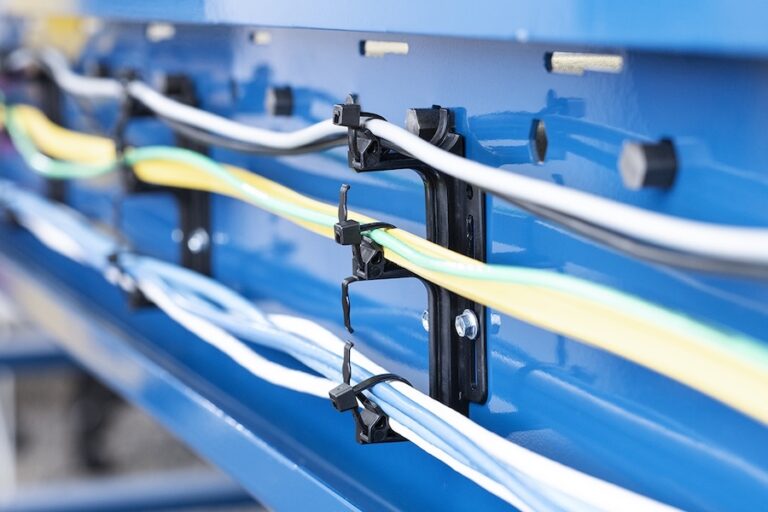
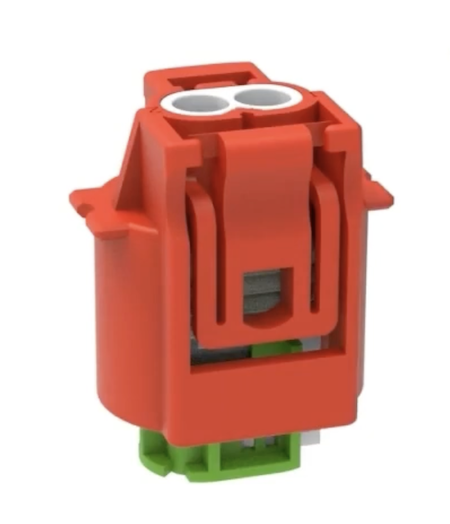
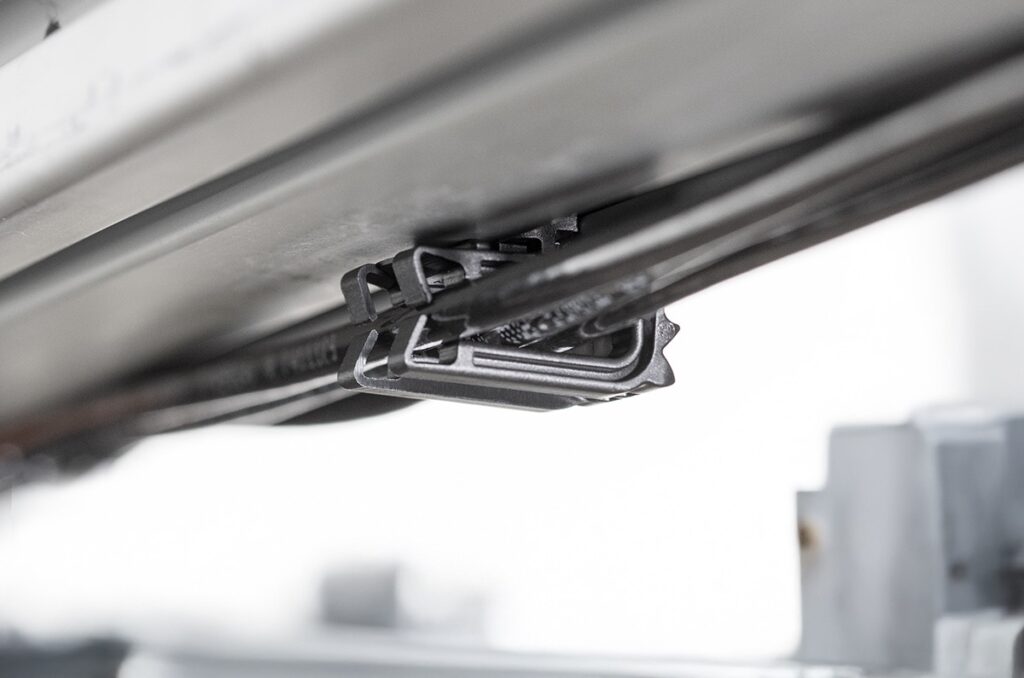
That reaction mirrors the response HellermannTyton has seen from OEMs and integrators who adopt its automation components. According to Zick, “When we show customers something they’ve never seen before—like a double-MOC (tubing clip) that can replace several ties or clamps—they drastically reduce install time, injuries, and waste.”
User-Inspired Features
Many of HellermannTyton’s signature automation products trace their origins to field observations.
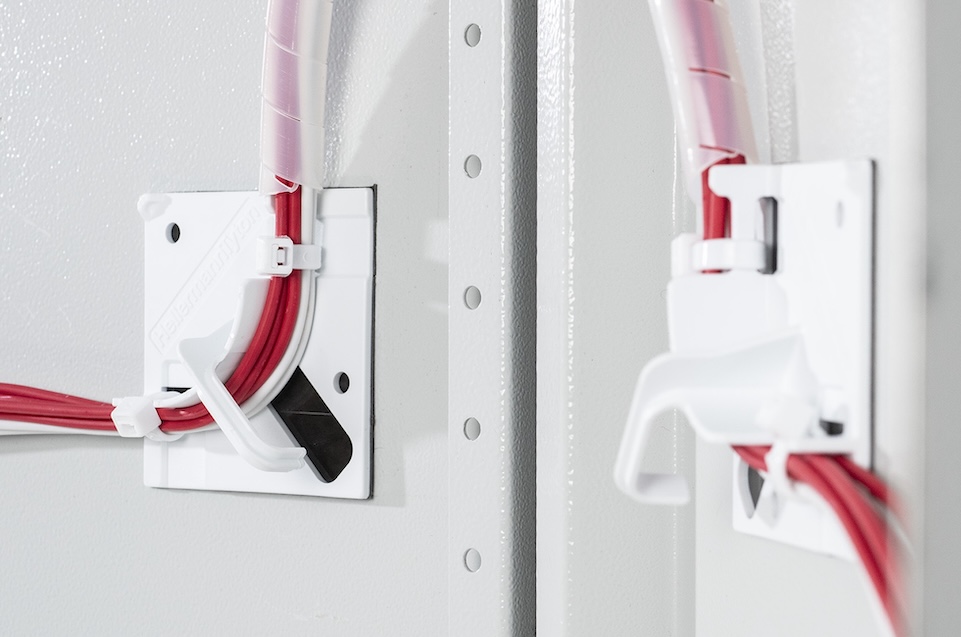
The CutZone, for example, grew out of repeated complaints from technicians about removing cable ties during maintenance. The issue wasn’t the tie itself—it was the risk of nicking wires when cutting them away. The team designed a small relief area that lets a cutter slide in safely without damaging insulation.
EZ Feed began with another moment of observation. Installers working inside dense panels often struggled to thread a tie through a mount already packed with wires. The engineers realized that a minor geometry change could allow the tie to find its way through almost automatically. “Our users didn’t even realize how much time they were losing—it was just part of the job,” Zick says.
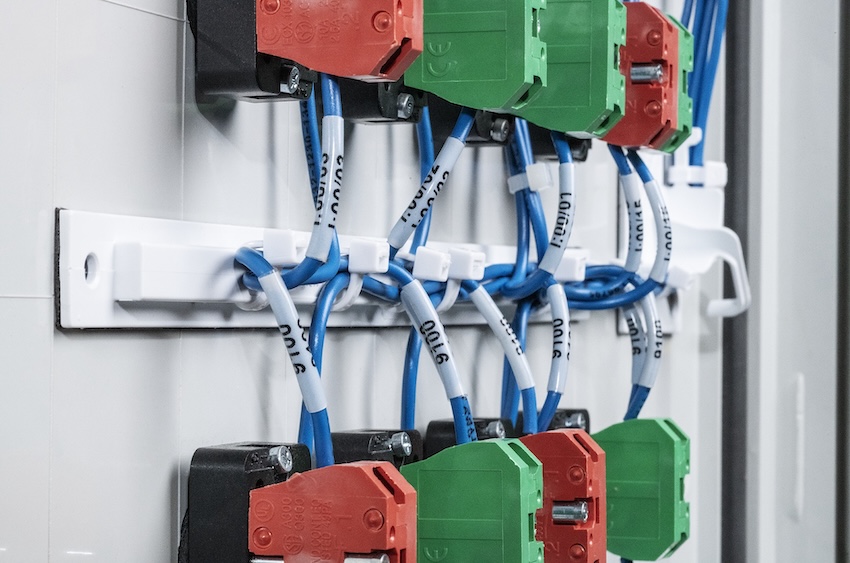
Then came the Cradle Mount, a deceptively simple idea born from watching installers waste cable ties as temporary supports. By designing a mount that gently holds wires until the final bundle is ready, the team reduced material use and sped up assembly.
Each product reflects what Zick calls user-centric insight—listening and observing until the pain points reveal themselves. “Most people grow accustomed to the way it’s always been,” he explains. “But we can recognize bottlenecks and safety issues and ask, ‘Would it be better if you could…?’ That’s where real innovation begins.”
Engineering for the Environment
Automation presents unique stresses for wire management: vibration, heat, confined spaces, and frequent movement. HellermannTyton draws heavily from its experience in other demanding sectors such as solar, automotive, and heavy equipment.
“These industrial environments share many of the same challenges,” Zick says. “Years of accumulated materials knowledge go into choosing the best polymer for each application.” The company’s background in high-temperature, UV-resistant, and chemical-resistant materials gives its automation products longevity that often exceeds customer specifications.
This materials science depth also supports safety. By mitigating wear and stress at connection points, proper wire management reduces the risk of shorts, arcing, or heat buildup—failures that can shut down entire production lines. “Automation systems are only as strong as their weakest link,” Zick notes. “Cable management keeps power and data connected through that link.”
System Reliability and Safety
HellermannTyton’s focus on organization and accessibility translates directly to uptime. Well-routed wiring doesn’t just look professional; it simplifies troubleshooting, shortens downtime, and helps ensure compliance with safety standards.
“Keeping wires organized and using proper management products prevents field risks like heat buildup, fires, and electrical shorts,” Zick explains. “It also allows maintenance technicians to trace and resolve problems more safely and efficiently.”
That attention to maintenance isn’t incidental—it’s strategic. “IA installers are craftsmen,” he adds. “They take pride in how their work looks, but they also know that getting a broken conveyor running again quickly is what saves money. That’s why feedback from maintenance teams has become a design priority for us.”
Building a Family—and a Future
To support system-wide consistency, HellermannTyton develops its automation products as a family with shared features and a consistent user experience. Whether a component attaches to a flat panel, a round tube, or a composite frame, installers can expect familiar tie paths, mounting geometries, and load ratings.
“There’s a lot of variation in automation wiring,” Zick says. “Different surfaces, bundle sizes, and pull directions—but we design each part with the same core usability in mind.” That continuity allows OEMs and integrators to standardize their approach and reduce training time.
Sustainability has become another pillar of the Concept Team’s work. HellermannTyton’s Source product line now includes cable management components made from recycled nylon and other sustainable materials. “It’s an internal priority,” Zick explains, “but customers increasingly want these options too.” The company also looks at waste reduction from a design perspective—creating products that do more with fewer parts.
Looking Ahead
Zick sees the next wave of wire management challenges arriving alongside AI-enabled automation. Smarter machines require more sensors, more power, and more data lines—often in the same or smaller enclosures. “More complex typically means more wires in the same space,” he says. “We’ll be there as that happens—listening, learning, and working with users to solve those new issues.”
That proactive mindset is what sets HellermannTyton apart. The Concept Team isn’t reacting to problems; it’s anticipating them, often by experimenting internally before customers even ask. “We have exciting products coming out later this year that have already gotten great responses from the control-panel market,” Zick hints. “Automation will only get more connected, and we’re building the infrastructure that keeps it reliable.”
His advice for harness manufacturers and system integrators is direct: “Don’t settle for good wire management when great exists. It’s worth asking your supplier, because there’s often a solution you don’t know about that will save time, reduce maintenance, and ultimately save money.”
The Human Element
For all the process and precision involved, Zick insists the company’s real advantage lies in human observation. Whether it’s Cors spotting opportunities on the production floor or a field engineer watching an installer struggle with a crowded panel, those moments drive the next idea. Innovation happens through observation, not distance. The team embraces this idea by seeing how customers use their products in real conditions — by touching, testing, and understanding why details matter
HellermannTyton’s production line may have started as a test bed for better wire routing, but it’s evolved into something larger—a living demonstration of how thoughtful design and practical experience can feed each other. The wires might be cleaner now, but the real story is the mindset behind them: continuous improvement, grounded in observation, validated by use.