













When Christopher Dillon took the stage at the Automotive Wire Harness & EDS Conference in Dearborn, Michigan, he brought with him nearly three decades of experience in automotive electrical connector development—from supplier engineering to OEM leadership, and now as Manager of the Electrical Wiring Components Application Partnership (EWCAP) at USCAR. His presentation, “USCAR and Its Impact in the Automotive Industry,” offered valuable insight into how precompetitive collaboration among OEMs and suppliers continues to advance connection system reliability and standardization across North America.
The Role and Reach of USCAR
Formed in 1992, the United States Council for Automotive Research (USCAR) functions as a collaborative, precompetitive technology consortium jointly supported by Ford, General Motors, and Stellantis. Dillon explained that USCAR provides a neutral forum for OEMs to align technical requirements—reducing the burden on suppliers who might otherwise face divergent specifications.
“We work on developing the requirements to allow suppliers to thrive in our environment,” Dillon said, “and to ensure the automotive industry receives robust, repeatable components that meet shared expectations.”
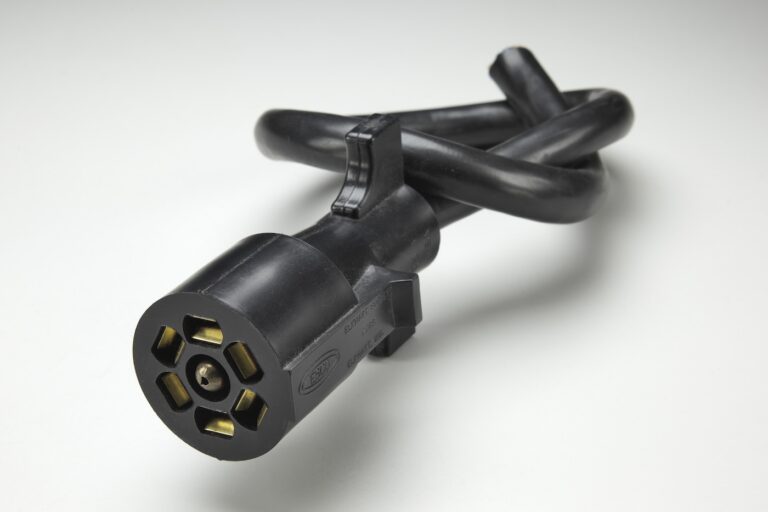
Among USCAR’s various partnerships, EWCAP—established in 1993—focuses specifically on electrical connection systems. The group develops interface drawings, validation standards, and performance requirements that guide connector and terminal design across the supply base. By defining common interfaces, USCAR enables interchangeability and scalability, ensuring that critical electrical connections remain reliable and cost-effective throughout the vehicle lifecycle.
Collaboration That Strengthens the Industry
Dillon noted that EWCAP’s greatest strength lies in its collaborative structure. OEM representatives and connector suppliers work together to shape the technical requirements that define performance and interface standards. “It’s not just the OEMs dictating,” he emphasized. “We pull in connector suppliers to get their feedback. They’re the experts.”
This cooperation has tangible results. Since the introduction of EWCAP’s standardized connector interfaces, the automotive industry has seen a marked decline in electrical connection failures. The efficiencies extend well beyond reliability—common interfaces and higher production volumes have also improved quality and reduced cost. As Dillon explained, “A connector that once required a two-cavity tool can now be produced with a sixteen-cavity tool at a fraction of the price. Higher volume drives better quality and better economics.”
Beyond connectors, USCAR’s influence reaches into data communications and high-voltage systems. Specifications such as USCAR-17 (RF/coax connectors) and USCAR-30 (USB interfaces) established early frameworks for high-speed signal transmission, while ongoing collaborations with ISO aim to harmonize Ethernet requirements up to 10 Gb/s for next-generation vehicles.
Evolution Through Standards
A cornerstone of USCAR’s work is the development and maintenance of validation and performance standards that guide the supply base. USCAR-2, introduced in 1997, set out to correct early design and assembly issues that had plagued connector reliability. As electric vehicles entered the mainstream, new standards emerged—such as USCAR-37 for high-voltage connectors—to ensure safety and durability under higher current and voltage demands.
Dillon highlighted the organization’s proactive approach to real-world issues. When field data revealed discrepancies between lab-tested and in-vehicle performance—particularly concerning seal integrity—USCAR introduced updated test protocols that included taping and bending procedures to better replicate harness routing stresses. “We don’t want a low cost connector keeping an expensivetruck off the road,” Dillon remarked. “When we find an issue, we work with suppliers to correct it and publish the revision letters quickly.”
This adaptive model keeps USCAR’s standards relevant, actionable, and in tune with field performance. Revision letters and updated guidelines are made publicly available through the organization’s website (www.uscar.org), reinforcing transparency and continuous improvement.
Global Alignment and Technical Leadership
In addition to managing EWCAP, Dillon also serves as the U.S. Technical Advisory Group (USTAG) leader within ISO’s Technical Committee 22 (Automotive) and Subcommittee 32 (Electrical). His work ensures that U.S. specifications maintain alignment with global standards while preserving the ability to address North American-specific needs.
“There may be competing standards—DIN in Europe, USCAR here—but much of our work focuses on alignment,” he said. “We don’t want to tell suppliers to go in two different directions.”
This cross-pollination between organizations promotes consistency across regional markets and strengthens the global supply chain. Through this role, Dillon has also identified opportunities to utilize best practices from adjacent working groups, including those focused on high-voltage safety and insulation requirements—insights that feed directly back into new revisions of USCAR’s own documentation.
Expanding the Collaborative Model
Under Dillon’s leadership, USCAR is looking to extend its precompetitive framework into new areas beyond traditional connector systems. Recent initiatives include a focus on high-voltage interface alignment, where the industry is working to standardize connectors for DC fast charging and battery electronics as systems migrate toward 1000 V architectures.
Another emerging effort is the “Device Owner Collaboration Team,” which seeks to harmonize connector integration requirements for electronic control modules and other devices. By engaging device engineers early in the process, the group aims to connection system issues that can occur during vehicle assembly.
Dillon also mentioned exploratory work with the USCAR Lighting Team to develop reliable, compact connectors suitable for modern headlamp assemblies, and an initiative in semiconductor interface alignment—born out of supply chain disruptions during the global chip shortage. “An inexpensivechip can stop a $costly module from being built, which, again, can stop an expensivevehicle from being built,” he said. “We’re looking at ways to drive consistency and flexibility, just like we’ve done with connectors.”
Looking Ahead
In closing, Dillon encouraged industry peers to engage directly with USCAR and its working groups. The consortium’s open, precompetitive approach ensures that technical advances benefit the entire automotive ecosystem—OEMs, suppliers, and ultimately consumers.
“My goal,” he concluded, “is to continue building alignment—between OEMs, between suppliers, and across continents—so we can deliver the robust electrical systems our industry depends on as it moves toward electrification and higher integration.”
About Christopher Dillon
Christopher Dillon has nearly 30 years of experience in the automotive electrical connector industry. After earning a Mechanical Engineering degree from the University of Michigan in 1998, he spent nearly two decades on the supplier side, specializing in connector design, manufacturing, and validation.
In 2016, he joined General Motors, advancing to Connector Technical Expert, where he helped integrate and refine connector systems across vehicle platforms. Today, as Manager of the Electrical Wiring Components Application Partnership (EWCAP) at USCAR, Dillon leads efforts to align and advance connector standards among Ford, General Motors, and Stellantis. He also serves as the U.S. Technical Advisory Group to ISO’s Technical Committee 22 for Road Vehicles/Subcommittee 32 for Electrical and Electronics.